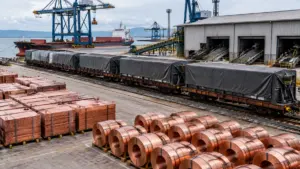
Copper operations and exploration ground in Chile’s Atacama Region.

By Penny Langford
Mining M&A deals 2026 are increasingly focused on strategic fit rather than headline scale. Recent transactions show companies buying adjacent ground, securing feed for existing plants, and taking structured positions in critical minerals without committing immediately to full project construction.
The pattern is visible across copper, gold, bauxite, lithium and antimony. Capstone Copper’s US$25 million acquisition of San Pietro in Chile is designed to consolidate a district around existing infrastructure. ACG Metals is buying a nearby oxide-gold licence in Türkiye to extend its Gediktepe heap-leach operation. Rio Tinto’s Aurukun agreement would add a major undeveloped bauxite project to its Cape York portfolio, while Evolution Mining’s Nevada North lithium investment illustrates how producers can gain exposure through staged project funding.
For investors and operators, the common question is no longer simply how much metal a transaction controls. It is whether the acquired asset improves the economics, infrastructure utilization or strategic resilience of the buyer’s existing portfolio.
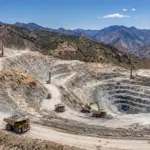
Mining M&A deals 2026: the transaction map
| Buyer | Asset and jurisdiction | Structure | Announced consideration | Strategic objective |
|---|---|---|---|---|
| Capstone Copper | San Pietro copper-gold-iron-cobalt project, Chile | Acquisition of copper concessions | US$25 million in shares | Consolidate the Mantoverde-Santo Domingo district |
| Vizsla Copper | Delta polymetallic VMS and Helm Bay gold, Alaska | Share, royalty and contingent-payment transaction | About C$32 million, plus up to C$20 million | Add copper, precious-metal and exploration exposure |
| Rio Tinto | Aurukun bauxite project, Queensland | Acquisition agreement | Undisclosed | Expand Cape York bauxite position near Weipa |
| ACG Metals | Keşkek gold licence, Türkiye | Licence acquisition | Up to US$7.85 million | Extend Gediktepe heap-leach utilization |
| Evolution Mining | Nevada North lithium, Nevada | Project-level joint venture funding | Up to C$10 million sole funding | Earn a 32.5% interest through PFS funding |
| Krait Critical Minerals | Nevada Hills antimony portfolio, Washington | Securities exchange agreement | 2.5 million shares plus US$100,000 | Gain indirect rights to Bales and additional antimony claims |
The transactions are not directly comparable. Some are completed acquisitions, others remain subject to approvals, and Evolution’s investment is an earn-in rather than a conventional purchase. That distinction matters when assessing execution risk and the timing of potential value creation.

Capstone’s San Pietro deal puts district consolidation first
Capstone Copper completed its acquisition of the copper assets at San Pietro in Chile’s Atacama Region for US$25 million in Capstone shares. The project sits between the company’s Mantoverde, Santo Domingo and Sierra Norte properties.
The transaction adds about 16,000 hectares of prospective ground and the Rincones and Colla deposits. Capstone reported an inferred resource of 492 million tonnes grading 0.23% copper and 0.05 grams per tonne gold, containing approximately 4.44 billion pounds of copper and 770,000 ounces of gold.

The resource is not a reserve and does not demonstrate economic viability. However, the location is central to the deal rationale. Capstone already has regional operating knowledge, infrastructure and development plans, allowing San Pietro to be evaluated as part of a larger district rather than as an isolated greenfield project.
That approach could create several options: additional exploration, shared infrastructure, future oxide or sulphide feed, and coordinated mine planning. The effective acquisition cost looks low against the reported contained copper, but the headline metric should not be mistaken for project value. Drilling, metallurgy, permitting and development capital will determine how much of the resource can ultimately be converted into an operating asset.
Capstone’s announcement is a useful example of the difference between a conventional takeover and a district-scale consolidation strategy. The value lies not only in the acquired tonnes but also in the possibility of improving the productivity of the surrounding portfolio.
Read more about how mining mergers work and the wider copper supply outlook.

San Pietro is positioned within Capstone’s existing Atacama operating district.
Vizsla Copper brings a major shareholder into its Alaska portfolio
Vizsla Copper agreed to acquire Agnico Eagle’s Delta polymetallic VMS and Helm Bay gold projects in Alaska in a transaction valued at about C$32 million.
Agnico Eagle is expected to receive 22.5 million Vizsla Copper shares, representing roughly 19.99% of the company at the time of the agreement. Agnico will also retain a 2% net smelter return royalty on Delta and a 3% royalty on Helm Bay. Vizsla can reportedly buy back half of each royalty for C$5 million.
The agreement also includes up to C$20 million in contingent payments tied to project milestones, including a resource estimate, a feasibility study and commercial production at Delta. The transaction is expected to close subject to customary approvals and conditions.
For Vizsla, the acquisition adds a polymetallic VMS project and a gold project to its Alaska platform. For Agnico, the structure provides continuing exposure through equity, royalties and milestone payments while monetizing assets that are no longer central to its operating portfolio.
This is a different form of consolidation from the Capstone transaction. Rather than an established producer acquiring adjacent ground, a junior company is using equity to secure assets and a strategic shareholder. The structure limits immediate cash requirements but increases future dilution and places greater importance on exploration success.
The deal also shows how major producers can retain upside in non-core assets without assuming direct development responsibility.
Rio Tinto’s Aurukun agreement highlights permitting and infrastructure risk
Rio Tinto agreed to acquire the Aurukun Bauxite Project in Queensland from a joint venture between Glencore and Mitsubishi Development. The purchase price was not disclosed.
Aurukun is an undeveloped project in Western Cape York. Earlier development plans contemplated production of up to 15 million tonnes of run-of-mine bauxite annually, equivalent to as much as 8 million dry tonnes of export product. The project is near Rio Tinto’s existing Weipa operations, which creates a potential regional logic for the acquisition.
The transaction remains subject to Queensland and other Australian regulatory approvals. Aurukun is also still held under a mineral development licence, and a mining lease has not yet been granted.
That makes the transaction less about near-term production and more about securing a long-term resource position in an established bauxite province. Rio Tinto will need to address permitting, infrastructure, project economics and engagement with Traditional Owners before the asset can move toward development.
Unlike the San Pietro deal, Aurukun does not provide an immediate operating or exploration feedstock advantage. Its value depends on whether Rio Tinto can use its regional capabilities to advance a project that previous owners were unable to bring into production.

Aurukun would expand Rio Tinto’s bauxite footprint in Cape York.
ACG targets infrastructure-backed gold growth in Türkiye
ACG Metals signed an agreement to acquire mining licence 60926, which contains the Keşkek gold project in Türkiye, from Meta Nikel Kobalt Madencilik.
The total consideration can reach US$7.85 million. The structure includes an initial US$4 million payment following licence-transfer approval and a further US$3.85 million linked to the environmental permitting process. The seller will also receive a 1% gross revenue royalty, while ACG has agreed to pay US$60 for each additional ounce discovered and converted into reserves outside the defined pit.
Keşkek covers about 666 hectares and is located roughly 70 kilometres from ACG’s Gediktepe mine. ACG says the defined pit contains approximately 300,000 tonnes grading 0.90 grams per tonne gold. Its internal resource estimate for the licence is 1.5 million tonnes grading 0.65 grams per tonne gold.
The strategic value is the existing heap-leach facility at Gediktepe. ACG expects Keşkek oxide ore to extend utilization of that plant after the company has processed the recoverable oxide material from Gediktepe. Production is targeted for mid-2027, subject to permitting.
This transaction illustrates one of the clearest themes in mining M&A deals 2026: smaller acquisitions can be economically meaningful when they improve utilization of infrastructure already in place.
Evolution’s Nevada North position demonstrates staged lithium exposure
Evolution Mining completed its funding commitment under a joint venture with Surge Battery Metals at the Nevada North Lithium Project. Evolution provided up to C$10 million toward the project’s preliminary feasibility study and, in return, increased its ownership interest to 32.5%. Surge retains 67.5%.
The project is a lithium-clay development in Nevada. The joint venture’s 2026 work program includes resource definition, mine-plan optimization, hydrogeological and geotechnical drilling, and metallurgical work ahead of a bankable feasibility study.
The structure reduces the immediate funding burden on Surge while giving Evolution exposure to a large domestic lithium project. It also limits Evolution’s commitment compared with an outright acquisition, although the project still faces technical, permitting, water and processing risks.

Drilling and metallurgical work are advancing Nevada North toward feasibility studies.
Krait builds an antimony portfolio through a securities exchange
Krait Critical Minerals agreed to acquire all membership interests in Nevada Hills Antimony LLC. The transaction would give Krait indirect rights to the Bales Antimony Project in Washington, nine contiguous claims and the four-claim Antimony Bell Project.
Consideration consists of 2.5 million Krait shares issued at a deemed price of US$0.87 per share and US$100,000 in cash. Krait previously paid a US$25,000 exclusivity fee, leaving US$75,000 payable at closing.
The structure is important: Krait will acquire Nevada Hills and its contractual rights, but it will not directly own the eight Bales claims at closing. Those claims remain subject to the underlying property purchase agreement, including a US$225,000 payment and a 2% net smelter return royalty.
Krait has cited historical antimony results, but the company also states that the information has not been independently verified and does not represent a current resource or reserve. Modern mapping, sampling, title review and permitting work remain necessary.

The Nevada Hills transaction includes contractual rights to the Bales antimony project.
Base, bull and bear framework for mining M&A deals 2026
| Scenario | What it would mean | Main indicators |
|---|---|---|
| Base case | M&A remains selective, with buyers favoring assets near existing infrastructure and staged funding structures | More district deals, earn-ins and feedstock acquisitions; continued permitting discipline |
| Bull case | Strong copper and critical-minerals pricing supports broader consolidation and accelerates project development | Higher transaction volumes, rising valuations and more competition for advanced assets |
| Bear case | Cost inflation, permitting delays and weak junior-market liquidity slow deal completion and reduce development spending | Deferred closings, wider valuation gaps and greater use of contingent consideration |
The base case appears most consistent with the current transaction mix. Buyers are not indiscriminately pursuing scale. They are seeking specific advantages: district control, plant utilization, strategic minerals or access to future supply.
For operators, the lesson is that infrastructure and execution capability can be as valuable as geology. For investors, the key diligence questions are whether the acquired asset is genuinely additive, how much capital remains to be spent, and which milestones must be achieved before the headline resource becomes economically relevant.
What to watch next
The next phase of mining M&A deals 2026 will likely be measured by conversion rather than announcement volume. At San Pietro, that means drilling and district planning. At Aurukun, approvals and Traditional Owner engagement will be central. At Keşkek, the licence transfer and environmental process will determine whether nearby oxide feed reaches Gediktepe. At Nevada North and Nevada Hills, technical validation will be critical before larger development commitments can be justified.
The market is rewarding strategic optionality, but optionality only becomes value when companies can move projects through permitting, engineering and construction.
LinkedIn snippet:
Mining M&A deals 2026 are shifting toward district consolidation, infrastructure-backed growth and staged exposure to critical minerals. Capstone’s San Pietro acquisition, ACG’s Keşkek deal and Evolution’s Nevada North earn-in show why strategic fit may matter more than headline size.
X snippet:
Mining M&A deals 2026 are increasingly about district control, plant utilization and critical-minerals exposure. Capstone, ACG, Rio Tinto, Evolution, Vizsla Copper and Krait show six different ways buyers are positioning for the next supply cycle.