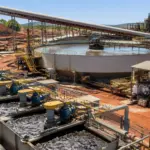
Indonesia’s laterite nickel mines sit at the center of the 2026 supply debate.

Indonesia has cut its 2026 nickel ore quota to 260–270 million wet metric tonnes, down sharply from the 379 million wet metric tonnes approved under the 2025 RKAB system. The decision has strengthened expectations that the world’s dominant nickel supplier will impose greater discipline on production.
But the market has not yet responded as if nickel is scarce.
LME warehouse stocks have climbed above 270,000 tonnes, while nickel prices remain near $16,700 per tonne. That contrast captures the central question for the 2026 nickel market: will Indonesia’s quota discipline create a durable price floor, or will elevated inventories and weak demand continue to absorb the impact?
The answer depends on how much ore Indonesia actually produces, how much material arrives from the Philippines, and whether stainless steel and battery demand improve quickly enough to draw down stocks.
Indonesia’s quota cut changes the supply equation
Indonesia accounts for roughly 60% of global mined nickel supply and has become the main source of growth in nickel pig iron, ferronickel, matte and battery intermediates.

The reduction from 379 million wet metric tonnes in 2025 to 260–270 million tonnes in 2026 represents a cut of approximately 29% to 31%. The country’s Energy and Mineral Resources Ministry has said it will not approve broad quota increases, although selective revisions may be granted to smelters facing immediate ore shortages.
That policy is intended to reduce oversupply, support prices and align mine production more closely with domestic processing capacity. Indonesian officials have also linked production controls to environmental oversight and the government’s broader effort to capture more value through downstream processing.
More Read
The adjustment is significant because Indonesia’s installed smelting capacity may require substantially more ore than the new quota provides. Industry estimates cited in market analysis place potential 2026 smelter demand at roughly 340–350 million wet metric tonnes, implying a theoretical shortfall of 70–90 million tonnes if the quota is enforced fully.
That does not automatically translate into a global nickel deficit. Smelters can reduce utilization, draw on stockpiles, compete more aggressively for ore or seek alternative feedstock. The critical issue is whether the shortfall appears in actual refined output rather than only in the permitting data.
Indonesia’s policy stance remains the largest swing factor in the market. The government has previously allowed quota revisions, and the 2026 framework still permits companies to submit adjustments under certain conditions. As Antara reported, officials have indicated that additional allocations would be limited and targeted rather than applied across the industry.

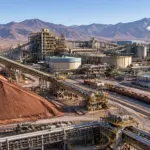
Rotary kiln and material-handling equipment connect Indonesian ore supply directly to global nickel markets.
Philippine ore imports provide a partial buffer
The Philippines is an important supplier of laterite ore to Chinese nickel pig iron and ferronickel producers. Its exports can cushion a decline in Indonesian availability, particularly when Chinese buyers are willing to pay higher prices for suitable grades.
The buffer is limited, however.
Philippine ore supply is affected by the seasonal pattern of monsoon weather, mine operating conditions, shipping availability and ore quality. Nickel laterite is not a uniform commodity: limonite and saprolite grades feed different processing routes, and Indonesian material cannot always be replaced on a one-for-one basis.
If Indonesian quotas remain near 260–270 million tonnes, Chinese smelters are likely to compete more intensely for Philippine ore. That could lift delivered ore prices and improve the economics of Philippine producers, but it may also raise costs for Chinese NPI plants.
A sustained increase in Philippine shipments would therefore soften the effect of Indonesia’s cut without necessarily restoring the previous supply balance. For the global market, the key indicator will be whether Philippine ore imports rise enough to keep Chinese stainless feedstock production running at high utilization.
Inventory overhang keeps the price response contained
The clearest evidence that the market remains well supplied is the rise in visible exchange inventories.
LME nickel stocks have moved above 270,000 tonnes, reaching approximately 274,000 tonnes in mid-September, according to warehouse data compiled from the LME’s warehouse and stock reports. Nickel has been trading around $16,700 per tonne, well below the levels that would normally signal an immediate physical shortage.
LME stocks represent Class 1 nickel that meets exchange-delivery standards. They do not capture the full volume of nickel pig iron, ferronickel, matte, mixed hydroxide precipitate or privately held material. That distinction matters because Indonesia’s rapid growth has been concentrated in Class 2 products and intermediates.
Even so, rising LME inventories indicate that surplus material is finding its way into the refined market. ING’s nickel analysis expects the global market to remain in surplus in 2026, with a projected excess of approximately 261,000 tonnes. The bank also points to subdued stainless steel growth, expanding Indonesian supply and the growing market share of lithium-iron-phosphate batteries as constraints on nickel demand.
The inventory overhang does not eliminate the bullish case. It raises the amount of supply that must be absorbed before a policy-driven rally becomes durable. A move above $18,000 per tonne would carry more significance if it were accompanied by falling LME stocks, stronger physical premiums and evidence of reduced Indonesian smelter utilization.
Stainless steel remains the demand anchor
Stainless steel accounts for more than 60% of global nickel consumption, making manufacturing activity and Chinese stainless output more important to the near-term market than electric vehicle headlines alone.
A recovery in construction, industrial production and consumer goods would improve nickel demand, but the recovery has been uneven. Chinese property weakness and soft manufacturing conditions have limited the speed of stainless steel growth, while producers have continued to manage output in response to margins.
This creates a difficult backdrop for Indonesian supply controls. If stainless demand remains subdued, lower ore availability may reduce Indonesian production without causing an immediate global shortage. Instead, the adjustment could be reflected in lower smelter utilization and tighter margins.
Battery demand offers a faster-growing source of consumption, but its effect is constrained by chemistry. Nickel-rich NMC and NCA batteries remain important for long-range electric vehicles, performance applications and some hybrid systems. However, LFP batteries continue to gain share because they are generally cheaper and do not use nickel.
That means battery demand can support the market without guaranteeing a deficit. Faster growth in nickel-intensive chemistries would strengthen the upside case, while continued LFP substitution would leave stainless steel as the primary source of incremental demand.
For broader context, Skillings’ coverage of critical minerals refining and supply-chain concentration examines how processing capacity, rather than mine supply alone, is reshaping the metals market.
Nickel market scenarios
The framework below is designed to track the indicators most likely to determine whether Indonesia’s quota cut establishes a price floor or is overwhelmed by surplus material.
| Scenario | Indonesian RKAB outcome | LME stocks | Demand and supply conditions | Indicative nickel price |
|---|---|---|---|---|
| Base case | Quota remains near 260–270 million wet metric tonnes, with selective revisions | 250,000–285,000 tonnes | Stainless steel improves gradually; Philippine imports provide a partial buffer; battery demand grows but LFP limits upside | $15,500–$18,000/t |
| Bull case | Strict enforcement with limited supplementary approvals | Below 250,000 tonnes after sustained drawdown | Philippine ore is disrupted or insufficient; stainless output strengthens; NMC battery demand outperforms | $18,000–$21,000/t |
| Bear case | Quotas move materially higher through revisions or under-delivery is offset elsewhere | Above 285,000–300,000 tonnes | Chinese stainless demand weakens; Philippine flows remain strong; LFP adoption accelerates | $14,000–$16,000/t |
The base case is a market that becomes tighter at the ore and intermediate level but remains capped by visible inventory. Prices near $16,700 per tonne are consistent with that outcome: high enough to reflect policy risk, but not high enough to signal a sustained shortage.
The bull case requires evidence beyond the announced quota. LME inventories would need to decline, Indonesian smelter output would need to fall and physical premiums would need to strengthen. A disruption to Philippine ore shipments could accelerate the move, particularly if Chinese stainless production improves at the same time.
The bear case remains credible because Indonesia retains considerable influence over realized supply. If the government approves more revisions, or if the quota is not fully utilized by miners, the headline cut may have less effect than expected. Weak stainless demand and continued LFP substitution would then leave inventories elevated.

Mine production, stockpiles and processing capacity will determine how much of the quota cut reaches the global market.
What operators and investors should monitor
The most useful indicators for the rest of the outlook are:
- RKAB approvals and revisions: The difference between the national quota and actual permitted mine output will determine the policy’s impact.
- Indonesian smelter utilization: Lower ore availability should appear in NPI, matte and HPAL production rates.
- Philippine export volumes: Stronger shipments could offset part of Indonesia’s reduction, while weather or logistics disruptions could tighten the market quickly.
- LME inventory direction: A sustained drawdown would provide stronger evidence of a physical rebalancing than a temporary price rally.
- Stainless steel production: Demand recovery remains the largest near-term test for nickel consumption.
- Battery chemistry: NMC growth supports nickel demand, while faster LFP adoption limits the contribution from electric vehicles.
- Class 1 premiums and spreads: Rising premiums would suggest that refined nickel is tightening even if Class 2 material remains abundant.

Port stockpiles and bulk-loading systems connect Indonesian mine policy to Asian manufacturing demand.
Bottom line
Indonesia’s 2026 quota cut is large enough to change the nickel market’s direction, but not necessarily large enough to eliminate the inventory overhang.
The central risk for prices is that lower ore supply reduces Indonesian output while existing refined stocks remain available to consumers. In that case, the quota establishes a floor under nickel prices without creating a sustained rally.
A more durable recovery would require three developments to occur together: strict Indonesian enforcement, stronger stainless steel demand and a meaningful drawdown in LME inventories. Battery demand could amplify the move, but it is unlikely to carry the market alone while LFP adoption continues to expand.
For operators, the priority is understanding how quota discipline affects ore access, smelter utilization and processing costs. For investors and policymakers, the more important distinction is between headline mine supply and the form of nickel actually available to the market.
The 2026 nickel outlook is therefore balanced between a policy-driven tightening cycle and a stubborn inventory surplus. At around $16,700 per tonne, the market is pricing in the possibility of tighter Indonesian supply: but not yet the certainty of a global deficit.
LinkedIn snippet
Indonesia has cut its 2026 nickel ore quota to 260–270 million wet metric tonnes from 379 million in 2025. Yet LME stocks remain above 270,000 tonnes and prices are near $16,700/t. Our base, bull and bear framework examines whether quota discipline can overcome inventory, Philippine ore supply and soft stainless steel demand.
X snippet
Indonesia’s nickel quota cut is reshaping the 2026 outlook: but LME stocks above 270,000 tonnes show the market is still carrying a substantial overhang. We examine the impact of RKAB policy, Philippine ore imports, stainless steel, batteries and three price scenarios.