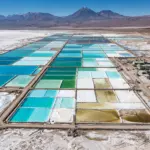
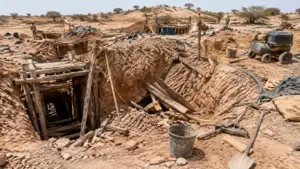
Equipment at a hard-rock lithium development site in Ghana’s tropical savanna.

By Penny Langford
Atlantic Lithium is continuing to work toward a proposed $210 million takeover by Zhejiang Huayou Cobalt, with the transaction still subject to shareholder, court and regulatory approvals across Australia, Ghana, China and West Africa.
The all-cash deal would give Huayou, one of China’s largest battery-materials groups, control of Atlantic Lithium and its Ewoyaa Lithium Project in Ghana. Atlantic Lithium said in its latest financial report that the proposed transaction remains conditional and is expected to reach a shareholder vote in November, with implementation targeted for December.
The agreement is one of the clearest examples yet of Chinese battery-materials capital moving into Ghana’s emerging lithium industry. It also places Ewoyaa’s development timeline, fiscal terms and ownership structure under review by regulators in several jurisdictions.
Deal structure and key terms
Atlantic Lithium entered into a binding Scheme Implementation Deed with Huayou on May 7. Under the proposed Australian scheme of arrangement, Huayou would acquire all issued shares in Atlantic Lithium for US$0.25486 per share, equivalent to approximately A$0.354 or £0.188.

The offer values Atlantic Lithium’s fully diluted equity at approximately US$210 million, or about A$292 million. The consideration represented a 26.6% premium to Atlantic Lithium’s ASX closing price before the announcement and a 21.8% premium to its 30-day volume-weighted average price, according to the company’s transaction announcement published through the London Stock Exchange.
The transaction is structured as a cash takeover rather than a share exchange. That means Atlantic Lithium shareholders would receive cash if the scheme becomes effective, while Huayou would assume control of the corporate group and its Ghanaian assets.
| Key deal term | Detail |
|---|---|
| Buyer | Zhejiang Huayou Cobalt Co., Limited |
| Target | Atlantic Lithium Limited |
| Headline value | Approximately US$210 million |
| Consideration | US$0.25486 per share |
| Equivalent consideration | A$0.354 per share; £0.188 per share |
| Transaction structure | Australian scheme of arrangement |
| Key asset | Ewoyaa Lithium Project, Ghana |
| Shareholder vote | Expected in November |
| Target implementation | December, subject to conditions |
| Major approvals | FIRB, PRC regulators, ECOWAS, Ghana SEC, GRA and Australian courts |
The Scheme Implementation Deed also requires Atlantic Lithium to deal with outstanding warrants and performance rights before completion. The company’s board has unanimously recommended the transaction, subject to an independent expert concluding that it is in shareholders’ best interests and no superior proposal emerging.
Atlantic Lithium’s largest shareholder, Assore International Holdings, which held approximately 26.4% of the company when the transaction was announced, has also indicated that it intends to vote in favor, subject to the same conditions.
Ewoyaa is largely permitted at project level
The proposed takeover comes after Atlantic Lithium cleared several important project milestones in Ghana.
The company received an Environmental Protection Authority permit for Ewoyaa in September 2024 and a Mine Operating Permit in October 2024. Ghana’s Parliament ratified the project’s Mining Lease in March, establishing the legal framework for development of the mine and processing plant.
Ewoyaa is located in the Mankessim area of Ghana’s Central Region. Atlantic Lithium’s latest company disclosures put the project’s mineral resource at 36.8 million tonnes grading 1.24% lithium oxide, including 25.6 million tonnes of probable ore reserves grading 1.22% lithium oxide.
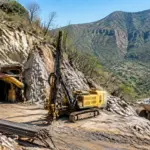
The project is designed around a hard-rock spodumene deposit rather than a brine operation. That distinction matters for development planning because Ewoyaa will require conventional mining, ore sorting or beneficiation, crushing and processing infrastructure, along with road, power and water systems.

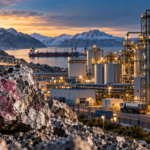
Drill core and sampling equipment at a West African hard-rock lithium exploration camp.
The project-level permitting progress reduces one category of uncertainty, but it does not remove the transaction’s remaining ownership, tax, competition and foreign-investment hurdles. The approvals now being sought relate primarily to the change in control and the transfer of project interests.
Regulatory reviews remain the main gate
The Scheme Implementation Deed lists several conditions that must be met before Huayou can complete the acquisition.
In Australia, the transaction requires approval under the country’s foreign investment regime, either through clearance from the Foreign Investment Review Board or the lapse of the applicable review period without an objection. The scheme must also pass through the Australian court process required under the Corporations Act.
Atlantic Lithium shareholders must approve the deal by the statutory voting thresholds. The company has indicated that the scheme meeting is expected to be held in November, following circulation of a scheme booklet and independent expert’s report.
In China, Huayou must obtain the approvals, registrations or filings required from relevant authorities. The transaction documents identify the Ministry of Commerce, the National Development and Reform Commission and the State Administration of Foreign Exchange, or their relevant delegated bodies, as potential approval points.
The deal also requires clearance from the ECOWAS Regional Competition Authority. That review reflects the cross-border nature of the transaction and the potential impact of a change in control involving a strategic mineral project in West Africa.
Ghanaian approvals are also central. The transaction documents refer to waivers, exemptions or clearances under the Ghana Securities and Exchange Commission’s takeover rules. They also require a private ruling from the Commissioner-General of the Ghana Revenue Authority on the tax treatment of the transaction.
The GRA ruling could affect the final amount payable. That makes the tax process more than a procedural step: it may influence the transaction economics and the amount ultimately distributed to shareholders.
Separate project-interest transfer
Alongside the corporate takeover, Huayou is also moving to consolidate its position in Ewoyaa at the project level.
Atlantic Lithium’s latest financial report says the company consented to an agreement under which Elevra Lithium would transfer its rights and interests in the project agreements to Huayou. The novation is not conditional on completion of the corporate scheme.
Public disclosures have described Elevra’s interest as approximately 22.5%, including associated spodumene offtake rights, with the related transaction valued at about $71 million. If both transactions are completed, Huayou is expected to hold the dominant economic and operational position in Ewoyaa, while Ghana retains its statutory free-carried interest in the project.
That structure is significant for Ghana because it combines foreign control of project development with a continuing state participation model. It also means that the government’s approach to royalties, taxes, local procurement and community benefits will remain important to the project’s social and political license.
Ghana’s revised lithium royalty framework includes a sliding scale of between 5% and 12%, according to Atlantic Lithium’s 2026 financial report. The final economic balance for the mine will therefore depend not only on lithium prices and operating costs, but also on the fiscal terms embedded in the ratified Mining Lease and applicable legislation.

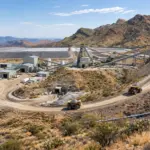
Crushing and processing equipment at a hard-rock lithium development in Ghana.
Why the Huayou deal matters for African lithium
Huayou’s proposed acquisition reflects the growing role of Chinese companies in securing upstream supplies of lithium and other energy-transition metals.
Huayou operates across lithium, nickel and cobalt mining, refining and battery-materials manufacturing. The company acquired Zimbabwe’s Arcadia Lithium Project for about $422 million in 2022, and the associated lithium sulfate operation entered trial production in early 2026, according to Atlantic Lithium’s transaction materials.
The Ewoyaa deal would extend that strategy to Ghana, a country better known for gold but now seeking a position in the critical-minerals supply chain. For Huayou, Ewoyaa would provide additional hard-rock lithium exposure in a region where the company already has experience with African project development.
For Ghana, the transaction could bring a well-capitalized strategic owner to a project that Atlantic Lithium has described as capable of becoming the country’s first lithium-producing mine. The potential benefits include mine construction, processing jobs, infrastructure investment, government revenue and a new export commodity.
The risks are equally concrete. Lithium prices remain cyclical, project construction can face cost and schedule overruns, and the final development plan will depend on financing, engineering and permitting decisions made after the ownership transition. Ghana will also need to manage expectations around domestic value addition, environmental oversight and benefits for host communities.
Skillings’ coverage of the lithium supply outlook and the wider critical-minerals supply chain provides additional context for the market and geopolitical forces shaping projects such as Ewoyaa.
Timeline now moves toward shareholder approval
Atlantic Lithium expects to submit the scheme booklet for regulatory review and distribute it to shareholders in October. The first court hearing is also expected in October, followed by the shareholder meeting in November.
If shareholders approve the scheme and the remaining conditions are satisfied, the second court hearing, effective date and implementation are expected in December. The timetable remains indicative and could change if court availability, regulatory reviews or other conditions cause delays.
Until then, the proposed takeover remains an agreement awaiting clearances rather than a completed acquisition. For Ghana, the outcome will help determine whether Ewoyaa advances under a Chinese battery-materials group and how the country’s first lithium project is integrated into a global critical-minerals supply chain.