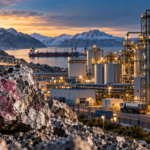
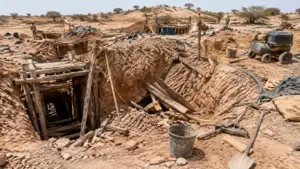
Lithium brine operations and pumping infrastructure on an Argentine high-altitude salar.

Glencore and InfraVia Capital Partners have emerged as potential buyers of a stake in Eramet’s Argentine lithium assets, Bloomberg reported, as strategic investors and infrastructure funds look for exposure to battery materials at a time when project funding remains difficult and lithium dealmaking is becoming more selective.
The discussions are preliminary, according to people familiar with the matter cited by Bloomberg, and there is no certainty that either company will reach an agreement with Eramet. The size of any potential stake, valuation, transaction structure and timetable have not been publicly disclosed.
The reported interest puts Eramet’s Argentine operations at the centre of a wider contest for lithium assets with existing infrastructure, production potential and expansion options. It also raises the possibility that Eramet could bring in a financial or strategic partner after spending heavily to regain full ownership of its lithium business.
What is being considered
Bloomberg reported that Glencore and InfraVia are among potential suitors examining a possible investment in Eramet’s Argentine lithium assets. The assets are associated with the Lithium Triangle, a major producing region spanning Argentina, Bolivia and Chile, and the reporting framed the interest around the Salar del Hombre Muerto region.
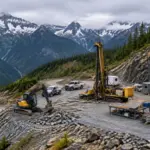
Eramet’s public materials identify its principal Argentine lithium holdings as the Centenario and Arizaro salars in Salta province. Its flagship operation is the Centenario-Ratones project, which uses direct lithium extraction, or DLE, technology to produce battery-grade lithium carbonate.

The distinction matters. Argentina’s high-altitude salars are often discussed collectively because of their proximity and importance to regional lithium supply, but each project has separate concessions, infrastructure, operating conditions and ownership structures.
Reported interest in Eramet’s Argentine lithium assets
| Item | Reported or publicly disclosed detail | Status |
|---|---|---|
| Potential suitors | Glencore and InfraVia Capital Partners | Reported by Bloomberg; not confirmed by the companies |
| Seller | Eramet | Publicly owns the Argentine lithium business; possible stake process remains unconfirmed |
| Region | Argentine Lithium Triangle, with reporting linked to the Salar del Hombre Muerto area | Geographic context reported; Eramet identifies Centenario and Arizaro salars in its public materials |
| Core operating asset | Centenario-Ratones lithium project | Publicly disclosed by Eramet |
| Existing ownership | Eramet owns 100% of Eramine Sudamerica after buying Tsingshan’s 49.9% interest | Confirmed by Eramet |
| Buyout value | $699 million net cash impact on Eramet’s net debt | Confirmed by Eramet in October 2024 |
| Initial production capacity | 24,000 tonnes per year of lithium carbonate equivalent | Confirmed by Eramet |
| Longer-term potential | More than 75,000 tonnes per year of lithium carbonate equivalent | Eramet estimate; expansion timing and scope remain subject to review |
| Possible transaction terms | Stake size, valuation, governance rights and funding commitments | Not publicly disclosed |
Sources: Bloomberg reporting; Eramet.
Why Eramet may consider a partner
Eramet took full control of its Argentine lithium business in October 2024, buying Tsingshan’s 49.9% interest in Eramine Sudamerica for a net cash impact of $699 million. The French mining company said the transaction was funded from available group liquidity.
The buyout gave Eramet full control over the Centenario project and its future expansion. It also left the company carrying the capital requirements and execution risks associated with ramping up a new lithium operation during a period of volatile prices and changing expectations for electric-vehicle demand.
A minority stake sale could provide several benefits. It could return part of the capital committed to the project, help fund additional processing capacity and reduce Eramet’s exposure to construction and ramp-up costs without giving up control. Depending on the structure, a new partner could also contribute offtake capacity, technical expertise, project financing or access to downstream customers.
The approach would not necessarily signal a change in Eramet’s strategic view of lithium. Instead, it could reflect a more flexible capital-allocation strategy: retain operational control while sharing some of the funding burden for a large resource with long-term expansion potential.
Eramet has described Centenario as a tier-one lithium asset. Its public disclosures cite more than 15 million tonnes of drainable lithium carbonate equivalent resources and an average lithium concentration of 407 milligrams per litre in the brine. The first plant has a nameplate capacity of 24,000 tonnes of lithium carbonate equivalent per year, with potential to expand beyond 75,000 tonnes per year.

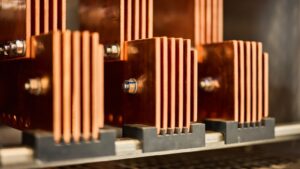
Direct lithium extraction equipment and process infrastructure.
Why Glencore and InfraVia are interested
For Glencore, an investment would extend its presence in battery materials beyond trading, marketing and project finance. The company has built a broad commodities platform covering copper, nickel, cobalt, zinc and other materials used in energy and industrial supply chains. Lithium would add another strategic battery metal, although the company would need to assess the project’s production profile, capital needs and exposure to lithium price volatility.
Glencore’s potential interest also comes against a backdrop of increasing competition for assets that can deliver future supply rather than only exploration upside. A producing or near-production lithium operation can offer a clearer path to revenue, but it still carries risks associated with commissioning, process performance, water management, permitting and product quality.
InfraVia brings a different profile. The French investment firm launched a critical metals strategy focused on extraction, processing and recycling assets considered important to Europe’s industrial and energy-transition objectives.
In March, InfraVia announced a $50 million investment in Core Lithium through a convertible note. That investment formed part of a $205 million funding package involving Glencore, Nebari and institutional investors to support the Finniss lithium project in Australia. InfraVia said the strategy was seeded by the French state under the France 2030 program alongside private institutional capital.
The Core Lithium transaction provides evidence of InfraVia’s willingness to support lithium project development, although it does not establish that the firm has agreed to participate in an Eramet transaction. It also creates a potential strategic connection between InfraVia and Glencore in lithium finance, while leaving open whether the two would pursue Eramet together or separately.
A competitive market for lithium deals
Lithium dealmaking has become more dependent on asset quality and financing structure as producers and investors adjust to price volatility. Projects with strong resources but high capital requirements have faced greater scrutiny, while assets with existing plants, proven extraction technology and expansion infrastructure have attracted strategic attention.
Centenario offers some of the features buyers have been seeking. The operation has an industrial-scale DLE plant, established project development work and a resource base that could support expansion. Eramet has said the facility is highly automated and designed to produce battery-grade lithium carbonate.
DLE could also make the project strategically relevant. Unlike conventional evaporation-based production, DLE is designed to selectively extract lithium from brine before reinjecting or otherwise managing the remaining fluids. Commercial performance depends on the specific brine chemistry, recovery rates, reagent use, water management and operating costs. The technology remains an important part of the project’s investment case, but also a key area for diligence during ramp-up.
The competitive question is whether potential buyers value Centenario primarily as a near-term production asset or as a platform for larger-scale growth. That distinction could influence the price Eramet seeks, the size of any stake and the governance rights offered to a partner.

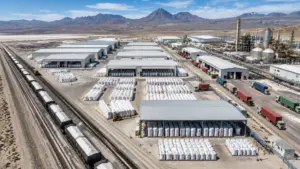
Brine pipelines and pumping infrastructure across an Argentine salt flat.
What remains unconfirmed
The reported discussions do not establish that Eramet has selected a preferred bidder or that a formal sale process has reached an advanced stage.
Several central questions remain open:
- Whether Eramet is seeking a minority partner, a larger strategic investor or project-level financing.
- The percentage of the business that could be offered.
- Whether the transaction would include offtake rights or marketing arrangements.
- How a new partner would share future expansion costs.
- Whether Glencore and InfraVia are acting independently or coordinating their interest.
- How any deal would affect Eramet’s control, consolidated financial reporting and capital-allocation plans.
- Whether other mining companies, battery-materials producers or infrastructure funds are considering bids.
Eramet’s latest public materials should remain the reference point for the project’s operating status, ownership and development plans until the company confirms otherwise. The company’s 2026 half-year results presentation and its earlier Centenario-Ratones project materials provide the disclosed baseline for production capacity, resource potential and project strategy.
Why the potential deal matters
A transaction would be significant beyond the ownership of one Argentine lithium project. It would test whether strategic investors are willing to commit capital to new lithium supply after a period of price pressure, and whether project developers can use partnerships to balance growth ambitions with balance-sheet discipline.
For Eramet, a stake sale could unlock capital while preserving control over a resource it has described as central to its lithium strategy. For Glencore, it could offer a route into lithium production linked to an existing operation. For InfraVia, it could deepen a critical-metals portfolio built around supply security and energy-transition materials.
But the outcome will depend on more than the quality of the resource. The eventual valuation will need to reflect commissioning performance, expansion costs, lithium prices, Argentina’s regulatory environment, infrastructure requirements and the technical track record of the DLE process.
For now, the reported interest is best understood as an early signal of competition for advanced lithium assets in Argentina; not as a completed transaction.

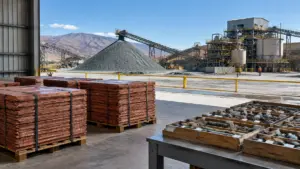
Operators monitor lithium processing systems from a control room.
Sources: Bloomberg; Eramet ownership announcement; Eramet Centenario-Ratones project presentation; InfraVia critical metals investment in Core Lithium.