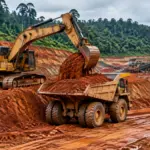
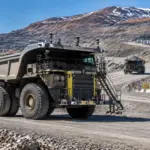
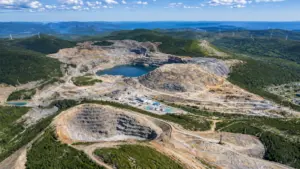
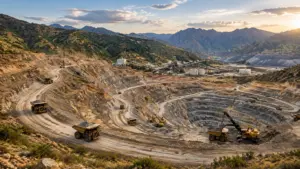
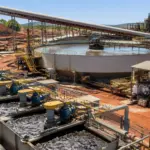
Copper heap-leach pads, solution ponds and processing infrastructure in the Arizona desert.

By Charles Pitts
Freeport-McMoRan is weighing a roughly $4.5 billion expansion of its Bagdad copper mine in Arizona as it scales a leaching technology aimed at recovering additional metal from existing stockpiles.
The company’s board has not made a final investment decision on Bagdad, but Freeport expects a decision before the end of 2026, according to a presentation at Morgan Stanley’s 14th Annual Laguna Conference and related coverage. If approved, the project would make Bagdad the second-largest copper mine in the United States.
Freeport is also targeting a substantial increase in copper recovered through leaching. Current output from the technology is about 200 million pounds per year, with a target of 300 million pounds by year-end 2026 and a longer-term goal of about 800 million pounds annually.
The plans come as the copper market faces a tightening mine-supply outlook. LME copper reached a reported record of $5.45 per pound, or about $14,231 per tonne, on Sept. 16, while global mine production fell 1.1% in the first half of 2026, according to data cited in market coverage. Morgan Stanley expects the industry to record its first annual decline in mine supply since 2017.

Freeport targets more copper from existing material
Freeport is scaling its proprietary leaching technology to recover copper from roughly 40 billion pounds of above-ground stockpiles. The approach is intended to improve recovery from material that has already been mined and accumulated at operating sites.
The company is testing new additives and heated-solution applications to increase copper recovery. Unlike a conventional greenfield mine, which requires extensive development, new infrastructure and years of permitting, leaching can use existing stockpiles, processing systems and site infrastructure.
More Read
That makes the technology a potentially lower-capital route to incremental copper production in the United States. It also offers a way to add supply without waiting for a new mine to move through a permitting and construction process that can take a decade or longer.

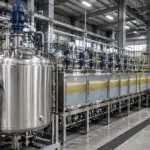
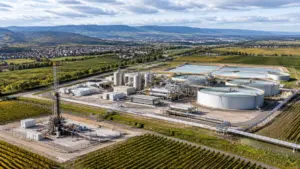
Solvent-extraction and electrowinning infrastructure used to process copper-bearing solutions.
Freeport’s targets represent a significant increase from its current leach output.
| Freeport leach and project metric | Status or target |
|---|---|
| Current leach copper production | Approximately 200 million pounds per year |
| Year-end 2026 leach target | Approximately 300 million pounds per year |
| Long-term leach target | Approximately 800 million pounds per year |
| Above-ground stockpile opportunity | Roughly 40 billion pounds of copper |
| Grasberg capacity | About 65% in the second half of 2026; return to full capacity planned by the end of 2027 |
| Bagdad expansion | About $4.5 billion; final investment decision expected before the end of 2026 |
The figures were presented as part of Freeport’s broader growth strategy, which combines technology-led production increases with larger mine-development projects.
Bagdad would be the largest U.S. copper growth project
The proposed Bagdad expansion would build on an existing mine and processing complex in western Arizona. Freeport already operates Bagdad as part of its U.S. copper portfolio, which also includes Morenci, Safford, Sierrita and Miami in Arizona, as well as Chino and Tyrone in New Mexico.
Freeport’s North American operations include established concentrator, leaching and electrowinning infrastructure. That operating base is important because it can reduce the amount of new infrastructure required compared with a standalone greenfield development.
The company has not yet committed the full project capital. The board’s pending decision will depend on final engineering, economic analysis, market conditions and the expected returns from expanding Bagdad’s production capacity.
If sanctioned, construction would still require several years. The project would therefore add to U.S. copper supply over the medium term rather than resolve near-term market tightness.
Bagdad’s significance extends beyond its production profile. It would be the largest U.S. copper growth project currently under consideration by Freeport and would increase domestic exposure to a metal that is central to power grids, electrification, industrial equipment and data-center infrastructure.
The expansion also illustrates the distinction between brownfield and greenfield growth. Brownfield projects can benefit from existing roads, power systems, processing facilities, water infrastructure and local operating expertise. However, they remain exposed to construction costs, permitting requirements, labor availability and the technical risk of integrating new capacity with an operating mine.
Grasberg remains a swing factor for global supply
Freeport’s growth plans also depend on the recovery of Grasberg in Indonesia, one of the world’s major copper and gold operations.
The Grasberg operation is running at about 65% of capacity in the second half of 2026 after a mud rush disruption. Freeport expects the mine to return to full capacity by the end of 2027.
The ramp-up is important for the global concentrate market. Grasberg’s return would provide additional copper units to smelters, but the timing and pace of the recovery will influence the balance between mine supply and processing capacity.
A slower ramp could prolong concentrate tightness and keep pressure on smelter treatment charges. A faster recovery would improve availability and could moderate some of the supply pressure currently reflected in copper pricing and concentrate markets.
The operation’s recovery is also relevant to Freeport’s own production profile. Grasberg provides a substantial portion of the company’s copper and gold output, making the ramp a central factor in its medium-term growth expectations.
Supply declines raise the value of incremental production
Morgan Stanley’s expectation of the first annual decline in global mine supply since 2017 reflects a wider set of problems facing the copper industry. Ore grades are declining at mature operations, major projects continue to face delays, and new mines remain difficult to permit and build.
Chile, the world’s largest copper producer, has cut its production guidance twice and forecasts a 2.6% decline. The country’s difficulties underline the challenge of maintaining output even in established mining jurisdictions with large resources and extensive industry infrastructure.
Global mine production fell 1.1% in the first half of 2026, according to market data cited in related coverage. While short-term disruptions can reverse, the supply outlook has become more dependent on expansions, brownfield projects, recovery improvements and technology initiatives.
Freeport’s leach strategy addresses that problem by targeting copper already present in stockpiles. The opportunity is not risk-free: recovery rates, reagent performance, solution temperatures, water management and operating costs will determine how much of the theoretical resource can be converted into commercial production.
Still, the model could be attractive because it does not rely entirely on a new open-pit mine or a new concentrator. Incremental improvements at existing sites can provide production faster and with less capital intensity than a greenfield project.
Copper prices reflect a narrow supply cushion
Copper’s record price on Sept. 16 provided a strong market backdrop for Freeport’s presentation. The rally has been supported by concerns over mine disruptions, declining production guidance and long-term demand from electrification and grid investment.
However, high prices do not automatically guarantee new supply. Mining projects require years of permitting, engineering, construction and commissioning. Capital costs can also rise during development, particularly when demand for skilled labor, equipment and construction services increases across the industry.
That gap between price signals and physical supply response is why leaching and brownfield expansions have attracted greater attention. They can potentially deliver additional pounds without the full timeline of a new mine.
Freeport’s planned leach increase from 200 million to 300 million pounds per year would add a meaningful volume in the short term. The longer-term 800-million-pound target would be more significant, although reaching it will depend on the performance of the proprietary additives and heated-solution applications as they are deployed across the company’s operations.
For the wider market, the key question is how much of the 40-billion-pound stockpile opportunity can be recovered economically and at what pace.

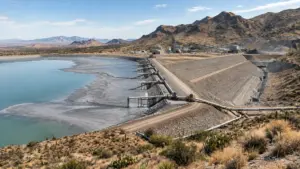
Heap-leach pads and solution ponds form the surface infrastructure for copper recovery.
Execution will determine the growth profile
Freeport’s plans contain three separate timelines.
The leach initiative could increase output during the current operating cycle, with the company targeting 300 million pounds by the end of 2026. The Bagdad expansion would require a board decision and several years of construction before reaching full production. Grasberg’s recovery is expected to continue through the end of 2027.
Together, those projects give Freeport multiple potential sources of growth, but each carries different risks.
Leaching depends on technology performance and recovery economics. Bagdad depends on capital approval, engineering and construction execution. Grasberg depends on the safe and reliable recovery of underground production after the mud rush disruption.
The company’s conference presentation listing places the announcements within a broader strategy of expanding copper production while using innovation to lower capital intensity.
For copper consumers and policymakers, the developments illustrate how difficult it is to add new supply quickly. For operators, they show the importance of extracting more metal from existing assets. For market participants, the combination of leach growth, Bagdad’s pending decision and Grasberg’s ramp creates a set of production milestones to monitor as the copper market adjusts to a weaker mine-supply outlook.
Related analysis from Skillings includes coverage of the copper price outlook and smelter treatment charges and the wider copper market, M&A and supply-chain outlook.