Vulcan Energy’s Lionheart project is designed to combine geothermal energy production with lithium extraction in Germany.

By Penny Langford
Vulcan Energy’s second lithium production licence for its Lionheart project in Germany has strengthened the regulatory foundation of one of Europe’s most closely watched domestic battery-material developments.
The new Ilka licence covers part of Vulcan’s Landau geothermal production area in Rhineland-Palatinate. It follows the earlier LiThermEx licence for the Insheim area and supports Vulcan’s target of beginning commercial lithium production in 2028.
The milestone matters beyond Vulcan. Europe remains heavily dependent on imported lithium chemicals and Chinese processing capacity, while its battery manufacturers are seeking more secure, traceable and lower-carbon supply. If Lionheart reaches its planned scale, it will not eliminate that dependence, but it could provide a meaningful local source of lithium hydroxide for European cathode and battery producers.

A second licence reduces a critical project risk
The Ilka licence is valid for six years, until September 2032. Vulcan plans to combine it with the LiThermEx licence into a single production licence with a minimum 30-year duration aligned with the Lionheart field development plan.

That distinction is important for project finance and operating continuity. A lithium resource may be large, but a commercial development also requires the legal right to extract, process and sell the product over a period long enough to support billions of euros in infrastructure investment.
Vulcan Managing Director and CEO Cris Moreno said construction remains on track toward targeted first production in 2028, according to Mining Weekly’s report on the licence.
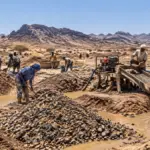
The project’s first phase is designed to produce:
- 24,000 tonnes per year of lithium hydroxide monohydrate (LHM)
- Enough lithium for approximately 500,000 electric vehicles annually
- Around 275 GWh of renewable electricity per year
- Around 560 GWh of renewable heat per year
- An estimated 30-year operating life
The European Investment Bank has described Lionheart as a roughly €2 billion integrated lithium and geothermal energy project. The EIB has committed €250 million in financing, alongside commercial lenders, export credit agencies, public grants and strategic equity support.
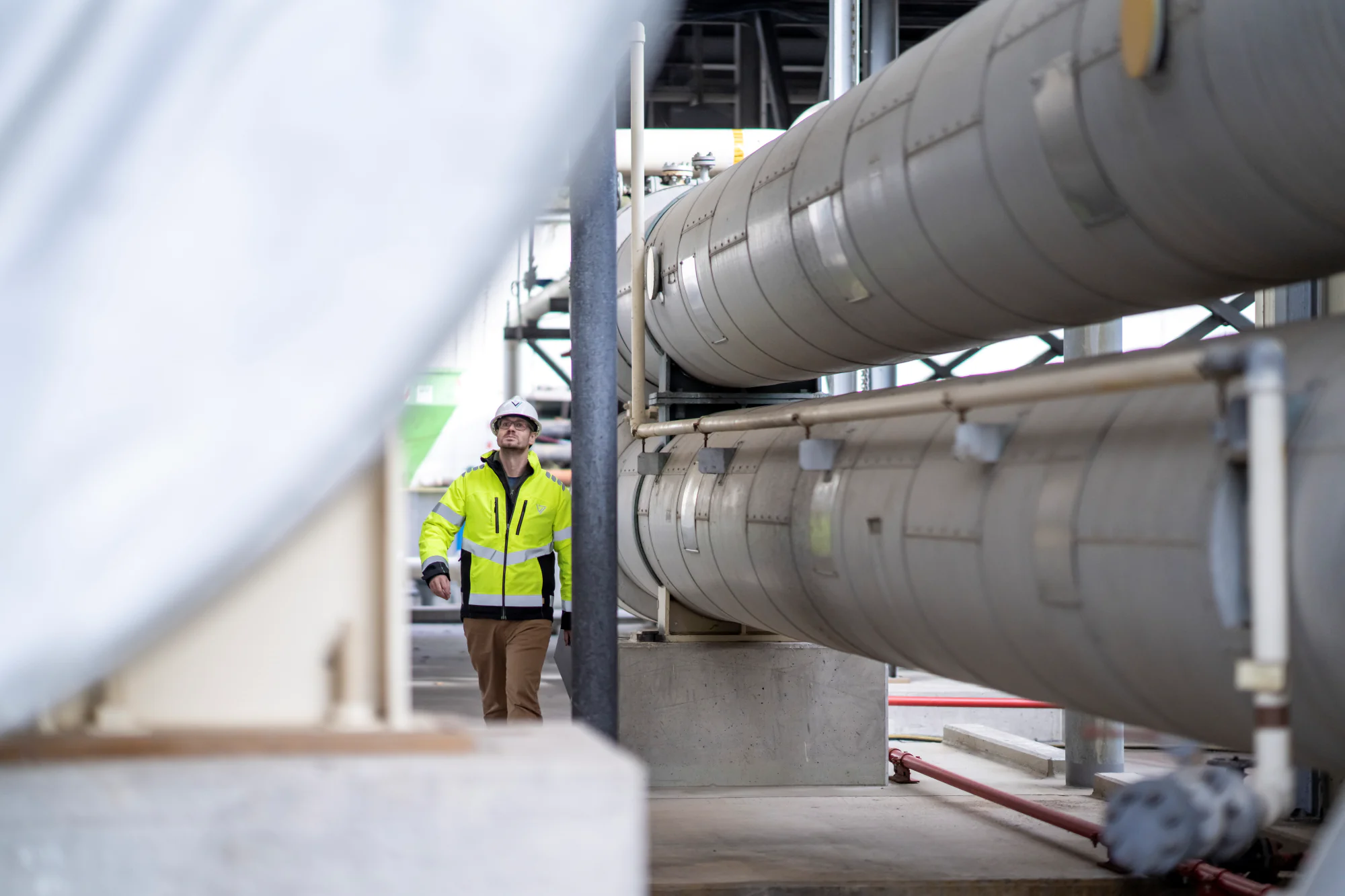
Lionheart’s model integrates geothermal heat, lithium extraction and downstream chemical processing.
How geothermal brine DLE works
Lionheart is not a conventional open-pit lithium mine or a solar-evaporation operation. Its feedstock is naturally heated, lithium-bearing geothermal brine circulating deep beneath the Upper Rhine Valley.
The process is designed around several connected stages:
- Production wells bring hot brine to the surface.
- The heat is transferred into industrial water systems for renewable electricity generation and district heating.
- Vulcan’s VULSORB adsorbent is used in an adsorption-type direct lithium extraction process.
- Lithium is separated from the brine to produce a lithium chloride intermediate.
- The lithium chloride is transported to the Central Lithium Plant at Frankfurt-Höchst.
- Electrolysis converts the intermediate into battery-grade lithium hydroxide monohydrate.
- The lithium-depleted brine is reinjected into the subsurface reservoir.
Vulcan details the process on its Lionheart project page, which describes the system as a closed-loop operation. The company’s optimisation plants have already been used to test lithium chloride production and downstream conversion before commercial-scale facilities are commissioned.
The appeal of direct lithium extraction is speed and footprint. Unlike evaporation ponds, DLE does not require large surface basins or months of solar concentration. Unlike hard-rock mining, it does not depend on blasting, crushing and roasting ore. Those advantages could reduce land disturbance and shorten the path from brine to chemical product.
They do not remove technical risk. DLE performance depends on brine chemistry, adsorbent durability, flow rates, impurity control, reinjection performance and the ability to maintain stable operation at commercial scale. A process that works in a pilot plant must still prove its reliability across thousands of operating hours and changing reservoir conditions.
Europe’s supply-chain problem is concentrated in processing
Europe’s lithium vulnerability is not limited to a shortage of geological resources. The larger weakness is the limited scale of domestic conversion and refining.
The region has lithium-bearing deposits in Portugal, Spain, Finland, France, Austria and the Czech Republic. Several projects, however, face long permitting timelines, local opposition, infrastructure constraints or uncertain economics. Even when a mine is developed, Europe still needs chemical conversion capacity to turn raw material into battery-grade carbonate or hydroxide.
Research from the European Investment Bank says Lionheart could supply approximately 12% of Europe’s projected lithium hydroxide demand in 2030. That estimate illustrates the project’s strategic importance, but it also shows its limits: one development cannot close the region’s entire import gap.
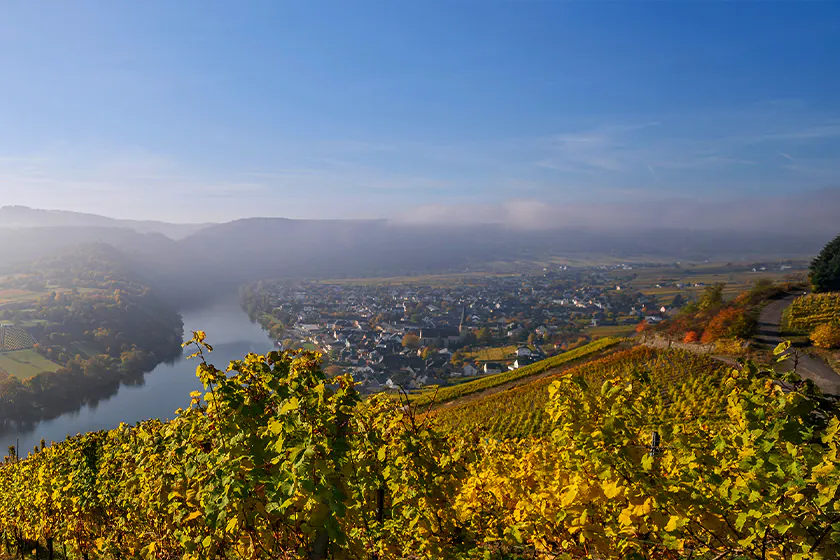
The Upper Rhine Valley combines geothermal resources with established industrial, transport and energy infrastructure.
China remains central to global lithium conversion and battery-material production. Europe can diversify its supply chain by developing mines, DLE projects, chemical plants and recycling capacity, but those assets must operate competitively. Strategic value alone will not protect projects from cost inflation, weak prices or commissioning delays.
That is why Lionheart’s integrated design is significant. The project is intended to earn revenue from lithium while also producing renewable heat and power. The energy co-products could improve local acceptance and help offset operating costs, although their contribution will depend on energy prices, offtake agreements and plant availability.
Lionheart data points for operators and investors
| Metric | Published figure | Why it matters |
|---|---|---|
| Lionheart Phase One LHM capacity | 24,000 tonnes per year | Defines the project’s initial commercial scale |
| Planned production start | 2028 | Sets the timing for Europe’s potential new domestic supply |
| EV battery equivalent | About 500,000 vehicles per year | Shows the project’s intended downstream relevance |
| Renewable electricity output | 275 GWh per year | Provides a power co-product from the geothermal system |
| Renewable heat output | 560 GWh per year | Connects lithium production with local district heating |
| Planned project life | About 30 years | Supports long-term financing and customer contracts |
| EIB financing | €250 million | Signals institutional support for European critical minerals |
| Total project investment | About €2 billion | Indicates the capital intensity of integrated DLE and refining |
| Ilka licence validity | Six years, to September 2032 | Creates the next licensing milestone before consolidation |
The figures above are based on Vulcan’s project information, the EIB financing announcement and reported licence details.
Lithium price forecast 2026: base, bull and bear cases
Lionheart is not expected to materially change Europe’s lithium balance before production begins. For 2026 and 2027, European buyers will remain exposed to global supply, Chinese conversion capacity, freight costs and the pace of new mine commissioning.
Published forecasts remain widely dispersed. Some analysts expect the market to move into deficit as electric-vehicle and energy-storage demand accelerates. Others see continued surplus conditions if Australian, Chinese and South American supply expands as planned.
The following framework is an analytical range for battery-grade lithium chemicals, not a company guidance figure or investment recommendation.
| Scenario | Indicative 2026 lithium chemical range | Main assumptions | Implication for Lionheart |
|---|---|---|---|
| Bear | US$13,000–18,000/t | Supply growth outpaces demand; project ramps continue; LFP and storage demand remain price-sensitive | Financing and margin assumptions face pressure; execution discipline becomes critical |
| Base | US$18,000–25,000/t | Demand growth absorbs much of new supply; Europe retains an import premium; hydroxide and carbonate remain volatile | Domestic, contracted supply remains strategically valuable even without extreme prices |
| Bull | US$26,000–32,000/t | Mine delays, stronger storage demand and limited conversion capacity create a deficit | Higher prices improve project economics but may accelerate competing supply |
Fastmarkets has reported expectations of a tighter lithium market, while BMI has maintained a more cautious surplus outlook. UBS has published a higher-price deficit case, whereas other market estimates have remained closer to the mid-teens.
The central issue for Europe is that a lower global price does not necessarily remove the value of local supply. European automakers and battery manufacturers may continue to pay for security of supply, shorter logistics chains, product qualification and reduced exposure to geopolitical restrictions.
What could still delay the scale-up?
The second production licence is an important milestone, but it does not eliminate Lionheart’s remaining execution risks.
The first is subsurface performance. Commercial output depends on well productivity, brine chemistry, reservoir management and successful reinjection. The second is DLE reliability. Adsorbent performance, scaling, impurities and operating continuity will determine whether pilot results translate into consistent production.
The third is downstream qualification. Battery-grade lithium hydroxide must meet strict chemical specifications, and customers typically require extended testing before accepting new material into commercial cathode production.
The fourth is construction and financing execution. A project of this scale involves geothermal wells, surface plants, pipelines, chemical-processing equipment and a central conversion facility. Delays in one part of the chain can affect the entire production schedule.
Finally, the project must maintain local support. Geothermal developments operate close to communities, farmland and industrial users. Monitoring seismicity, groundwater, noise, traffic and reinjection performance will remain important to the project’s long-term social licence.
Outlook: strategic supply before price-setting supply
Vulcan’s second Lionheart licence does not change Europe’s lithium supply balance overnight. It does, however, move the project further from resource concept toward a permitted, financed and under-construction development.
That distinction matters in a market where announced capacity often arrives years after the original target date. Lionheart’s progress gives European buyers a clearer path to locally produced lithium hydroxide, while its geothermal design links critical-mineral security with renewable power and heat.
For the 2026 lithium price forecast, the most defensible conclusion is a wide range rather than a single number. Prices could remain in the mid-teens if supply growth stays ahead of demand, or move into the high-teens and beyond if energy storage, electric vehicles and project delays tighten the market.
Lionheart will not determine that outcome. Its importance is different: it represents Europe’s attempt to build a lithium supply chain that is closer to its battery customers, less exposed to overseas processing bottlenecks and integrated with the region’s energy system.
The next test is whether Vulcan can convert its second licence and existing construction progress into reliable commercial production in 2028.
LinkedIn snippet
Europe’s lithium race is shifting from resource discovery to industrial execution. Vulcan Energy’s second production licence for the Lionheart project supports a planned 2028 start for 24,000 tonnes per year of lithium hydroxide, produced from geothermal brine using direct lithium extraction. The project could strengthen Europe’s battery supply chain, but well performance, DLE reliability, customer qualification and construction remain decisive risks.
X snippet
Vulcan Energy’s second Lionheart lithium licence strengthens Europe’s DLE supply-chain push. The Germany project targets 24,000 t/y of lithium hydroxide from 2028, alongside geothermal power and heat. The key risks now are scale-up, well performance, qualification and construction execution.