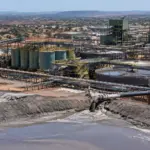
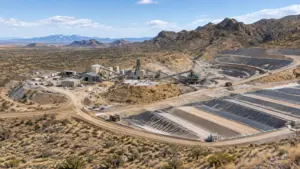
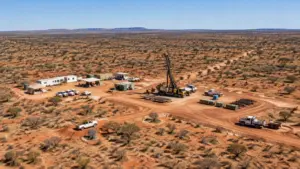
Ghana’s Ewoyaa project is designed as a conventional open-pit spodumene operation in the Central Region.

By Penny Langford
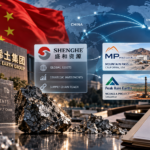
Zhejiang Huayou Cobalt’s proposed US$210 million takeover of Atlantic Lithium has cleared a major Australian regulatory hurdle, bringing Ghana’s first planned commercial lithium mine closer to a change in ownership, and potentially a faster route to construction.
Australia’s Foreign Investment Review Board has approved the transaction. Atlantic Lithium expects to issue its scheme booklet in October 2026, hold a shareholder vote in November and, subject to remaining approvals, implement the deal in December.
The transaction still requires shareholder, court and regulatory approvals in Ghana, China and the wider ECOWAS region. But the strategic message is already clear: a major Chinese battery-materials producer is prepared to pay for direct control of a West African spodumene asset at a time when the lithium industry is being reshaped by supply-chain security, refinery concentration and volatile prices.
Ewoyaa at a glance
| Key fact | Ewoyaa project detail |
|---|---|
| Buyer | Zhejiang Huayou Cobalt |
| Transaction value | About US$210 million |
| Project location | Central Region, Ghana |
| Resource | 36.8 million tonnes at 1.24% Li₂O |
| Probable ore reserve | 25.6 million tonnes at 1.22% Li₂O |
| Planned processing | 2.7 million tonnes of ore per year |
| Planned mine life | About 12 years |
| Spodumene production | Approximately 3.6 million tonnes over the life of mine |
| DFS C1 cash cost | US$377 per tonne of concentrate |
| DFS AISC | US$610 per tonne of concentrate |
| Initial development capital | About US$185 million |
| Scheme booklet | Expected October 2026 |
| Shareholder vote | Expected November 2026 |
| Target implementation | December 2026, subject to conditions |
The figures come primarily from Atlantic Lithium’s Ewoyaa project information and its Definitive Feasibility Study. They are study estimates, not operating results.

Why Huayou wants the project
Huayou is not simply buying a junior mining company. It is buying a potential source of hard-rock lithium concentrate that can feed a much larger battery-materials system.
The company is already active across the battery-materials chain, including cobalt, nickel, lithium conversion and precursor production. Ewoyaa would give it exposure to spodumene at the mine gate, reducing reliance on third-party concentrate purchases and adding geographic diversity outside Australia and South America.
That matters because the lithium supply chain is no longer judged only by resource size or grade. Buyers are also assessing:
- Who controls the mine?
- Who owns the conversion capacity?
- How reliable is the route to port?
- Can the project withstand lower prices?
- Which government has the authority to change royalties or export rules?
Ewoyaa is attractive on several of those measures. The project is approximately 100 kilometres from Accra and about 110 kilometres from Takoradi port. It has access to the N1 highway and nearby grid infrastructure, while its proposed flowsheet uses conventional crushing and dense media separation rather than a more complex chemical process.
That relatively simple design is important. Atlantic Lithium’s DFS describes a low-capital-intensity operation producing SC6 and SC5.5 spodumene concentrate. The study also estimates more than 800 direct jobs and a 19-month payback period under its assumptions.
The transaction therefore gives Huayou three potential advantages: feedstock security, operating control and an opportunity to apply its process and construction expertise to a project that has already completed feasibility work.

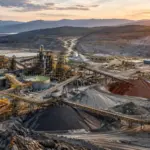
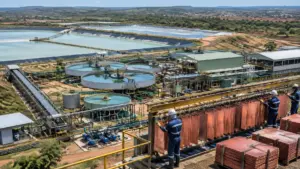
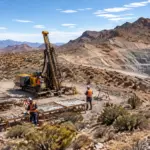
Ewoyaa’s proposed processing route uses conventional crushing and dense media separation.
What the takeover means for Ghana
For Ghana, Ewoyaa is more than another mine. It is the first major test of the country’s attempt to capture a larger share of the value created by critical minerals.
Parliament ratified the project’s mining lease in March 2026, making it the first lithium lease formally ratified in Ghana. The project sits within the country’s Green Minerals Policy, which seeks higher state participation, stronger local-content rules and domestic value addition.
The policy framework has included a 13% free-carried state interest, a further 6% stake through the Minerals Income Investment Fund and a broader ambition for at least 30% Ghanaian participation. Royalty terms have also moved toward a price-linked regime that can range from lower rates at weaker prices to as much as 12% when prices rise.
That structure could deliver significant fiscal benefits. The Natural Resource Governance Institute previously estimated an effective tax rate of about 58% under an earlier version of the project’s fiscal regime, excluding paid state equity.
But the same terms create a balancing act. High royalties, community obligations, a refinery requirement and local ownership targets may improve Ghana’s share of the upside while increasing the project’s operating and financing complexity.
The critical question is whether value addition will be built at a commercially competitive scale. A refinery in Ghana could create more jobs, technical capability and export value than concentrate shipments alone. It could also introduce additional capital requirements, power needs, chemical-supply risks and permitting timelines.
The takeover may help address that problem. Huayou has experience in chemical conversion and is better positioned than a small exploration developer to connect Ghanaian concentrate to an integrated battery-materials chain.
The outcome for Ghana will depend less on the headline purchase price than on what follows: construction spending, local procurement, tax receipts, refinery investment and the transparency of community-benefit arrangements.
Africa’s cost position against Australia and Brazil
Africa is not a single cost region. Its lithium projects range from potentially competitive hard-rock operations to higher-cost projects constrained by weak roads, limited power or small scale.
Australia’s Greenbushes remains widely regarded as the benchmark for low-cost spodumene because of its high-grade ore, established infrastructure and integration with downstream converters. Brazil also has a strong position. Research cited by Argus indicates that some Brazilian operations sit below most African producers on the cost curve, supported by favorable geology and integrated logistics.
Ewoyaa’s reported DFS costs are competitive, but comparisons must be treated carefully. Its US$377 per tonne C1 cost is a project-study figure after by-product credits and on an FOB Ghana basis. Broader African delivered-cost estimates, including mining, concentration, inland transport and shipping to China, are often placed around US$350–550 per tonne by IndexBox.
Those are not identical measures. The relevant conclusion is narrower: Ewoyaa appears designed to operate in the competitive half of the hard-rock market, but it is unlikely to displace the very lowest-cost Australian or Brazilian tonnes solely on mining cost.
Its advantage may instead come from the combination of cost, location and strategic ownership. A coastal Ghanaian project with grid power, highway access and a short route to Takoradi can compete more effectively than a mine with similar geology but higher inland logistics costs.
The main risks are familiar: construction inflation, recovery performance, rainfall, land access, resettlement, power reliability and the gap between laboratory metallurgy and commercial plant performance.

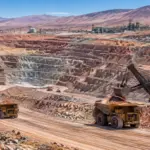
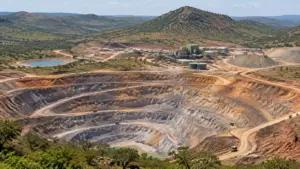
Project economics will depend on reliable road, port and power connections as much as on the orebody.
Lithium price forecast 2026: a volatile path through 2027
The lithium market has moved rapidly from oversupply fears to renewed price volatility. Published market estimates cited in industry research place battery-grade lithium carbonate in a wide range, from below US$12,000 per tonne in a prolonged surplus to US$25,000–30,000 in a stronger recovery.
For project developers, spodumene concentrate is often the more important benchmark. A balanced-market range of roughly US$800–1,200 per tonne for SC6 appears reasonable as a working base case, although contract structures, grade, freight and conversion economics can create large differences.
Lithium market scenarios
| Scenario | Battery-grade lithium carbonate | SC6 spodumene | What it means for Ewoyaa |
|---|---|---|---|
| Bear case | Below US$12,000/t | Below US$600/t | Higher-cost projects defer construction; Ewoyaa’s cost discipline becomes essential |
| Base case | US$15,000–20,000/t | US$800–1,200/t | Low-cost projects remain financeable while margins normalize |
| Bull case | US$25,000–30,000/t | Above US$1,500/t | Strong cash generation, faster expansion and greater competition for assets |
The bear case would be driven by faster-than-expected Australian, Brazilian and African supply, slower electric-vehicle growth or weaker battery-storage demand. The bull case would require demand to absorb new supply more quickly than producers can add capacity.
The most likely path through 2027 is not a smooth trend. It is a market that alternates between inventory-driven rallies and supply-driven corrections. That makes the lithium price outlook particularly important for Ewoyaa, because the project’s value is highly sensitive to concentrate prices.
The blunt investor take
The Cramer-style read is straightforward: US$210 million buys Huayou control of a permitted, feasibility-stage lithium asset with a reported low cost and a short route to port, but it does not buy a risk-free mine.
The attractive part is the asymmetry. Ewoyaa has a defined resource, a conventional process route, a modest DFS capital estimate and a strategic owner with experience in battery materials. The less attractive part is that the DFS was prepared under earlier market and fiscal assumptions, while Ghana’s royalty, value-addition and ownership requirements continue to evolve.
For investors tracking mining M&A deals in 2026, the transaction is a useful signal: strategic buyers are willing to acquire development-stage lithium projects even after a severe price downturn, but they are selecting assets with infrastructure, scale and downstream relevance.
For Ghana, the takeover could unlock construction capital and technical capability. For Huayou, it could secure a new feedstock position. For the wider critical minerals supply chain in 2026, it shows why control of the mine-to-chemical pathway is becoming as important as resource ownership.
The deal’s real test will not be the December closing. It will be whether Ewoyaa can turn a strong feasibility case into consistent concentrate production while delivering the local economic benefits Ghana has attached to its first lithium mine.
Social snippet
LinkedIn: Ghana’s first planned lithium mine is moving closer to a change in ownership. Huayou Cobalt’s US$210 million takeover of Atlantic Lithium has cleared FIRB, with a shareholder vote expected in November and implementation targeted for December. The deal highlights the growing value of low-cost, infrastructure-linked spodumene assets, and Ghana’s attempt to capture more of the critical-minerals value chain.
X: Huayou Cobalt’s US$210M takeover of Atlantic Lithium puts Ghana’s Ewoyaa lithium project at the center of the 2026 battery-materials M&A market. The project’s cost position, Ghana’s value-addition rules and lithium’s 2027 price path will determine what the deal ultimately unlocks.