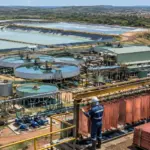
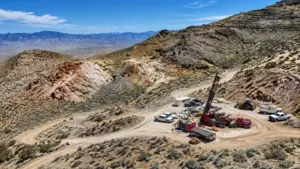
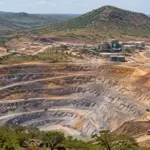
Representative view of a copper-palladium processing complex under construction in Northwestern Ontario.

By Mo Shine
Generation Mining has agreed to a term sheet with the Government of Ontario for a loan of up to C$11 million to support construction of the processing facility at its Marathon copper-palladium project in Northwestern Ontario.
The proposed funding would come through Ontario’s Critical Minerals Processing Fund, administered by Invest Ontario. The facility is expected to form the core of a C$410 million processing complex designed to treat ore from the 100%-owned Marathon project.
The agreement remains subject to final documentation and customary conditions. It does not, by itself, represent a completed funding draw.
The provincial support adds another public-sector commitment to Generation Mining’s broader financing package and strengthens the project’s position as Ontario seeks to keep more mined material within the province for processing and refining.

Loan tied to eligible project costs and employment
The C$11 million loan is structured around a percentage of eligible project expenditures and minimum employment requirements at the Marathon site, according to the terms outlined for the provincial support.
Eligible costs for the processing facility, related infrastructure and other qualifying expenditures are estimated at approximately C$410 million. Those costs are part of the Marathon project’s total estimated capital requirement of about C$992 million, based on the company’s updated feasibility work.
Ontario described the facility as the first recipient of its C$500 million Critical Minerals Processing Fund. The province said the project is expected to support more than 800 construction jobs and create more than 450 permanent jobs once fully operational.
Marathon funding and project figures
| Item | Detail |
|---|---|
| Ontario loan term sheet | Up to C$11 million |
| Eligible processing and related costs | Approximately C$410 million |
| Total Marathon project capital cost | Approximately C$992 million |
| Construction employment | More than 800 jobs |
| Expected permanent employment | More than 450 jobs |
| Planned mine life | Approximately 13 years |
| Estimated payable copper production | 532 million pounds |
| Estimated payable palladium production | 2.161 million ounces |
The loan is relatively small compared with the project’s total capital requirement, but it is targeted at the processing component that gives Marathon its strategic relevance to Ontario’s critical-minerals policy.
What the loan unlocks for Marathon
The provincial term sheet helps Generation Mining fund construction of the processing infrastructure needed to convert Marathon ore into a polymetallic concentrate containing copper, palladium, platinum, gold and silver.
That infrastructure is important because the project is not simply an open-pit mine. Its economics and supply-chain case depend on the ability to process ore and produce a saleable concentrate that can enter established Canadian smelting and refining networks.
Generation Mining has said the Marathon project is expected to produce approximately 532 million pounds of copper and 2.161 million ounces of palladium over its projected 13-year mine life. The feasibility study also estimates payable production of platinum, gold and silver.
The company has separately announced an agreement with Glencore for the purchase of Marathon’s polymetallic copper concentrate. The concentrate is expected to support processing at Glencore Canada’s Horne smelter in Rouyn-Noranda, Quebec, followed by further refining through Glencore’s Canadian facilities.
That arrangement gives Marathon a potential domestic route to market, although it remains dependent on the project reaching construction completion and commercial production.

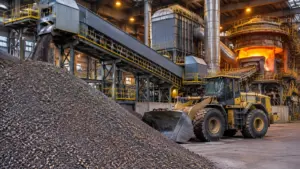
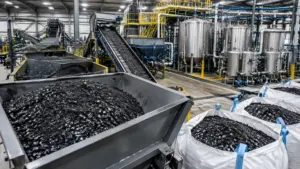
Representative mineral processing equipment for copper and palladium concentrate production.
Funding complements wider financing package
The Ontario loan term sheet follows a series of financing commitments announced by Generation Mining and its financial partners.
In September, the company announced approximately C$340 million in final funding for Marathon. That package included:
- C$200 million of bought-deal equity financing;
- C$40 million private placement backed by Canada Growth Fund; and
- C$100 million of subordinated unsecured convertible notes, split between Canada Growth Fund and Canada Infrastructure Bank.
The company has also disclosed senior project finance, subordinated debt, a metals-stream facility and equipment-leasing arrangements. Taken together, those commitments represent an approximately C$1.3 billion fully financed construction package, subject to closing conditions, regulatory approvals and final documentation.
Generation Mining said its board is expected to make a final investment decision after completion of the remaining financing arrangements. The company has targeted early works construction in the fourth quarter, subject to the required approvals and financing conditions.
The Ontario support therefore removes only one part of the project’s funding requirement. Generation Mining still faces the practical task of closing the financing package, coordinating contractors and managing construction costs, equipment delivery, commissioning and ramp-up.
Ontario signals support for in-province processing
The Marathon announcement is an important test of Ontario’s strategy to move beyond mining and support domestic processing capacity.
Ontario’s Critical Minerals Processing Fund was established to accelerate projects that add processing capacity and strengthen supply chains for minerals used in electrification, advanced manufacturing and defense technologies. The province has emphasized that minerals extracted in Ontario should increasingly be processed and refined in Ontario.
The policy comes as governments in Canada, the United States and Europe seek to reduce dependence on concentrated overseas processing networks. That concern is particularly relevant to the broader critical minerals supply chain in 2026, where mine supply may be geographically diverse while refining capacity remains concentrated in a smaller number of jurisdictions.
Marathon is not a lithium or rare-earth project, but its copper and palladium output fits the same policy framework. Copper is essential to power transmission, electric vehicles, data centers and grid infrastructure. Palladium has industrial and emissions-control applications, including in automotive technologies.
Ontario’s backing also provides a signal to project developers and lenders that processing facilities may receive policy support alongside mines. That distinction matters because midstream infrastructure often requires substantial capital before a project generates revenue.
The provincial government said the Marathon facility would help create an end-to-end Canadian supply chain. In practical terms, the project would still rely on established downstream infrastructure, including Glencore’s Quebec-based facilities, but the proposed arrangement would keep the mine, initial processing and much of the value chain within Canada.

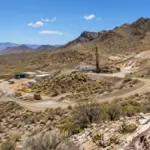
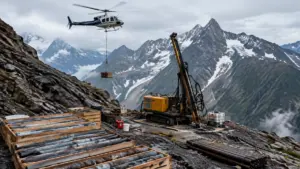
Representative early works construction at a Canadian critical-minerals project.
Key risks remain after the loan agreement
The term sheet reduces a portion of Marathon’s financing risk, but it does not remove the project’s principal execution risks.
The agreement is non-binding until definitive documentation is completed. Generation Mining must also satisfy the conditions attached to its broader debt, equity and convertible-note financings. Shareholder, stock exchange and other regulatory approvals may be required for parts of the funding package.
Construction risk is another concern. The project’s total capital requirement is nearly C$1 billion on a standalone basis, and large mining developments can face delays or cost increases related to labor, equipment, logistics, inflation and contractor performance.
Commodity exposure also remains significant. Marathon’s projected revenue depends on copper, palladium, platinum, gold and silver prices. A weaker copper price forecast for 2026 or a prolonged decline in palladium prices could affect project economics, financing flexibility and future cash flow.
The company’s feasibility study estimated a net present value of approximately C$1.07 billion, using a 6% discount rate, and an internal rate of return of 28%. Those figures are projections based on stated assumptions rather than operating results.
The next milestones include completion of Ontario’s loan documentation, closing of the remaining financing transactions, the final investment decision and the start of early works.
Investor take
The headline is not the size of the Ontario loan; it is the validation of the processing strategy.
C$11 million will not finance a C$992 million mine by itself. But it helps fund the part of Marathon that policymakers increasingly view as strategic: processing material close to the mine and connecting it to allied infrastructure. The project now has public backing, private capital and a potential Canadian offtake route.
The hard part begins next. Investors will be watching financing close, dilution, construction costs, project timing and the copper-palladium price mix. In short: the funding story is improving, but execution, not headlines, will determine whether Marathon becomes a producing critical-minerals asset.

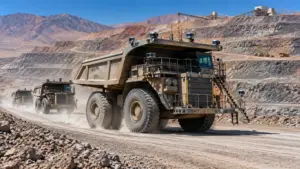
Representative concentrate transport infrastructure supporting a domestic minerals supply chain.
Social snippet
LinkedIn/X: Generation Mining has agreed a term sheet with Ontario for up to C$11 million to support construction of the Marathon copper-palladium processing facility. The loan adds provincial backing to a wider financing package and reinforces Ontario’s push to keep more critical-minerals processing in Canada. Read more
Sources: Government of Ontario, Generation Mining, Generation Mining Marathon project information, and Skillings’ earlier coverage of the Marathon financing package.