Botswana’s Kalahari Copper Belt is attracting further exploration capital as Sandfire expands its regional position.

By Sonny Rollins
Sandfire Resources has cleared the conditions required to acquire two copper prospecting licences in Botswana from Galileo Resources, moving a US$3 million transaction toward completion and adding another exploration position to the company’s Kalahari Copper Belt portfolio.
Galileo said all conditions precedent to the sale of its wholly owned subsidiary, Virgo Business Solutions (Pty) Ltd, have been met. Virgo owns prospecting licences PL039/2018 and PL040/2018 in Botswana.
The buyer is Metal Capital Exploration Ltd, a wholly owned subsidiary of Australia-listed Sandfire. Completion is expected around Sept. 30, with Sandfire acting as purchaser guarantor under the agreement.
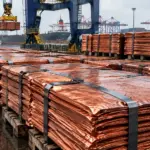
The transaction gives Sandfire control of two licences that remain at an early exploration stage but offer potential exposure to the same copper belt that hosts Sandfire’s Motheo operation and other major exploration projects.

What Sandfire is buying
The transaction is structured as a sale of Virgo rather than a direct transfer of the two licences. Galileo will receive an upfront consideration of US$3 million at completion.
That amount comprises:
| Transaction component | Amount |
|---|---|
| Sale of Virgo shares and repayment of related loans | US$1.5 million |
| Parent guarantee fee payable to Galileo | US$1.5 million |
| Total upfront consideration | US$3 million |
| Potential contingent success payment | US$20 million–US$80 million |
Galileo will also retain exposure to any significant discovery through a contingent success payment. The payment would become due if the first qualifying JORC-compliant ore reserve declared on the licences contains at least 400,000 tonnes of contained copper.
The payment would rise according to the size of that reserve:
| First qualifying ore reserve | Potential payment |
|---|---|
| At least 400,000 tonnes and below 600,000 tonnes of contained copper | US$20 million |
| At least 600,000 tonnes and below 750,000 tonnes | US$40 million |
| At least 750,000 tonnes | US$80 million |
The payment is not guaranteed. Galileo has said the licences currently have no defined mineral resource estimate, meaning the eventual value depends on exploration results, geological continuity, drilling success and future reserve conversion.

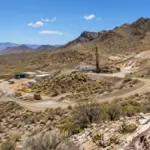
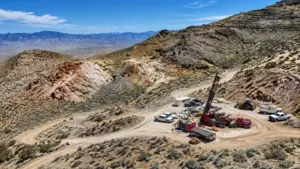
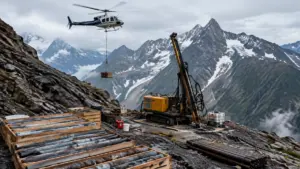
A diamond drill rig operates on the flat, semi-arid terrain typical of the Kalahari Copper Belt.
Exploration commitments set the next test
Metal Capital has committed to spend at least US$4.5 million on exploration within three years of completion. At least US$2.25 million is due within the first 18 months.
The buyer has also committed to a minimum of 4,000 metres of drilling by Dec. 31, subject to the required permits and approvals. The programme includes drilling, assaying and evaluation work, with earlier transaction details indicating that about US$2.7 million of the exploration commitment is allocated to drilling and assaying.
Those obligations provide a defined near-term work programme for the licences. They also give investors and the Botswana government a clearer measure of whether the transaction is progressing beyond a change in ownership.
The immediate milestones will be the completion of the share sale, finalisation of field planning, mobilisation of drilling equipment and the release of exploration results. The more important technical test will be whether drilling can establish enough continuity and scale to support a future mineral resource and, ultimately, a JORC ore reserve.
Why the licences matter to Sandfire
Sandfire’s interest is consistent with a broader strategy in Botswana: use the Kalahari Copper Belt’s regional geology to extend and strengthen an existing production hub rather than build every deposit as a standalone operation.
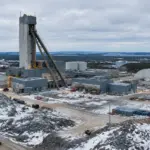
The company’s Motheo copper mine is already operating in the Kalahari Copper Belt. Sandfire has been advancing higher-grade A4 material, drilling the A1 deposit and testing additional regional targets that could support longer-term production through the Motheo processing infrastructure.
That hub-and-spoke approach matters because a new discovery does not necessarily need to justify a complete mine, concentrator and supporting infrastructure on its own. If a deposit is close enough to existing facilities, it may be evaluated as satellite feed or as part of a larger district-scale development plan.
The Galileo licences are not being described as an extension of Motheo, and the transaction does not establish that they will feed the operation. Their value is exploratory at this stage. However, ownership by a producer with an established Botswana presence could provide access to technical expertise, regional geological data and exploration capacity that a smaller explorer may not be able to deploy at the same scale.
Sandfire’s stated strategy and exploration activities can be followed through its Botswana operations and company information.
Galileo shifts capital toward Zambia and Zimbabwe
For Galileo, the sale represents a portfolio decision as much as an asset transaction.
Galileo Chairman Colin Bird said the company’s principal portfolio and personnel resources are concentrated in Zambia and Zimbabwe, where management believes it is better positioned to advance projects. The upfront proceeds are expected to be directed toward those assets.
The deal therefore allows Galileo to monetise the Botswana licences without giving up all future upside. It receives immediate cash, reduces the need to fund the licences directly and retains the possibility of a much larger payment if Sandfire’s exploration establishes a qualifying copper reserve.
That structure is becoming more common in early-stage mining transactions. A junior explorer can transfer funding and execution risk to a larger operator while retaining a royalty, success payment, earn-out or other contingent interest. For the buyer, the structure limits the initial cash outlay while securing access to ground that may become more valuable after drilling.
Galileo’s original transaction announcement was covered by Mining Weekly, while the latest conditions update was reported here.
A small deal within a larger consolidation trend
At US$3 million upfront, the transaction is modest compared with the larger mining M&A deals of 2026. Its significance lies less in the headline value than in the type of ground being consolidated and the buyer’s position in the district.
The Kalahari Copper Belt has attracted sustained interest from producers, mid-tier companies and exploration groups seeking copper resources with regional development potential. Botswana offers established mining institutions, a long history in the resources sector and a growing exploration base, although projects still face the normal challenges of remote logistics, water, power, permitting and infrastructure.
As producers seek to secure future copper supply, early-stage licences around operating assets can attract attention even before a resource is defined. The rationale is straightforward: existing infrastructure and geological knowledge may reduce the cost and time required to test nearby opportunities.
But consolidation does not remove geological risk. A licence may be strategically located and still fail to deliver an economic discovery. The success payment in the Galileo transaction makes that distinction clear. The larger consideration is conditional on a future reserve, not on the transfer of the licences themselves.
That is also why the deal is relevant to the copper price forecast 2026. Higher copper prices can support more aggressive exploration and make lower-grade or remote discoveries more attractive, but price strength cannot substitute for grade, tonnage, metallurgy or infrastructure. The transaction offers exposure to copper’s long-term supply concerns, while leaving the technical outcome unresolved.

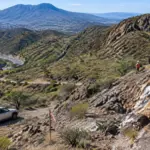
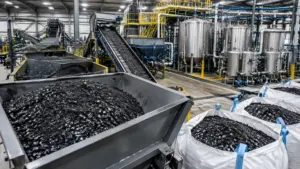
Drill core logging and assaying will determine whether exploration targets can support a future resource.
What to watch next
The immediate timetable is centred on completion around Sept. 30. After that, the main indicators will be:
- Confirmation that the 4,000-metre drilling commitment is under way.
- Timing of permits and field mobilisation.
- Initial drill intersections from PL039/2018 and PL040/2018.
- Follow-up drilling to establish continuity and geological scale.
- Any resource estimate or reserve work that could support the contingent payment.
- Sandfire’s broader exploration priorities around the Motheo hub.
For Botswana, the transaction reinforces the country’s role in the regional copper exploration map. For Sandfire, it adds prospective ground to a district where the company is already investing in production, near-mine exploration and regional growth. For Galileo, it provides near-term cash while preserving a defined share of future discovery value.
Investor take
The sharpest way to read this transaction is as an option-value deal, not a producing-asset acquisition. Sandfire is paying US$3 million upfront for exploration exposure and committing additional capital to test the ground. Galileo gets liquidity today while keeping a potential US$20 million-to-US$80 million outcome if the geology delivers.
The scoreboard will not be the announcement value. It will be metres drilled, copper intersections, resource continuity and whether the licences can connect to a credible regional development case. Until then, the deal is a signal of confidence in the Kalahari Copper Belt, not proof of a commercial discovery.
Social snippet
LinkedIn: Sandfire Resources has cleared the conditions to acquire Galileo Resources’ two Botswana copper licences for US$3 million upfront. The deal includes up to US$80 million in contingent upside and a 4,000-metre drilling commitment, highlighting the continued consolidation of exploration ground around the Kalahari Copper Belt.
X: Sandfire is moving toward completion of its US$3m acquisition of Galileo’s two Botswana copper licences. The deal includes up to US$80m in contingent success payments and 4,000m of planned drilling. Another sign of Kalahari Copper Belt consolidation.
Related reading: Copper project M&A and the search for district-scale growth and Zambia’s copper policy shift.