By Charles Pitts

Aura Minerals has secured a $200 million syndicated loan to support its growth program in the Americas, including construction of the Era Dorada gold project in Guatemala, as the company targets annual production of more than 600,000 gold-equivalent ounces.
The loan, equivalent to about C$280 million, was announced by Aura at the holding-company level. The company said the facility would strengthen its financial flexibility as it advances Era Dorada and expands production at existing and developing operations.
The financing was reported by The Northern Miner, which described the facility as part of Aura’s broader growth strategy. Aura’s announcement said Citigroup Global Markets and Itaú BBA acted as joint lead arrangers and bookrunners.
Loan supports broader growth plan
The five-year loan carries interest at the Secured Overnight Financing Rate, or SOFR, plus 2.70%, with a two-year grace period before principal repayments begin, according to the company announcement.

Aura said the proceeds may be used for payments to suppliers and for the prepayment of production and selling costs across its operations. The structure gives the company access to corporate-level debt rather than tying the facility exclusively to Era Dorada.

That distinction is important for a developer building a multi-asset production platform. While Era Dorada is a central part of Aura’s expansion plans, the loan can support working capital and operating requirements across the group.
| Key financing and growth figures | Details |
|---|---|
| Syndicated loan | $200 million |
| Canadian-dollar equivalent | About C$280 million |
| Facility term | Five years |
| Grace period | Two years |
| Interest rate | SOFR + 2.70% |
| Recent annual production baseline | About 313,000 GEO |
| Medium-term production target | More than 600,000 GEO per year |
| Era Dorada estimated capital cost | About $382 million |
| Era Dorada expected start-up | First half of 2028 |
Source: Aura Minerals company announcement and project disclosures, as reported by The Northern Miner. GEO refers to gold-equivalent ounces.
Era Dorada moves into construction
Era Dorada is located in Guatemala’s Jutiapa department, close to the border with El Salvador. The project was formerly known as Cerro Blanco before Aura acquired it and incorporated it into its Americas growth portfolio.
Aura’s project information describes Era Dorada as a new phase of the company’s expansion in Central America. The project has received construction approval, and Aura has said it expects the build to take roughly two years.
The company has estimated Era Dorada’s capital cost at approximately $382 million. Its feasibility work outlines average production of about 111,000 gold-equivalent ounces annually during the first four years, with a planned mine life of 17 years.
The project is expected to begin operations in the first half of 2028, subject to construction execution, commissioning and other development requirements.

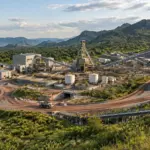
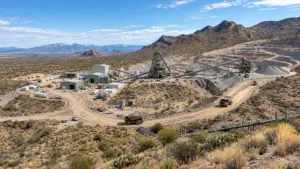
Processing infrastructure and steel construction at a developing gold operation.
The $200 million facility does not cover the entire estimated capital cost of Era Dorada. Instead, it provides Aura with additional liquidity while the company combines debt, operating cash flow and other sources of capital to execute its wider development plan.
Aura has also identified production growth at Almas and an expected expansion of Borborema as contributors to its medium-term output target. The company produced approximately 313,000 gold-equivalent ounces in the 12 months through June, according to disclosures cited in the financing coverage.
Reaching more than 600,000 GEO annually would therefore require a substantial increase from the company’s recent operating base. Era Dorada would be one contributor, rather than the sole source of the targeted growth.
Gold prices support construction economics
The financing arrives as gold trades around $4,400 an ounce, according to the market context provided with the company’s announcement. Prices have remained elevated even after the Federal Reserve raised interest rates by 25 basis points, creating a supportive backdrop for gold producers and developers with projects moving toward construction.
High gold prices can improve project economics and strengthen operating cash flow. They can also make lenders more willing to provide debt to established producers with producing assets, approved development projects and visible reserves.
The market environment does not remove the risks associated with construction. Mine developers still face potential cost inflation, schedule delays, permitting conditions, labor constraints, infrastructure requirements and changes in operating performance once a project enters production.
For Aura, the corporate structure of the facility means that repayment capacity will depend on cash generation across its operating portfolio and on the timing of new production. The company must continue to fund existing mines while advancing Era Dorada and other growth projects.
Bank debt returns to mining finance
The Aura transaction also reflects a broader shift in the financing mix available to mining companies.
For much of the past several years, developers relied heavily on equity raisings, streaming agreements, royalties and strategic partnerships to fund construction and expansion. Those options remain important, particularly for early-stage companies without operating cash flow. However, syndicated bank debt is becoming more relevant for producers with established assets and stronger balance sheets.
Debt can reduce immediate equity dilution, but it introduces fixed repayment obligations and interest-rate exposure. In Aura’s case, the loan is priced against SOFR, meaning its interest cost can move with short-term U.S. dollar borrowing rates.
The two-year grace period provides time for Aura to advance construction and potentially bring new production into the portfolio before principal repayment begins. The five-year maturity, however, places importance on project delivery and cash-flow generation during the facility’s term.

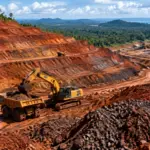
Access roads and construction earthworks across a developing mining project in Guatemala.
For investors and lenders, the central question is not only whether the financing is available, but how effectively Aura converts capital into operating capacity. Era Dorada’s construction schedule, capital discipline and ramp-up performance will be key measures of execution.
Guatemala adds regional diversification
Era Dorada would give Aura a larger operating presence in Central America, complementing its gold and copper activities in Brazil, Mexico and Honduras.
The company’s portfolio currently includes producing operations such as Almas in Brazil, Aranzazu in Mexico and Minosa in Honduras, alongside projects including Borborema and Era Dorada. This regional spread can provide diversification across jurisdictions, but it also exposes the company to different regulatory systems, infrastructure conditions, community expectations and political environments.
The Guatemalan project has attracted attention because of its location, development history and planned shift into construction. Aura has said it is advancing the project with commitments related to community engagement, environmental management and transparency.
Those commitments will remain relevant as construction activity increases. Mining projects in Latin America often face scrutiny over water use, land access, employment, local procurement and the distribution of economic benefits. The project’s ability to maintain local support will be an important part of its execution risk profile.
What to watch next
The new loan gives Aura more room to manage construction and operating requirements, but several milestones will determine whether the financing translates into the company’s production ambitions.
The first is construction progress at Era Dorada. Investors will be watching for updates on procurement, earthworks, plant construction and spending against the estimated $382 million capital budget.
The second is the performance of Aura’s existing mines. Current operations must continue generating cash while the company funds development activity and services the new debt facility.
The third is the timing of production growth at Borborema and the expansion of Almas. Delays or weaker-than-expected output from those assets would place greater pressure on Era Dorada and other projects to close the gap toward the 600,000-GEO target.
Finally, gold prices will continue to influence project economics and financial capacity. Prices near $4,400 an ounce provide a strong revenue environment, but commodity markets remain cyclical and the loan’s floating-rate structure leaves Aura exposed to changes in borrowing costs.
The financing marks a significant step in Aura Minerals’ plan to scale its Americas portfolio. Its success will ultimately depend on whether the company can turn a five-year corporate facility into timely construction, reliable production and sustainable cash flow across the assets supporting its growth strategy.

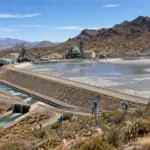
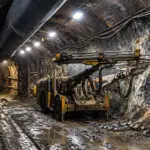
Project planning and cost review are central to managing mine construction and financing risk.
Related coverage: Mining M&A deals and the latest consolidation trends | Latest mining industry news