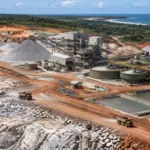
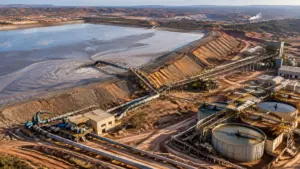
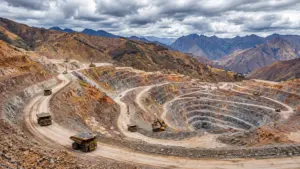
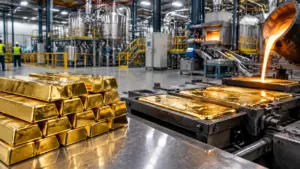
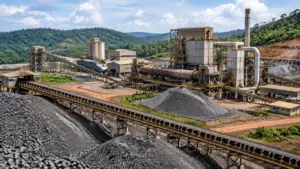
Lithium brine evaporation ponds and processing infrastructure in an arid Chilean landscape.

By Mo Shine
Chile’s tightening of water extraction permits in the Atacama is changing the timetable for future lithium brine supply, just as China’s revised inventory data has weakened the market’s immediate shortage narrative.
The result is a lithium market being pulled in two directions. Chinese battery-grade lithium carbonate has retreated to roughly 130,000–143,000 yuan per tonne, while permitting, feedstock and project-restart risks continue to limit how quickly new supply can respond.
For operators and investors, the key question is no longer simply how much lithium exists underground. It is how much production can be brought online with the required water permits, processing capacity and acceptable operating costs.
The market is beginning to price “water-permitted tonnes,” not just geological tonnes.
That distinction is likely to shape the lithium price range for the remainder of the year.

Chile’s water rules raise the cost of new brine supply
Chile’s Salar de Atacama remains one of the world’s most important lithium-producing regions, with SQM and Albemarle supplying global battery markets from brine operations.
Existing production has not been abruptly removed from the market. However, tighter oversight of new water extraction rights in parts of the salar’s watershed is raising the development risk for future expansions. The restrictions are also pushing project developers toward lower-water processing routes, including direct lithium extraction, or DLE.
Chile’s broader National Lithium Strategy places greater emphasis on state participation and more efficient extraction technologies. For brine developers, that means water management is becoming a permitting requirement rather than a secondary technical consideration.
Traditional evaporation ponds can have a lower processing complexity than some DLE systems, but they require significant land, long residence times and careful management of brine and freshwater flows. DLE may shorten processing cycles and reduce surface evaporation requirements, but the technology must still prove its performance at commercial scale across different brine chemistries.
The impact is therefore likely to be gradual. The tighter rules do not necessarily remove current Atacama output, but they can delay expansions, increase capital requirements and make project timelines more dependent on environmental approvals.
That matters because the lithium market still has a large volume of nominal capacity that is not producing at full potential.

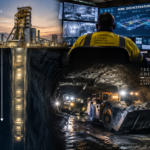
DLE systems are gaining importance as water-efficient extraction becomes central to project approvals.
The inventory revision reset the shortage narrative
The second major market shock came from China’s inventory data.
A methodology revision lifted reported Chinese lithium inventories from approximately 78,800 tonnes to about 175,000 tonnes. The change did not represent an equivalent one-week arrival of physical material. Instead, it reflected broader sampling and revised treatment of inventory categories.
Even so, the new figure changed market psychology. Traders and consumers suddenly had a larger visible buffer to consider, and lithium carbonate prices weakened sharply.
Mysteel reported spot prices moving down through the 143,000 yuan-per-tonne area toward 135,000 yuan, while the most active futures contract briefly fell below 130,000 yuan. Shanghai Metals Market data and other market trackers likewise showed a sharp retreat from earlier expectations of an immediate supply deficit.
The revised inventory level is material, but its significance requires context. Against projected global consumption of roughly 1.48 million tonnes of lithium carbonate equivalent, 175,000 tonnes represents a buffer of around one to one-and-a-half months of demand, depending on how the inventories are defined and whether they are readily available to the market.
The inventory revision therefore weakens the near-term shortage case without proving that the market has entered a durable structural surplus.
Skillings’ own price tracking, alongside reporting from Mysteel, suggests the current price band reflects both physical availability and a data-confidence shock. The market is having to separate newly visible inventory from genuinely incremental supply.
Delayed capacity remains the central supply variable
Roughly 500,000 tonnes of potential capacity remains delayed, idled or uncertain across the wider supply chain. The unresolved restart status of CATL’s Jianxiawo operation is one of the most closely watched variables.
A restart would add confidence that suspended or delayed material can return quickly when prices improve. A prolonged outage would reinforce the view that headline capacity is less reliable than operating capacity.
The distinction is important for forecasting. Announced capacity can appear in supply models before a project has secured permits, financing, construction completion, qualified feedstock or stable recovery rates. Delays at several projects can therefore remove a substantial amount of expected supply even when the long-term resource base remains unchanged.
Zimbabwe adds another layer of uncertainty. Restrictions on exports of raw minerals and lithium concentrates continue to complicate spodumene flows to Chinese converters. The policy direction is aimed at encouraging domestic processing and beneficiation, but the near-term effect is less predictable export availability.
For Chinese converters, the issue is not only the price of lithium carbonate. It is also whether the required concentrate arrives on time, at the expected grade and under a stable customs regime.
Energy storage is becoming the swing demand factor
Electric vehicles remain the largest lithium demand segment, but utility-scale energy storage is increasingly setting the direction of marginal demand.
Lithium iron phosphate batteries are widely used in stationary storage because of their cost, cycle-life and thermal characteristics. As grid operators and renewable developers add storage capacity, LFP-linked carbonate demand is expected to build through the latter part of the year.
Reporting cited by Reuters points to energy-storage lithium demand growth of roughly 55%, following an estimated 71% increase in the prior year. Other market estimates suggest storage could account for approximately 31% of global lithium consumption, compared with about 23% previously.
This makes storage the market’s swing factor. If EV growth is uneven, stronger grid-storage deployment can absorb additional carbonate production. If storage orders slow or projects are delayed, the market may have more difficulty clearing the inventory buffer revealed by the Chinese methodology change.
The demand picture is therefore not uniformly strong, but it is broader than the EV cycle alone.

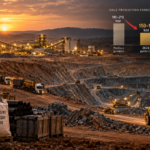
Energy storage is becoming a larger source of lithium carbonate demand as grid projects expand.
Lithium price scenarios
Published forecasts remain unusually wide, ranging from approximately 110,000 to 250,000 yuan per tonne. BMI, Mining Weekly and other market assessments have pointed to a stronger medium-term price outlook, while more bearish views assume that delayed capacity returns and inventories remain elevated.
For planning purposes, the following framework separates price outcomes from the operating conditions that would make them more likely.
| Scenario | Indicative lithium carbonate range | Conditions attached | Main market signal |
|---|---|---|---|
| Bear case | 110,000–130,000 yuan/t | Chinese inventories remain high; Jianxiawo or other delayed capacity restarts; storage demand underperforms; Zimbabwean feedstock flows normalize | Visible supply exceeds near-term consumption |
| Base case | 130,000–170,000 yuan/t | Inventory data stabilizes; storage demand grows; Atacama restrictions slow expansions but do not cut current output; delayed projects return unevenly | Market remains supplied but increasingly sensitive to disruptions |
| Bull case | 170,000–250,000 yuan/t | CATL restart remains delayed; Zimbabwe restrictions tighten; Atacama permitting slows new brine tonnes; storage demand accelerates; DLE and non-brine projects fail to scale quickly | Risk-weighted supply falls below demand growth |
The base case is the most balanced interpretation of the available evidence. It allows for high reported inventory while recognizing that part of the market’s future supply pipeline remains delayed or technically uncertain.
Under that view, lithium carbonate could remain within the 130,000–170,000 yuan-per-tonne range for the remainder of the year, with volatility increasing around project updates, Chinese inventory reports and storage procurement data.
What operators and investors should monitor
The next signals will be operational rather than purely financial.
CATL’s Jianxiawo restart
A confirmed restart would reduce uncertainty around delayed supply and could place pressure on carbonate prices. Continued suspension would support the argument that nominal capacity is overstated.
Zimbabwean concentrate flows
Customs data, exemptions and local processing requirements will determine how much spodumene reaches Chinese converters. Any further restrictions could tighten feedstock availability even if global mine capacity remains unchanged.
DLE water intensity and recovery rates
DLE projects need to demonstrate more than lower freshwater use. Operators must show stable recovery rates, reagent performance, brine reinjection outcomes and competitive operating costs. Those results will influence whether DLE becomes a commercially scalable response to Chile’s water constraints.
Non-brine project permitting
Hard-rock and clay-based projects can diversify supply, but they face their own permitting, construction and processing challenges. The market will be watching whether these projects move from feasibility studies into funded construction and commissioning.
Energy-storage orders
Storage demand is now a key test of the market’s ability to absorb supply. Battery shipments, grid tenders and LFP production plans will provide a clearer signal than broad announcements about the energy transition.
The market’s real supply test
The lithium market is not simply moving between surplus and shortage. It is testing the quality of its supply assumptions.
China’s inventory revision showed that visible stocks can change sharply when measurement methods change. Chile’s water restrictions show that geological resources cannot become production without permits and credible extraction systems. Zimbabwe’s export rules demonstrate how feedstock can be disrupted by policy. Energy storage, meanwhile, is expanding the demand base beyond electric vehicles.
That combination supports a wide but structured forecast rather than a single price target. The market could remain near the lower end of the range if inventory remains elevated and delayed capacity returns. It could move toward the upper end if water-permitted supply grows slowly, project restarts slip and storage demand continues to accelerate.
For operators, the priority is proving that tonnes are permitted, funded and recoverable. For investors, the more useful measure is not announced capacity but water-permitted, operationally available tonnes.
That is likely to be the defining lens for lithium prices through the next phase of the market.
Shareable snippets
LinkedIn:
Chile’s tighter Atacama water rules and China’s revised lithium inventory data are reshaping the market’s supply assumptions. The key question for 2026 is not how many lithium tonnes are announced, but how many are water-permitted, operationally available and able to meet rising energy-storage demand.
X:
Lithium’s 2026 price range now hinges on two competing forces: Chile’s Atacama water squeeze and China’s inventory reset. CATL’s Jianxiawo status, Zimbabwean concentrate flows, DLE performance and storage demand will decide whether carbonate stays near 130,000 yuan/t, or moves toward 170,000–250,000 yuan/t.
Sources: BMI lithium forecast reporting via Mining Weekly, Mysteel lithium market analysis, Skillings lithium price analysis, Reuters on energy-storage demand, Reuters on Zimbabwe lithium export restrictions.