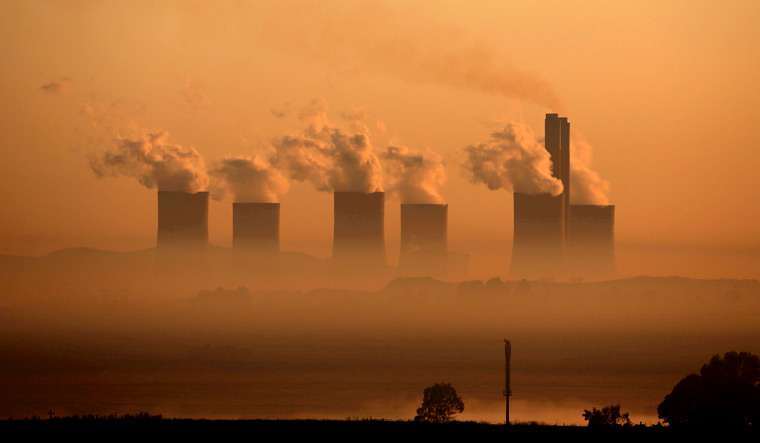
There is no denying that the world is currently experiencing an unprecedented energy crisis. This crisis has been exacerbated by the COVID-19 pandemic and the Russian invasion of Ukraine. This has resulted in severe shortages and sharp increases in the price of oil, gas, and electricity in nations around the world – especially in Europe and North America.

Limited gas supplies have drastically increased the cost of necessities like fertilizer. In addition, they have also led to a greater reliance on coal and other natural resources. Europe alone had a 14% increase in coal usage last year and another 17% increase is anticipated by the end of 2022.
European gas prices are currently approximately ten times higher than their average level over the previous ten years, hitting a record high of over $335 per megawatt-hour in late August.
On a related note, the recently released winter fuel estimate for 2022 from the United States Energy Information Administration predicts a staggering 28% increase in average fuel prices for Americans over the current year, reaching a staggering $931.
With such alarming data available in the public domain, it is important to investigate how this prolonged energy deficit may impact the crypto industry and whether its negative impacts will abate any time soon.
More Read

Experts Weigh In On The Subject
The global economy is in bad shape according to Matthijs de Vries, founder and chief technical officer of AllianceBlock – a blockchain company that bridges the gap between decentralized finance and traditional finance. He recently told Cointelegraph that a number of factors – such as the power crisis, an impending recession, surging inflation, and rising geopolitical tensions – are to blame.

He added that, “These problems are connected, particularly in the way that capital enters and exits businesses that have an impact. The capital that flows into and out of the digital asset industry is negatively correlated with the macroeconomic environment. The blockchain’s incentivization processes can only function as long as there is this liquidity. Therefore, if there is a lack of liquidity, miners will have fewer transactions to confirm, lower fees, and fewer incentives.”
De Vries also thinks that rising energy prices may give miners greater motivation to switch to Ethereum 2.0’s validator ecosystem, which uses a proof-of-stake mechanism that is much more energy-efficient.
More Read

Yuriy Snigur, CEO of Extra chain, a provider of infrastructure for distributed applications, blockchains, and decentralized autonomous organization (DAO) platforms, shares a somewhat similar outlook and predicts that the current increase in energy prices will have the greatest impact on proof-of-work blockchains.
They are largely reliant on the energy industry. PoW is ultimately doomed because, in my perspective, a blockchain’s value shouldn’t originate from the pointless consumption of energy, he added.
Worsening Macroeconomic Environment Likely to Harm Cryptocurrency
According to Nero Jay, the creator of the cryptocurrency YouTube channel Dapp Center, the market’s current difficulties will continue to have an overall negative impact, leading most investors to view this still-emerging industry as speculative and risky – atleast for the foreseeable future.
As a bright spot, he pointed out that the aforementioned difficulties might present a chance for greater crypto adoption, particularly given the fact that many nations such as Venezuela, Turkey, Argentina, Zimbabwe, and Sudan continue to suffer from hyperinflation and sanctions. This might give crypto assets more utility and use cases.
Last but not the least, Jay thinks that the deteriorating energy situation might lead to further examination of the mining industry, particularly since those who support the zero carbon emission movement will now have more reason to be critical of the industry.
“Many people are skeptical about the potential environmental effects of cryptocurrency mining. The good news is that many cryptocurrency initiatives, including Ethereum, are already working to make their blockchain networks very effective and based on low carbon emissions,” he stated.
Relationship Between The Cost Of Bitcoin And The Energy Market
From the outside looking in, rising energy costs will increase costs for miners. This would force them to sell their stored Bitcoin which would then drive prices down. Additionally, increased production may force miners to raise their rates in order to cover their daily operating expenses and, in rare situations, even compel them to cease operations or sell their equipment completely.
Furthermore, the overall amount of BTC created will remain the same even if miners continue to close their doors. The block rewards will be split up among fewer people though. This implies that miners that are able to withstand the bearish pressure brought on by growing energy costs stand to gain enormous profits. Andrew Weiner, Vice President of the cryptocurrency exchange MEXC, told Cointelegraph:
“Electricity shortages may result in higher electricity costs, which would significantly increase the cost of mining bitcoins. The transfer of miners to other jurisdictions where relatively low electricity prices ensure safety and stability will result in a long-term regional power shortfall.
There is still hope for a trend reversal. According to Weiner, the oil crisis may exert pressure on Bitcoin’s price, but the weak overall condition of the world economy may be able to offset this. He also added that the major factor influencing the cryptocurrency market at the moment is the U.S. Federal Reserve’s monetary policy, adding:
“Since the Federal Reserve started enforcing loose monetary policy in 2020, institutions have digitally modernized their back-office operations and expedited their Bitcoin acquisitions. Institutions modify their approach to allocate bitcoin as a value-preserving asset as fiat depreciates.
In addition, he pointed out that the S&P 500 and Nasdaq are growing more and more associated with the cryptocurrency market, particularly Bitcoin, but the correlation between energy, oil, and electricity will be negligible unless a future worldwide electricity shortage affects BTC mining.
Additionally, the continued energy issue might lead to additional government spending initiatives which would lead to the “printing” of more money to get out of problems. This can lead to a decline in confidence in fiat assets and an increase in demand for digital currencies. Given that this tendency is currently evident in many developing countries and has the potential to spread to some of the world’s more developed economies, it is still possible that it will occur in the future.
Just a few months ago, inflation in the eurozone reached 8.9%. In the US, inflation recently reached 8.5% – the highest level in forty years. Even though opinions on the benefits and drawbacks of the stimulus packages are widely divergent, the simple worry of rising inflation is enough to drive up demand for cryptocurrencies.
It will be interesting to see how the future of the digital asset market develops as we transition into an era marked by potential energy shortages and price increases. This is especially true given how much worse things are getting due to escalating global tensions and deteriorating market conditions.