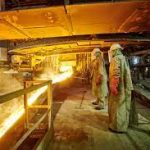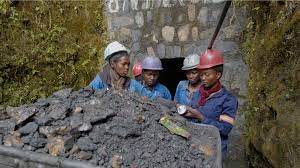
This was observed during a nationwide tour of mining industry representatives and industry stakeholders as part of Mining Week, with media representatives visiting various mining concessions.

The purpose of the visit was to understand the status of the country’s mining industry, the challenges faced by the industry and the potential available, which is currently the country’s largest source of revenue.
By comparison, the industry’s annual revenue is expected to rise from $516 million in 2021 to $585 million in September 2022, and is expected to reach $1.5 billion by the end of 2024, according to government forecasts.
However, officials say this can only be achieved if there is significant investment in the industry to improve technology adoption to help fully optimize the country’s mining potential.
The scope of the tour includes: the Miyove gold mine in Gicumbi District, the Bugarama mining area where coltan, tungsten, cassiterite, lithium and beryllium are mined, and the Lugo mine which mines coltan, tungsten, cassiterite, lithium and beryllium. Coltan, lithium, beryllium and cassiterite are mined in Nyamyumba District, Bavu District.
More Read

The mined minerals at all sites are significantly deficient compared to the original target deposits.

Most mines still use rudimentary tools, resulting in low daily output. A processing stage critical to extracting minerals involves outdated water screening methods that yield only a fraction of potential yields.
For example, Ngali Mining Ltd. estimates that the Miyove mine has the highest gold content at more than 2,500 kilograms and covers more than 1,450 hectares, according to a report by South African exploration firm SRK Consulting. Providing soil and rock mechanics and tailings treatment services
More Read

Ngali Mining Ltd holds the keys to these valuable minerals worth about Rs 80 million per kilogram, but the obstacle it still faces is not scarcity but the outdated mining technology that plagues the industry.
The mine produces 2.5 grams per ton of ore processed, for a total of at least 24 tonnes, yielding 60 grams of gold per day.
Create incentives for the industry
Donat Nsengumuremyi, manager of the Mining and Inspection Department at the Rwanda Minerals Board (RMB), said the problem of inefficient processing methods is common in all mines, adding that it is hindering the growth of the industry despite its huge potential.
“The challenge is that despite the success of the mining operations, it is impossible to process and mine more than 30% of the ore. This is an urgent issue that needs to be addressed.”
However, Nsengumuremyi believes that current incentives to procure modern processing equipment from the private sector could be beneficial to the industry.
“We encourage the private sector to introduce advanced processing equipment and urge local Rwandan companies to increase local production of these machines to reduce import costs and spare parts,” he said.
Janvier Ndabananiye, operations manager of New Bugarama Mining Company operating in the Bugarama region, echoed similar sentiments about the need to transition from artisanal mining to semi-mechanized mining.
“We are replacing hand tools with lightweight, machine-like electric jackhammers to improve mining and processing to achieve higher mineral yields.”
“We are in the development phase where we are exploring for new deposits and developing a roadmap for new mineral claims up to 75 meters deep,” he added.
Jean Paul Nturanyi, an experienced miner at the Bugarama mine, came up with techniques to use explosives to blast rock more easily, a method that could shorten time and increase productivity.
“We replaced the pans with shakers for more efficient mineral extraction.”
Industry insiders believe that modern refining technology, which is rarely adopted, raises high hopes.
When contacted for comment, Rwanda Mining Association president Jean Malik Kalima stressed the need for solid financial support to procure the necessary equipment.
“We are also focused on refining assets to add value and working closely with government support to improve on-site processing and pursue maximum mineral recovery.”
Despite improvements in processing efficiency, Kalima told New Times that “50 to 60% of losses are caused by insufficient access to investment credit,” adding, “That is why we are asking the government to provide a guarantee fund to support investment.”