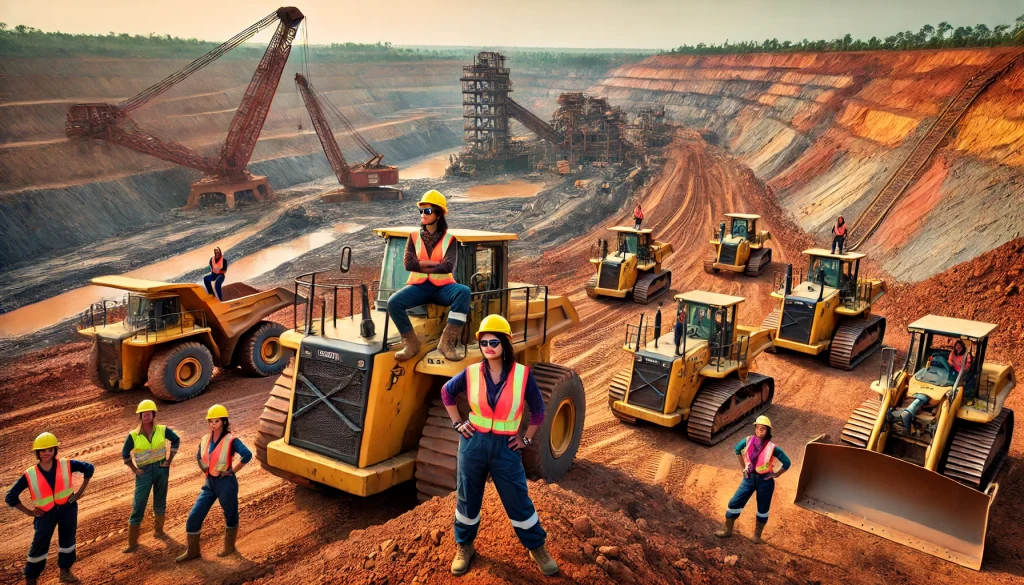
In a historic milestone for gender inclusivity, Tata Steel all-women shift has launched India’s first such initiative at its Noamundi Iron Mine in Jharkhand. This groundbreaking step, part of the company’s Tejaswini program, is redefining gender roles in the traditionally male-dominated mining sector, inspiring a new era for women in mining India.

Breaking Barriers with Tata Steel All-Women Shift
The Tata Steel all-women shift at Noamundi encompasses critical roles such as operating Heavy Earth Moving Machinery (HEMM), including shovels, loaders, drills, and dozers, as well as overseeing shift supervision. This innovative endeavor was inaugurated by Shyam Sundar Prasad, Deputy Director General of Mines Safety, SE Region, Ranchi, who praised it as a transformative step toward equitable workplaces in India’s mining industry.
“This initiative exemplifies the government’s and industry’s commitment to fostering diversity and empowering women in technical and operational roles,” Prasad remarked.
- Mining Trends in 2024: Transformative Forces Shaping the Industry
- U.S. Graphite Mining Industry Pushes for 920% Tariff on Chinese Competitors
- Low-Carbon Shotcrete Set to Debut at Outokumpu Kemi Mine
- Trump Fast-Track Permits: A $1 Billion Investment Opportunity
- Pecos River Watershed Conservation Efforts Take Center Stage
A Landmark Achievement in the Tejaswini Program
D B Sundara Ramam, Vice President of Raw Materials at Tata Steel, hailed the Tata Steel all-women shift as transformative.
“This is a landmark achievement, not just for Tata Steel but for the Indian mining industry as a whole. Diversity and inclusion are critical drivers of innovation and operational excellence,” he said.
More Read

Tata Steel’s diversity efforts have garnered global recognition, including being named a Global Diversity Equity & Inclusion Lighthouse 2023 by the World Economic Forum. The company has achieved 20% diversity in its Indian workforce, setting a new benchmark for industry peers.

The Role of the Tejaswini Program in Empowering Noamundi Iron Mine Women Workers
Tata Steel’s commitment to gender inclusivity took a significant leap in 2019, following amendments to the Mines Act, 1952, which allowed women to work in all shifts. This led to the creation of the Tejaswini program, aimed at recruiting and training women from local communities for core mining roles, including HEMM operations.
- Tejaswini 2.0 (2021): Women underwent comprehensive training programs covering technical skills, simulator sessions, safety protocols, and physical fitness. By April 2022, trained women operators joined the workforce at Noamundi.
- Tejaswini 2.1 (2022): This phase attracted over 2,100 applicants, with 24 women ultimately selected to operate HEMM.
These efforts have empowered Noamundi Iron Mine women workers, fostering an inclusive workforce in one of India’s largest iron mines.
More Read

Expanding Diversity Beyond Women in Mining India
Earlier this year, Tata Steel’s Noamundi Mine further expanded its diversity initiatives by inducting nine transgender HEMM operators. This move aligns with the company’s philosophy that inclusion is both a social imperative and a business strategy driving resilience and adaptability.
“These programs demonstrate that inclusion isn’t just about representation—it’s about unlocking the full potential of a diverse workforce,” noted Sundara Ramam.
A Model for the Future: Tata Steel All-Women Shift Leads the Way
The Tata Steel all-women shift at Noamundi sets a precedent for the Indian mining sector. By challenging entrenched stereotypes and showcasing women excelling in mining operations, Tata Steel has carved a path for others to follow. Initiatives like the Tejaswini program ensure sustainable and innovative growth, demonstrating how industries can integrate diversity into their core operations.
This pioneering effort empowers Noamundi Iron Mine women workers and inspires broader change, proving that diversity and inclusion are critical to a forward-thinking and competitive industry.