Key Takeaways
- Canada launches C$1.6 billion investment in Alberta lithium hub.
- Project aims to secure supply chains and reduce reliance on China.
- Expected to create 6,500 jobs and start production in 2027.
- Environmental and Indigenous consultations underway.
- Ottawa plans to leverage the hub to attract battery and tech investment.
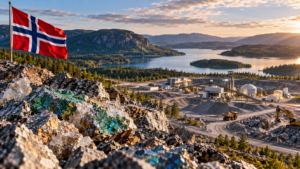
Canada is making its largest-ever investment in critical minerals processing, committing C$1.6 billion to build the Alberta lithium hub—a facility officials say will transform the country’s economic future and secure the materials underpinning clean energy technologies.

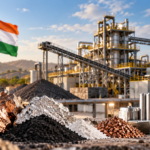
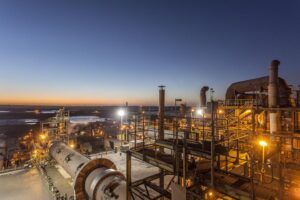
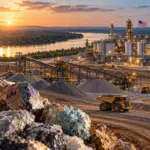
Announced Tuesday, the Western Canada Critical Minerals Hub is designed to position the country as a leading supplier of battery-grade lithium, refined nickel, cobalt, and separated rare earths—key inputs for electric vehicles and renewable power systems. The 500-acre Alberta lithium hub will rise in the Industrial Heartland region near Edmonton, with construction expected to begin by year-end and first production targeted for late 2027.
“This is a generational step forward,” Prime Minister Justin Trudeau said at the launch. “It’s the biggest mineral processing investment in Canadian history—and it will create thousands of good-paying jobs while securing our place in the clean technology economy.”
A Bid to Cement Canada’s Role in Critical Minerals
The economic impact of the Alberta lithium hub is substantial: federal estimates suggest 4,500 construction jobs and 2,000 permanent positions spanning refining, engineering, and logistics. Alberta Premier Danielle Smith framed the project as a catalyst for diversifying the province’s resource-dependent economy.
“This will anchor new industries in battery manufacturing and advanced materials,” Smith said. “It’s a once-in-a-generation opportunity.”
More Read

The announcement comes as nations across the West accelerate efforts to reduce reliance on China, which controls the majority of global rare earth and lithium refining. Canadian policymakers see the hub as a lever to secure supply chains and attract downstream investment from automakers and battery manufacturers.

Natural Resources Minister Jonathan Wilkinson called it “Canada’s most ambitious critical minerals initiative ever,” underscoring the urgency of matching U.S. and European subsidy frameworks. Washington recently approved a $2 billion loan to expand rare earth processing in California and Texas.
Industry Partners Circle the Alberta Lithium Hub
Ottawa officials said discussions are underway with several companies, including Livent Corporation, MP Materials, Rio Tinto, and Tesla, though no binding agreements have been announced. Private investors are expected to contribute at least C$700 million.
“This project positions Alberta and Canada at the forefront of a geopolitical shift,” said Mark Reynolds, a resource economist at the University of British Columbia. “If they execute, it could realign supply chains that have been entrenched for decades.”
Environmental Scrutiny and Indigenous Consultation
While the Alberta lithium hub promises significant economic gains, it also faces scrutiny. Environmental advocates have raised concerns over the water and energy demands of lithium refining, as well as the long-term management of tailings. Indigenous communities in the region have called for more robust consultation and protections for traditional lands.
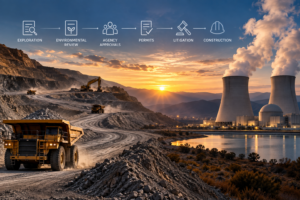
Federal officials have pledged to complete comprehensive environmental assessments and said the project will meet “the highest standards of sustainability.” Still, permitting delays have complicated similar developments, and some analysts caution that the 2027 target may prove optimistic.
A Broader Industrial Strategy
The hub is part of Ottawa’s wider effort to reposition Canada as a credible alternative to China in critical minerals processing. Beyond the direct economic benefits, officials hope the Alberta lithium hub will spur growth in battery production, advanced magnets, and clean energy components.
For Alberta, the project represents a chance to diversify beyond oil and gas. For Canada’s federal government, it marks a bet that a blend of public investment, private partnerships, and regulatory certainty can finally unlock the country’s untapped mineral potential.
Permitting and engineering work will continue over the summer. If timelines hold, the complex will be North America’s largest integrated critical minerals facility by decade’s end—a symbol of Canada’s ambition to be more than just a raw-materials supplier.