Norway has set 2028 as the target for completing the planning framework needed to develop the Fen Complex, Europe’s largest documented rare-earth deposit.

The target marks a new phase for a project that has faced delays over land use and environmental concerns. On September 23, Norway’s government said it wants the planning process completed by 2028 at the latest, with the possibility of finishing earlier. A proposal for the planning programme could go to public consultation as early as 2027.
The Fen Complex is located in Telemark, about 150 kilometres southwest of Oslo. An updated 2026 resource estimate puts its total rare-earth oxide (TREO) resource at 15.9 million tonnes, up from 8.8 million tonnes in 2024.
Fen is not yet a producing mine. The 2028 target concerns the government’s planning process. Rare Earths Norway (REN), the company developing the project, has previously indicated that mining could begin in the early 2030s.
A Major European Rare-Earth Resource
The Fen Complex is a carbonatite system formed from a volcanic system about 580 million years ago. It contains neodymium and praseodymium (NdPr), two elements that are important for high-performance permanent magnets.
More Read
REN’s 2026 resource estimate includes 14.2 million tonnes of inferred TREO resources and 1.7 million tonnes in the indicated category. The company reports that NdPr represents about 19% of TREO in the indicated resource.

That composition gives Fen particular relevance to the permanent-magnet supply chain. NdPr-based magnets are used in electric motors, wind turbines and other applications where high magnetic strength and compact size are important.
The size of the resource, however, does not establish the commercial viability of a mine.
Fen still has to move through planning, environmental assessment, engineering, financing and permitting. The project must also demonstrate that its mining and processing route can produce marketable rare-earth products at commercially viable costs.
Oslo Takes a Larger Role in Planning
The Norwegian government has already taken a more direct role in the project’s planning.
In April, the government decided to prepare a state-level regulatory plan after Nome municipality requested that the state take over the planning process. Oslo said the project has national significance and that competing land-use and other interests need to be considered together.
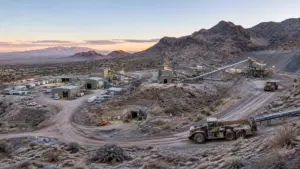
The new planning process will examine the location and parameters for mining and mineral processing. It will also cover infrastructure, waste and tailings management and the underground mine.
That distinction matters. REN plans to develop an underground operation, but mineral-processing facilities would still require surface land.
Environmental concerns have contributed to delays. Euronews reported that objections have focused particularly on proposed surface processing facilities in forested areas. The government has said the planning process must consider environmental protection, local communities, land-use interests, national security and preparedness.
From Mine to Magnet
Fen’s strategic importance will depend on more than the size of its resource.
REN’s development concept extends beyond mining. The company plans underground extraction, crushing and beneficiation, followed by hydrometallurgical processing and rare-earth separation. Its longer-term ambition includes metal and permanent-magnet production, with the company exploring partnerships with industrial players across the value chain.
That matters because mining is only one part of the rare-earth supply chain.
A mine can produce ore or concentrate, but manufacturers need further processing and separation capacity before rare-earth materials can enter downstream applications. Building those links in Europe would require additional investment, technical capability and industrial partnerships.
For Fen, the commercial question is not simply whether the resource is large enough. It is whether the project can develop a viable route from underground extraction to processed rare-earth products and downstream markets.
Why Fen Matters to Europe
Europe currently has no operating rare-earth mine, leaving the region dependent on imports for its rare-earth requirements. Norway’s government has described Fen as a potential contributor to European and wider Western critical-mineral supply chains.
Norway is not an EU member, but it has a strategic raw-materials partnership with the European Union. Signed in 2024, the partnership covers cooperation on sustainable land-based raw materials and related value chains.
The EU’s Critical Raw Materials Act is designed to strengthen extraction, processing and recycling capacity and diversify supply sources. The framework applies within the EU, so it does not make Fen an EU-regulated project. But the broader European policy direction gives projects such as Fen strategic relevance.
2028 Is a Planning Milestone, Not a Production Date
The 2028 target needs to be viewed in the context of the project’s longer development timeline.
Norway does not expect to produce rare earths from Fen in 2028. The target is to complete the planning framework for the development. The process will still have to address environmental impacts, land use, mine and processing design, infrastructure and other regulatory requirements.
REN has indicated that production could begin in the early 2030s. That leaves several major steps between the current planning phase and commercial output.
The project will need a workable mine and processing design, the necessary approvals, financing and a credible route into downstream rare-earth processing.
For Europe, Fen’s significance will depend on what happens after the resource estimate: whether Norway can move the project through planning, permitting and financing and build the processing links needed to turn the deposit into commercial rare-earth supply.