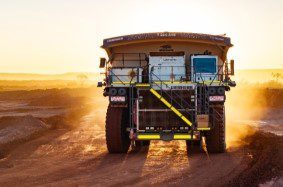
The global mining industry is entering 2025 with renewed urgency to modernize fleets, cut emissions, and extend productivity in the face of declining ore grades and rising ESG expectations. From the Pilbara iron ore mines of Australia to the lithium brine fields of South America, the pressure to produce more with fewer resources is reshaping investment in heavy equipment.

At the heart of this transformation is technology. Automation, electrification, and digital integration are no longer “future trends”—they are the competitive baseline. Operators who hesitate to upgrade risk not only lower productivity but also compliance penalties as governments demand higher safety and environmental performance.
This Skillings guide identifies the 10 most essential categories of mining equipment in 2025. From autonomous haul trucks to environmental monitoring systems, we examine what matters, why it matters this year, and how companies can position themselves for efficiency, safety, and compliance.
Mining Equipment in 2025 – The Industry Context
Global mining capital expenditure is forecast to exceed USD 150 billion in 2025, with a growing share directed at equipment replacement and fleet upgrades. The drivers are clear:
- Automation & Autonomy: Rio Tinto, BHP, and Vale continue to scale autonomous fleets, while mid-tier miners begin pilot adoption.
- Electrification & Hybrid Systems: Driven by ESG targets, miners are testing hydrogen fuel-cell trucks and electric loaders.
- Digital Integration: Predictive maintenance, real-time monitoring, and AI-driven drilling systems are now standard considerations in procurement.
- Regulatory & ESG Pressure: Air quality standards, worker safety mandates, and carbon reporting frameworks are forcing new investment in ventilation, monitoring, and clean power.

The question is no longer whether to invest in modern equipment, but how quickly and in what categories.
The Top 10 Essential Mining Machines in 2025
1. Autonomous Haul Trucks: Core Mining Equipment in 2025
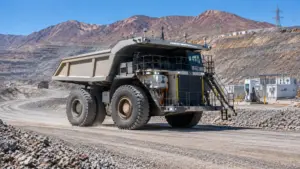
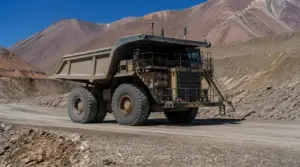
Autonomy isn’t a novelty anymore; it’s how big pits keep tonnage predictable while labour stays tight. What started with early fleets in the Pilbara is now standard practice across iron ore and coal, with copper catching up. The win isn’t just “no drivers.” It’s fewer judgment errors, 24/7 utilisation, tighter spacing, and cycle times that stop yo-yoing when shifts change.

Finance teams like autonomy for a different reason: variance control. A truck that runs the plan every hour makes cost/tonne and cash-flow forecasting boring—in the best possible way. Add in lower accident exposure and steadier tire wear, and the model starts paying for itself before Year 2.
| Why They Matter in 2025 | Key Features | Leading Brands & Models |
|---|---|---|
| Safety, consistent productivity, lower unit cost | GPS/LiDAR/radar; central control rooms & digital twins; IoT health sensors; trolley/hybrid compatibility | Caterpillar 797F Autonomous, Komatsu 980E-5 AHS, Liebherr T 264 (automation-ready) |
Estimated Cost (2025): USD 3.5–5M per truck
Best For: Large open pits (iron ore, coal, copper) with haul cycle bottlenecks
Skillings Insight: Autonomy is really a variance product. The ROI doesn’t just live in saved headcount—it lives in the hours you stop losing to human variability, incidents, and shift change drift.

2. AI-Enhanced Drilling Rigs
If trucks set the pace at surface, drilling sets the truth of a mine. AI-controlled rigs cut mis-drilled metres, adjust bit pressure and angle in real time, and push clean data straight into geological models. That compresses the calendar: feasibility teams get higher-quality core sooner, and project financiers get fewer excuses later.
Underground, remote-capable rigs are solving a different pain: scarce specialists. One crew can supervise multiple machines from a safe bay, while auto-logging tools remove the clipboard errors that used to haunt resource models. The rigs don’t just drill better—they make the study economics sturdier.
| Why They Matter in 2025 | Key Features | Leading Brands & Models |
|---|---|---|
| Lower exploration cost; faster, cleaner data; fewer specialists on face | AI optimisation for torque/weight-on-bit; auto core logging; hybrid/electric drives; cloud dashboards | Sandvik DL432i, Epiroc SmartROC D65, Boart Longyear LF™160 (remote-capable) |
Estimated Cost (2025): USD 0.8–1.2M per rig
Best For: Underground hard-rock and greenfield programs under time pressure
Skillings Insight: Don’t sell AI rigs as “cheaper metres.” Sell them as time compression. In markets where funding windows open and shut fast, weeks saved on drill-to-model can decide who actually builds.
3. Smart Crushers & Screening Machines
Processing has become a reliability business. Lower ore grades mean more tonnes must pass through the plant, while power prices and dust rules get stricter. “Smart” crushers and screens respond to feed hardness, vary speeds to cut kWh/t, and self-report wear before a liner ruins a shift.
The benefit is cumulative: a little less energy, a little more uptime, fewer emergency stops—and a plant that hits nameplate more days of the month. In 2025, that’s what lenders want to see in quarterly ops reports.
| Why They Matter in 2025 | Key Features | Leading Brands & Models |
|---|---|---|
| Keep throughput up as grades fall; lower energy; fewer surprise stoppages | Adaptive chambers; remote vibration/temperature monitoring; modular change-outs; integrated dust suppression | Metso Outotec Lokotrack® LT220D, Sandvik CH890i, Terex Finlay 883+ H/D Screener |
Estimated Cost (2025): USD 250k–700k (config dependent)
Best For: Mid- to large-scale plants, especially gold and copper
Skillings Insight: Plants don’t go down from one big mistake anymore—they go down from ten small ones you didn’t see coming. Predictive wear and variable drives turn those ten into none.

4. Battery-Electric Loaders: Mining Equipment in 2025 Goes Green
Diesel used to be the unavoidable cost of going underground: hot engines, thick particulates, and giant fans running around the clock just to keep headings breathable. By 2025, that math has flipped. Battery-electric loaders and trucks are no longer “pilot projects” in Scandinavia or Canada — they’re rolling into mainstream fleets from Sudbury to Santiago.
The economics are blunt. A battery loader may cost more upfront, but it slashes the megawatts needed for ventilation. Studies from Canada’s Goldcorp and Finland’s Boliden showed ventilation accounts for up to 40–50% of underground energy use. Swap out diesel, and those fans can be downsized — a capex saving on top of the opex in fuel. Epiroc’s ST14 Battery and Caterpillar’s R1700 XE are now marketed as much on ventilation deferral as on productivity.
Of course, batteries bring new headaches: charging bay fire protocols, thermal management, and supply bottlenecks for cells. But in an ESG-focused financing environment, “zero exhaust at face” plays better with lenders than another diesel fleet does.
| Why They Matter in 2025 | Key Features | Leading Brands & Models |
|---|---|---|
| Cuts diesel particulates and heat; reduces ventilation capex; ESG-friendly | Swappable packs, fast charging, regenerative braking, thermal management | Sandvik LH518B, Epiroc ST14 Battery, Caterpillar R1700 XE |
Estimated Cost (2025): USD 2–3.5M per unit
Best For: Deep or expanding underground mines with high ventilation loads
Skillings Insight: These machines aren’t a “green premium.” They’re a financial hedge. Every megawatt not spent on ventilation is margin that stays in the bank — and in 2025, that’s what boards, lenders, and communities want to see.
5. High-Pressure Grinding Rolls (HPGR)
Comminution has always been the silent energy sink in mining. By some estimates, crushing and grinding alone account for nearly 40% of a mine’s total energy bill. In a world where power tariffs rise and ESG audits demand kWh/tonne disclosures, that’s no longer something a CFO can ignore.
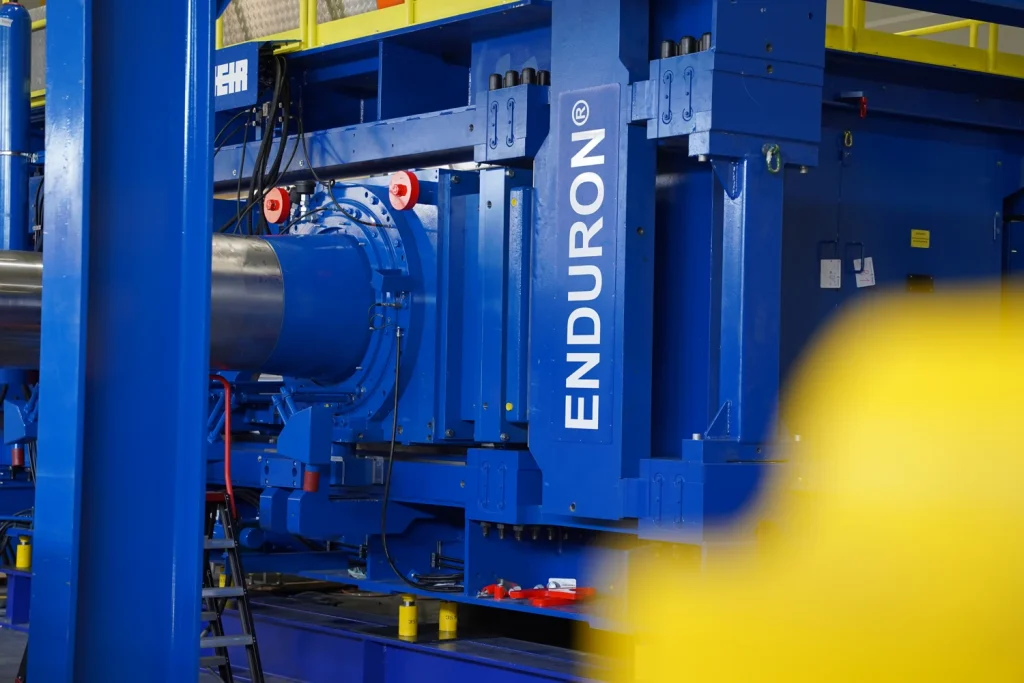
That’s where high-pressure grinding rolls (HPGR) come in. Instead of tumbling tonnes through energy-hungry SAG mills, HPGRs squeeze ore between counter-rotating rolls, producing finer particles with less wasted energy. The payoff isn’t just in electricity saved: downstream recovery often improves, meaning more metal per tonne of ore. Rio Tinto has quietly expanded HPGR use at iron ore operations in the Pilbara, while copper miners in Chile and Peru are weighing retrofits to cut both costs and emissions.
The drawback? HPGRs need feed consistency and wear-part discipline. Run them on variable ore without planning, and maintenance will eat the savings. But for operations under pressure from power regulators and investors, HPGRs are quickly shifting from “alternative” to baseline.
| Why They Matter in 2025 | Key Features | Leading Brands & Models |
|---|---|---|
| Energy savings up to 20%; improved downstream recovery; ESG credit | Studded roll surfaces, skew control, edge protection, advanced wear linings | Metso HRCe, Weir Enduron, thyssenkrupp polysius® HPGR |
Estimated Cost (2025): USD 5–10M per unit
Best For: Copper, gold, and iron ore concentrators under energy/emissions scrutiny
Skillings Insight: Think of HPGRs less as “new crushers” and more as an energy hedge. In markets where electricity prices swing, locking in 15–20% savings per tonne can be the difference between hitting EBITDA targets – or explaining misses to the board.
6. In-Pit Crushing & Conveying (IPCC)
Haul trucks remain the workhorses of open-pit mining — but also its biggest cost centre. Diesel burn, tire wear, haul road maintenance, operator shifts: it all adds up. In many large copper and iron ore pits, haulage alone eats 30–50% of total mining costs. That’s why in-pit crushing and conveying (IPCC) has re-emerged in 2025 as a serious alternative.
Instead of moving ore by truck over kilometres of haul roads, IPCC systems place crushers inside the pit and transfer ore via conveyors directly to the plant. The benefits are obvious: lower diesel use, fewer drivers, smaller carbon footprint. Companies like Codelco in Chile and Suncor in Canada have revisited IPCC not as a futuristic gamble, but as a hedge against rising diesel prices and stricter carbon accounting.
The catch? IPCC demands long-term planning discipline. Once a crusher and conveyor are installed, mine designs lose flexibility. Pushbacks and sequencing changes can quickly undermine the economics if geology shifts. For companies with stable reserves and predictable pits, however, the payoff is significant — both financially and in ESG reporting.
| Why They Matter in 2025 | Key Features | Leading Brands & Models |
|---|---|---|
| Cuts diesel haulage; reduces road maintenance; lowers carbon intensity | Mobile/semi-mobile crushers, high-angle conveyors, pit-to-plant integration | FLSmidth IPCC, Metso Lokotrack IPCC, thyssenkrupp/Takraf systems |
Estimated Cost (2025): USD 50–150M per installation
Best For: Large, deep, and geologically stable open-pit mines (copper, iron ore, coal)
Skillings Insight: IPCC isn’t just an equipment buy — it’s a planning culture shift. Mines that treat it as a one-off procurement project will struggle; those that align mine design, maintenance, and ESG reporting around it will bank decades of savings.
7. Ventilation-on-Demand: Smarter Mining Equipment in 2025
Underground mines live and die by ventilation. Fans are often the single largest consumer of electricity on site, and regulators are no longer tolerating “one-size-fits-all” airflow. By 2025, ventilation-on-demand (VoD) has moved from pilot projects to operational necessity, driven by both ESG scrutiny and brutal power tariffs.
Instead of running fans at full tilt 24/7, VoD systems adjust airflow in real time using sensors, tracking beacons, and machine data. If only two crews are working on one level, airflow can be dialed back; if a battery loader goes deeper, fans ramp automatically. This isn’t just an energy play — it improves safety by giving planners a live map of where fresh air is going, and where it isn’t.
Mines in Canada, South Africa, and Australia have reported 20–50% ventilation power savings with VoD rollouts. For companies chasing net-zero targets, that’s the kind of number that shows up not only in ESG reports but in quarterly earnings.
| Why They Matter in 2025 | Key Features | Leading Brands & Models |
|---|---|---|
| 20–50% ventilation power savings; safer underground airflow | Tracking beacons, variable-speed fans, rules-based airflows, sensor integration | Howden Ventsim/ACE, ABB Ventilation Optimizer, Epiroc Serpent |
Estimated Cost (2025): USD 2–6M for full-site rollout
Best For: Deep or expanding underground mines with high energy intensity
Skillings Insight: Ventilation-on-demand becomes truly powerful when paired with BEVs. Less diesel heat plus smarter airflow isn’t additive — it’s multiplicative. Mines that run the numbers right see payback in months, not years.
8. Fleet Management & Dispatch Systems
For years, mining companies threw money at bigger trucks and faster shovels. By 2025, the smarter money is flowing into software. Fleet management and dispatch systems don’t dig ore, but they determine whether your existing fleet works like a clock — or like a traffic jam.
These platforms track every truck, shovel, and drill in real time. They calculate optimum haul routes, adjust dispatch on the fly, and flag underutilized assets. A truck waiting five minutes at a shovel doesn’t sound catastrophic — until you multiply it across 40 units, three shifts, and a month of production. The gains add up fast: studies from Australia’s Pilbara iron ore region report 5–15% productivity lifts when FMS is fully adopted.
The challenge isn’t the tech. The challenge is cultural. Operators don’t like tablets telling them how to drive, and supervisors resist software second-guessing their judgment. Mines that tackle the change management head-on unlock millions; those that don’t, end up with expensive dashboards no one trusts.
| Why They Matter in 2025 | Key Features | Leading Brands & Models |
|---|---|---|
| 5–15% productivity gains; reduced wait times; fuel and tire savings | Real-time dispatch, cycle optimization, predictive maintenance, integration with OEM telemetry | Caterpillar MineStar, Komatsu Modular DISPATCH, Hexagon MineOperate, Wenco FMS |
Estimated Cost (2025): USD 500k–5M depending on fleet size and modules
Best For: Mid- to large-scale open pits with multi-shovel fleets
Skillings Insight: The ROI isn’t in the code — it’s in the culture. Mines that treat FMS as an IT project fail. Mines that treat it as an operations reboot win.
9. Hybrid Microgrids & Modular Power
Mines don’t run without power, and in 2025, power isn’t cheap or simple. Remote operations face soaring diesel logistics costs, while investors press hard on carbon intensity. The answer many miners are turning to is hybrid microgrids — modular power systems that mix renewables, batteries, and efficient thermal generation.
Think of it as hedging energy exposure. Solar and wind cut diesel dependence when the weather cooperates; battery storage smooths the gaps; gas or HFO gensets handle baseload. The result is a lower levelized cost of energy (LCOE) and fewer volatile fuel bills — a number CFOs can actually plan around. Aggreko, Caterpillar, and Wärtsilä now offer “plug-and-play” modular solutions sized to mines, not cities, making the barrier to entry lower than ever.
But the technology alone doesn’t sell it. Lenders and communities want proof that mines are serious about long-term carbon reduction, not just power bills. That’s why hybrid systems are showing up in sustainability reports as much as in site engineering plans.
| Why They Matter in 2025 | Key Features | Leading Brands & Models |
|---|---|---|
| Lower fuel costs; stable LCOE; ESG credibility | Modular gensets, battery storage, renewables integration, energy management systems | Aggreko, Caterpillar Microgrid, Wärtsilä Hybrid Solutions, Rolls-Royce MTU |
Estimated Cost (2025): USD 5–30M depending on mine size and storage capacity
Best For: Remote operations with high fuel transport costs or ESG reporting pressure
Skillings Insight: Hybrid microgrids are as much a finance instrument as an engineering fix. In volatile fuel markets, predictable LCOE can be the cleanest line item in the whole budget.
10. Tailings & Geotech Monitoring Systems
Tailings dams used to be “engineer’s business.” Then Brazil’s Brumadinho collapse in 2019 killed 270 people and wiped billions off Vale’s market cap. By 2025, no serious miner treats tailings as a line item to cut. Real-time monitoring of tailings storage facilities (TSFs), slopes, and geotechnical risks has become mandatory — not because regulators say so, but because insurers and lenders demand it.
Today’s systems go far beyond quarterly inspections. UAVs map volumes weekly, ground-based radar tracks slope stability in real time, and fiber-optic piezometers flag seepage or pressure changes long before failure. The cost isn’t trivial — a fully instrumented TSF monitoring system can run into millions — but compared to reputational damage, litigation, and loss of license, it’s the cheapest insurance a mine can buy.
Chile, Canada, and Australia have already tightened disclosure requirements, forcing operators to log and publish monitoring data. That shift is turning risk management into a transparency contest — and the mines that get ahead of it win credibility with both regulators and investors.
| Why They Matter in 2025 | Key Features | Leading Brands & Models |
|---|---|---|
| Safety, compliance, investor trust; early detection of failures | UAV photogrammetry, radar slope monitoring, fiber-optic sensors, IoT dashboards | GroundProbe Radar, RST Instruments, Trimble UAV Systems, Hexagon Geotech Solutions |
Estimated Cost (2025): UAV kits USD 20k–100k; full TSF monitoring USD 1–5M
Best For: Any mine with tailings dams or high-consequence slopes
Skillings Insight: Your ESG report is only as good as your tailings data. In 2025, the mines that survive reputationally are the ones that publish real-time dashboards — not glossy PDFs.
Closing the Loop: Mining Equipment in 2025 Is About Credibility
Mining equipment in 2025 is no longer just hardware — it’s the frontline of how companies balance cost, risk, and credibility. Every machine on this list, from autonomous trucks to tailings monitors, shows the same truth: efficiency and ESG are inseparable. Regulators, lenders, and communities all read the data, and it’s those numbers — not slogans — that decide who wins or loses.
The companies that succeed this decade won’t simply buy the biggest or newest machines. They’ll align equipment choices with finance and strategy, and they’ll prove it in transparent reporting.
For Skillings, the takeaway is clear: equipment is not only a capital expense. It’s a reputation expense. A poor fleet choice creates downtime and boardroom risk; the right one creates margin and staying power in volatile markets.
As 2025 unfolds, Skillings will continue tracking these themes — from the rise of second-hand fleets to the copper tariff fallout reshaping parts supply. Because the equipment choices miners make today won’t just shape production — they’ll define who is still producing tomorrow.