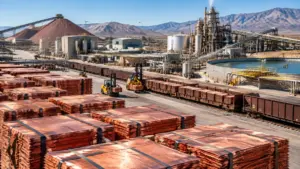
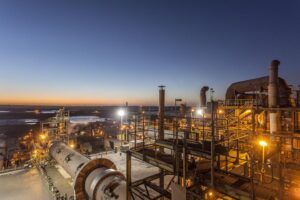
Australia’s push to scale lithium refining Australia capabilities entered a new phase this quarter as Canberra sharpened policy incentives and miners accelerated downstream plans. With lithium exports already worth more than A$19 billion in FY2023 (ABS) and the International Energy Agency forecasting a 300–700% surge in battery mineral demand by 2040, the country is racing to convert geological advantage into processing strength. Yet entrenched reliance on offshore refining—particularly China’s dominance—continues to constrain margins for miners and manufacturers.

Global Demand Surge Propels Lithium Refining Australia Strategy
Australia’s Critical Minerals Strategy positions Australia‘s lithium refining efforts as central to national competitiveness. The country already supplies over half of global lithium and is a top-tier producer of cobalt, nickel, and rare earths. Policymakers are responding to soaring demand from EV makers in the US, EU, Japan, and South Korea—all seeking diversified, non-Chinese supply chains.
For mining companies, the pivot toward lithium refining Australia is not optional: downstream processing is where long-term value and geopolitical leverage increasingly reside.
See also Skillings’ earlier coverage on U.S.–Australia critical minerals cooperation and lithium market volatility.
Mining Strength Meets Refining Shortfalls in Lithium Refining Australia
Australia’s mineral endowment masks a structural weakness—processing capacity. China still controls 70–90% of global refining across most battery minerals (USGS), a bottleneck that keeps Australia‘s lithium refining ambitions in an early-stage transition.
Hydrometallurgical refining, chemical conversion, and high-temperature processing require high capex, complex technology, and chemical engineering expertise that remains limited domestically. For miners, this means elevated project risk and a continued struggle to capture downstream value.
More Read

Exporting Raw Materials Limits the Value of Lithium Refining Australia
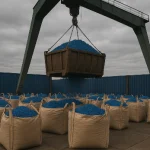
Australia’s reliance on concentrate exports leaves billions on the table. Lithium spodumene may fetch US$500–800 per tonne, while refined lithium hydroxide or carbonate—key outputs of lithium refining Australia—sell at US$15,000–25,000 per tonne (Benchmark Mineral Intelligence).

Companies such as Pilbara Minerals, IGO Ltd., and Allkem have highlighted that only through lithium refining Australia can they secure margin resilience and long-term strategic partnerships with global battery and EV makers.
Government Strategy Accelerates Lithium Refining Australia Capacity
Canberra’s A$4 billion Critical Minerals Facility is the backbone of Australia‘s lithium refining drive. Priority funding includes:
- Lithium hydroxide refineries in Western Australia
- Battery precursor material plants targeting nickel, manganese, and cobalt
- Rare earth separation projects complementing lithium processing streams
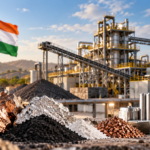
The government’s strategy explicitly aims to shift from ore exports to refined materials and intermediate battery products. Kemerton and Kwinana, key hubs in the lithium refining Australia network, are progressing but remain susceptible to commissioning delays typical of first-of-kind chemical facilities.
Environmental Challenges Complicate Expansion of Lithium Refining Australia
Scaling lithium refining Australia capacity is not purely technical; it’s regulatory. Rare earth and lithium processing produce residues requiring rigorous environmental controls. Recent scrutiny around radioactive wastes and sulfate-rich tailings underscores the need for transparent compliance.
Community groups have become increasingly vocal, and project timelines risk slippage if environmental safeguards are not front-loaded into refinery design and operations.
A Strategic Opening—If Lithium Refining Australia Can Be Scaled
With the global race for critical minerals supply accelerating, lithium refining Australia could reposition the country as a cradle-to-gate clean-energy materials hub. But without rapid build-out of refining expertise and infrastructure, Australia risks remaining a bulk-ore exporter while downstream value consolidates elsewhere.
Skillings Analysis
- “Lithium refining Australia is now the core battleground for margin capture.” Miners that integrate downstream will outperform over the next decade.
- “Automakers are likely to co-invest.” Expect more JV financing from OEMs seeking secure, ESG-aligned sources.
- “Regulatory certainty will separate winners from stalled assets.” Projects with robust environmental planning will advance fastest.
Outlook: A Defining Year for Lithium Refining Australia
With EV demand set to accelerate into 2026 and new refineries entering commissioning, the next 12 months will test whether lithium refining Australia can achieve commercial stability at scale. Success could cement Australia as a fully integrated, high-value exporter across the battery materials supply chain. Failure risks entrenching its role as a concentrate supplier in a rapidly consolidating global market.