IREL funding for rare earth has emerged as a critical policy priority after a Parliamentary Standing Committee urged the Indian government to significantly increase financial support for Indian Rare Earths Limited (IREL). The committee warned that without timely and focused investment, India risks missing a crucial opportunity to build domestic capacity in the mining and processing of rare earth minerals, even as global demand accelerates sharply.

Rare earth elements are rapidly gaining strategic importance worldwide due to their indispensable role in clean energy technologies, electric vehicles, advanced electronics, and defence manufacturing. The committee cautioned that India’s continued dependence on imports for these critical minerals exposes key industrial sectors to supply chain disruptions, price volatility, and growing geopolitical risks.
Growing Strategic Importance of Rare Earth Minerals in India
In its report presented to Parliament, the Standing Committee on Coal, Mines, and Steel highlighted that despite their rising economic and strategic significance, India’s rare earth mineral resources remain largely underdeveloped. Rare earth elements are essential for manufacturing electric vehicle components, wind turbines, renewable energy systems, defence equipment, and high-tech electronics used across civilian and military applications.
However, India continues to rely heavily on imports to meet domestic demand, making the country vulnerable to external supply constraints and shifting global trade dynamics. The committee observed that ensuring a stable and uninterrupted supply of rare earth minerals has become vital not only for industrial growth but also for national energy security, defence preparedness, and long-term economic resilience.
The panel further noted that global competition for rare earth resources is intensifying, with several countries aggressively investing in domestic mining, processing, and refining capabilities. Without decisive action, India risks falling behind in the evolving industrial and technological landscape, potentially weakening its position in future strategic industries.
More Read

IREL Funding for Rare Earth as a Pillar of Strategic Independence
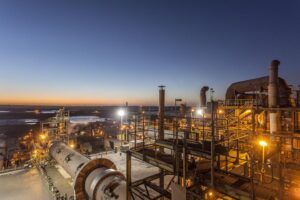
The committee placed strong emphasis on IREL funding for rare earth, recognising Indian Rare Earths Limited as the country’s primary public sector enterprise actively engaged in the mining and processing of rare earth minerals. IREL currently conducts extraction activities in Odisha and operates processing and refining facilities in Kerala, giving it a foundational role in India’s rare earth value chain.

According to the committee, enhanced funding would allow IREL to significantly expand exploration efforts, modernise processing infrastructure, and invest in advanced separation and refining technologies. These upgrades are essential for improving efficiency, reducing costs, and achieving globally competitive production standards.
The panel warned that without targeted financial support, India could lag behind at a time when global competition for rare earth materials is intensifying. Increased IREL funding for rare earth would not only strengthen domestic production but also enable the country to explore additional mineral deposits and reduce long-term dependence on nations that currently dominate global rare earth processing and refining.
Exploration Progress Highlights Need for Investment and Technology Partnerships
India’s geological potential for rare earth minerals has already been demonstrated through extensive exploration work conducted by the Geological Survey of India (GSI). Over the past three years, GSI has completed more than 180 rare earth exploration and investigation projects, alongside several ongoing initiatives across multiple regions.
These efforts have identified numerous prospective areas with promising rare earth mineral potential. However, the committee stressed that exploration alone does not translate into production. Substantial capital investment is required to convert identified resources into economically viable mining operations, supported by modern processing facilities and skilled technical personnel.
The panel emphasised that IREL funding for rare earth must be aligned with a broader development strategy that bridges the gap between exploration data and commercial-scale processing. Without integrated planning, valuable geological discoveries may remain underutilised.
Role of Technology Collaboration and Environmental Safeguards
In addition to increased funding, the committee highlighted the importance of technology partnerships, both domestic and international. Advanced separation and refining of rare earth elements require specialised expertise and modern technologies, areas where collaboration could accelerate India’s capability development.
At the same time, the panel underscored the need to maintain strong environmental safeguards. Rare earth mining and processing can have significant environmental impacts if not managed responsibly. The committee recommended that future expansion under enhanced IREL funding for rare earth should prioritise sustainable mining practices, environmental protection, and regulatory compliance.
Strategic Implications for India’s Industrial Future
The committee concluded that strengthening IREL through sustained financial support is essential for safeguarding India’s strategic and industrial interests. Rare earth minerals are foundational to emerging technologies that will shape global competitiveness in the coming decades.
By boosting IREL funding for rare earth, India can reduce its vulnerability to external supply shocks, strengthen domestic manufacturing ecosystems, and secure critical inputs for clean energy, defence, and advanced manufacturing sectors. The panel warned that delays in action could result in long-term strategic disadvantages at a time when access to critical minerals is becoming a defining factor in global economic and geopolitical power.