By Mo Shine | Skillings Mining Review

The easy ore is gone. That’s the blunt reality staring down 500 senior mining executives who participated in EY’s latest global mining risk survey: and it’s why operational complexity just claimed the top spot for 2026. Not geopolitics. Not ESG pressures. Not even the talent crunch. The thing keeping mining CEOs up at night is the sheer physical and technical challenge of pulling economically viable product out of deposits that are deeper, leaner, and meaner than anything the industry has tackled before.
This isn’t a distant threat. It’s happening right now, reshaping capital allocation decisions and forcing a fundamental rethink of how mines operate from pit to port.
The Numbers Don’t Lie
Here’s the sobering math: the average grade of copper mined worldwide has fallen by roughly 40% since 1991. That means miners are moving significantly more rock to produce the same amount of metal they did three decades ago. And it’s not just copper: gold, nickel, zinc, and other critical minerals are following the same downward trajectory.
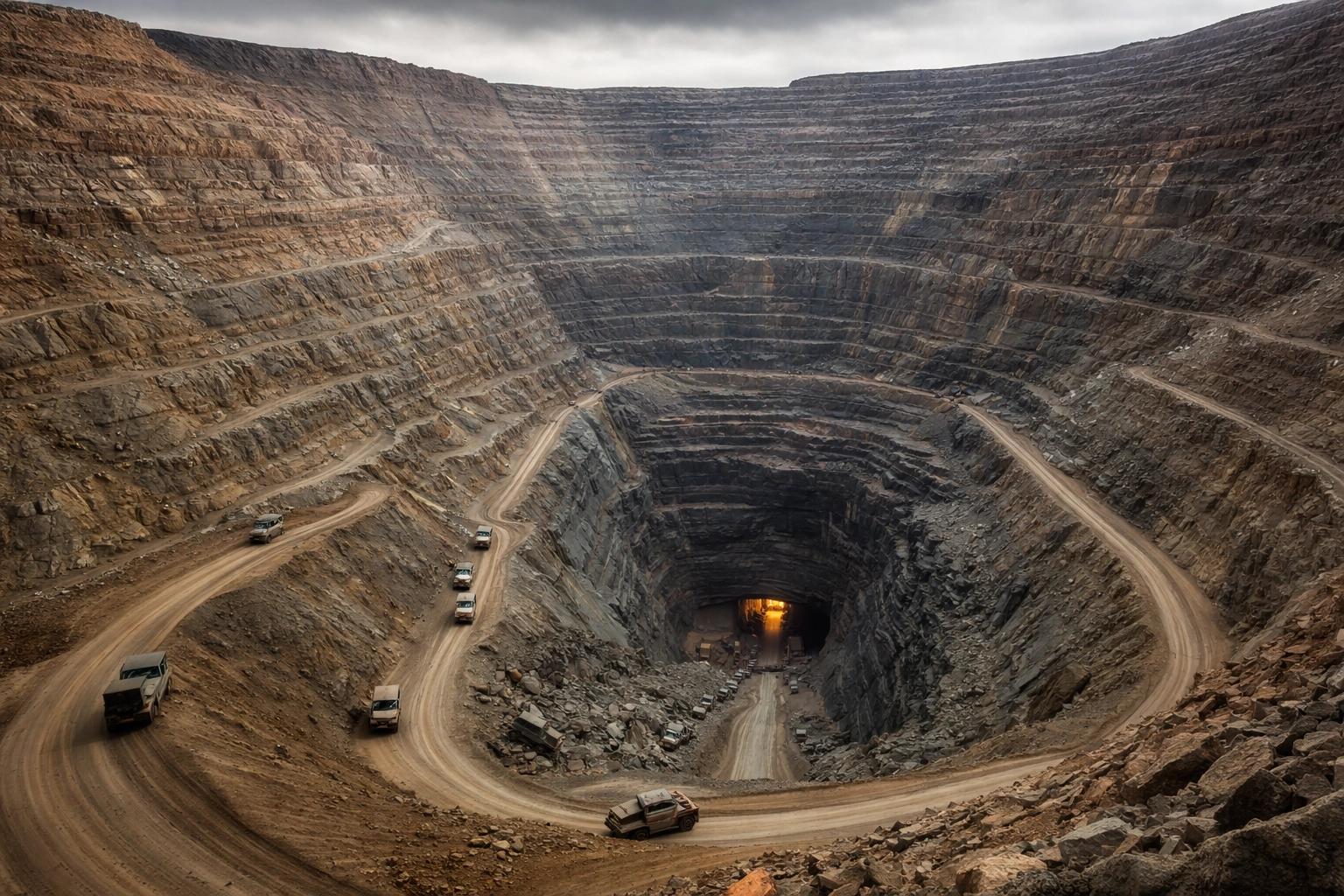
Pair declining grades with the fact that new discoveries increasingly sit hundreds of meters deeper than legacy operations, and you’ve got a compounding problem. Deeper means hotter. Deeper means wetter. Deeper means more complex ground conditions, longer haulage distances, and infrastructure that wasn’t designed for this kind of punishment.
More Read

The cascading effect hits every corner of the value chain. Processing plants designed for higher-grade feed suddenly face throughput challenges. Tailings volumes swell. Energy consumption spikes. And the predictable, quarter-over-quarter production that investors demand becomes maddeningly elusive.
Why 2026 Is the Breaking Point
For years, operational complexity lurked in the background while miners fixated on flashier risks: trade wars, permitting battles, decarbonization mandates. But this year’s EY survey marks a notable pivot. The sector’s collective attention has swung from strategic and geopolitical concerns toward short-term operational realities.
More Read
Why now? A few factors are converging simultaneously:
Aging infrastructure is catching up with producers. Many of the world’s largest operations were built decades ago, engineered for conditions that no longer exist. Ventilation systems strain under deeper workings. Water management becomes a constant firefight. Equipment designed for surface or shallow underground work gets pushed well past its design envelope.
Input costs keep climbing. Diesel, electricity, consumables, labor: everything costs more. When you’re already moving twice the waste rock per ton of product, those margin pressures compound fast.
Weather variability adds another layer of chaos. Extreme precipitation events, extended droughts, and unpredictable seasons wreak havoc on operations that depend on tight planning windows.
The result? Production variability that investors and lenders absolutely hate. As EY’s Global Mining & Metals Leader Paul Mitchell puts it: “The sector recognizes it must disrupt traditional ways of operating to win.”
The Capability Gap Nobody Wants to Talk About
Here’s where things get uncomfortable. Deeper, more complex deposits require specialist knowledge in geotechnics, logistics, and hydrology that many companies simply don’t have in-house. The talent pool for this kind of expertise is shallow, and the learning curve is steep.

Too many operations still run on siloed models where maintenance and production barely talk to each other. Inventory optimization? Often an afterthought. The old playbook: throw bodies and equipment at the problem: doesn’t scale when you’re dealing with geometallurgical variability that can swing concentrate grades by double digits from one stope to the next.
This isn’t just a technical challenge. It’s a cultural one. Mines that grew up on high-grade, near-surface deposits have institutional muscle memory that doesn’t translate to the new reality. Breaking those habits takes more than a memo from corporate.
The Innovation Imperative
So what’s the path forward? The EY survey reveals that 21% of mining executives plan to increase AI spending by more than 20% over the next year. That’s not pocket change: it signals genuine conviction that technology is the lever that can restore margins and predictability.
The specific applications vary, but a few themes dominate:
Predictive maintenance is finally moving from pilot projects to production scale. Sensors embedded across mobile fleets and fixed plant equipment feed machine learning models that flag impending failures before they cascade into unplanned downtime. The math here is brutal: a single unplanned shutdown on a major haul truck can cost six figures in lost production. Multiply that across a fleet, and the ROI on predictive systems becomes obvious.
Tighter planning discipline sounds boring, but it’s transformative. Real-time integration of geological models, equipment availability, and processing constraints allows schedulers to respond to variability rather than getting blindsided by it. Some operators are moving toward daily or even shift-by-shift replanning: a far cry from the monthly cadences that were standard a decade ago.
Energy and ventilation optimization is critical for deep operations. AI-driven systems can dynamically adjust airflow and cooling based on actual conditions rather than worst-case assumptions, cutting power consumption without compromising safety.

None of this is magic. It’s the cumulative effect of treating data as a strategic asset rather than a byproduct of operations. The miners who’ve invested in sensor networks, data infrastructure, and analytical talent are starting to pull ahead. Those still running on spreadsheets and tribal knowledge are finding the gap harder to close.
Rethinking Critical Site Infrastructure
Beyond the digital layer, there’s hard physical work to be done. Companies are rethinking energy sourcing, with hybrid solar-diesel and even modular nuclear options gaining traction for remote sites where grid power isn’t an option. Water management systems are getting upgrades to handle both the increased volumes from deeper operations and the regulatory scrutiny that comes with tailings and discharge.
Ventilation is arguably the most underappreciated constraint. Deep mines can generate ambient temperatures that make productive work impossible without massive cooling systems. The capital required to retrofit older operations is staggering, but the alternative: watching productivity crater as crews struggle in oppressive conditions: is worse.
This infrastructure layer is where operational complexity becomes a balance sheet issue. The capital intensity of transitioning older assets to handle lower grades and deeper deposits is significant, and not every operation will make the cut. Expect to see more closures and divestments as companies rationalize portfolios around sites that can actually compete in this new environment.
What This Means for the Sector
Operational complexity as the number-one risk isn’t just an EY headline: it’s a signal that the mining industry is entering a fundamentally different era. The deposits that remain require more sophistication, more capital, and more patience than the sector has traditionally demonstrated.
For investors, this means scrutinizing operational track records more closely. Paper reserves don’t mean much if the technical capability to extract them economically doesn’t exist. For operators, it means accepting that the old ways won’t deliver the consistent, predictable output that unlocks capital.
The good news? The technology exists to tackle this challenge. AI, automation, advanced geotechnical modeling, and smarter infrastructure can restore margins even in tough deposits. But deploying that technology at scale requires investment, talent, and a willingness to disrupt entrenched ways of working.
The mining industry has reinvented itself before. The question for 2026 is whether it can do so fast enough to keep pace with the geological and economic realities that are no longer optional to address.
For more in-depth coverage of mining industry trends and operational insights, explore our archives at Skillings Mining Review.