By Charles Pitts and Mo Shine

The mining industry just crossed a threshold that has boardrooms buzzing and junior explorers sweating. Anglo American and Teck merged in September 2025: a $53 billion “merger of equals” that birthed Anglo Teck, now one of the planet’s top copper producers. And that’s just the opening act. Rio Tinto and Glencore are back at the negotiating table, circling what could become the biggest mining company the world has ever seen.
Thirty-two percent of industry insiders now expect M&A to drive strategic partnerships through 2026, with another 29 percent betting on precious metals consolidation. The question isn’t whether we’re in a consolidation wave anymore. It’s whether the wave is about to drown everyone who isn’t already a giant.

The New Math of Mining Scale
The Anglo-Teck combination wasn’t a random corporate marriage. It was strategic calculus in its purest form. Building a new mine in 2026 means navigating permitting hell, community opposition, ESG scrutiny, capital costs that regularly double initial estimates, and timelines stretching 10 to 15 years. Buying existing production skips most of that nightmare.
More Read
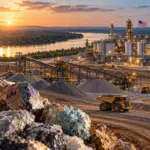
Rio and Glencore understand this perfectly. Their on-again, off-again merger talks represent more than empire building: they’re about controlling supply chains from pit to port at a scale that gives pricing power and negotiating leverage no mid-tier operator can match. When copper demand is projected to surge through the energy transition and electric vehicle buildout, owning the largest diversified portfolio of producing assets beats gambling on greenfield exploration every single time.

The numbers tell the story. Major mining houses: Rio, Barrick, Anglo, Teck: have decades of restructuring and M&A track records. They know how to extract synergies, cut redundant costs, and optimize production across portfolios. A combined Rio-Glencore would control copper, coal, zinc, nickel, and cobalt assets spanning continents, giving it the kind of geographic and commodity diversification that weathers price cycles and geopolitical shocks.
What’s Driving the Feeding Frenzy
Cost pressure sits at the heart of this consolidation boom. Lithium and nickel markets hit oversupply in 2024 and 2025, crushing prices and forcing producers to slash costs or die. Copper faced its own volatility despite long-term bullish fundamentals. In this environment, scale equals survival. Bigger companies negotiate better supply contracts, absorb price swings, and maintain access to capital markets when smaller players get frozen out.
More Read
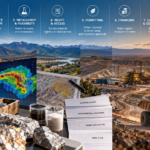
But there’s another force pushing consolidation that doesn’t get enough attention: governments are treating mining like a strategic national priority again. Policy support, preferential lending, and state backing are creating conditions where M&A becomes easier and more attractive. Critical minerals strategies in the U.S., EU, and across Asia mean mining deals now carry geopolitical weight. Governments want domestic champions or allied producers, not fragmented markets of mid-tier independents.

The industry has also made a fundamental strategic choice: inorganic growth over organic exploration. Exploration budgets remain flat in Canada, Australia, and the U.S., the traditional powerhouses of discovery. Major producers would rather write a check for proven reserves than spend years drilling holes in the ground hoping to hit something commercial. That preference accelerates consolidation because there’s a finite pool of quality producing assets to acquire.
The Junior Problem Nobody Wants to Discuss
Here’s where the consolidation story gets uncomfortable. Junior exploration companies and developers: the lifeblood of new discovery: are getting squeezed from every direction. Project financing is harder to secure when majors are buying existing producers instead of funding exploration partnerships. Equity markets for small-cap miners remain brutal, with retail investors burned by commodity cycles and institutional investors demanding scale and liquidity that juniors can’t provide.
The math is bleak: if majors buy production rather than fund grassroots exploration, who discovers the next generation of deposits? Exploration isn’t getting easier or cheaper. Ore grades are declining globally. The low-hanging fruit got picked decades ago. Finding the next Tier 1 copper or gold deposit requires patient capital, technical expertise, and tolerance for dry holes. Those are resources juniors possess but increasingly can’t monetize.
Some argue that consolidation creates opportunity for juniors: the newly formed super-majors will need to replenish reserves eventually, creating a seller’s market for quality advanced projects. Maybe. But the evidence suggests majors prefer late-stage or producing assets they can bolt into existing operations. Early-stage exploration projects without resources or feasibility studies are tougher sells, especially when majors can deploy capital into acquisitions with immediate production profiles and cash flow.

The financing crunch compounds this problem. Private equity and alternative capital sources have entered mining in recent years, but they skew toward development-stage projects with near-term production potential. Pre-resource explorers are stuck in no-man’s-land: too early for development capital, too capital-intensive for traditional venture funding, and increasingly ignored by majors focused on M&A rather than grassroots partnerships.
Are We Past the Point of Healthy Competition?
The consolidation wave raises fundamental questions about market structure and competition. Three or four super-majors controlling the bulk of global copper production might create efficiencies, but it also concentrates pricing power and supply chain control in fewer hands. That’s great for shareholders of those companies. It’s less clear whether it’s optimal for commodity markets, consumers, or producing countries who want competitive bidding for development rights.
There’s a historical parallel worth considering. The oil industry went through similar consolidation waves: Exxon-Mobil, Chevron-Texaco, BP-Amoco. Those mergers created mega-caps with enormous operational scale and financial power. They also created oligopolies with significant influence over prices and production decisions. Mining hasn’t reached that level of concentration yet, but another round of major deals could push it uncomfortably close.
Producing countries are watching this carefully. Governments in resource-rich jurisdictions want competition among potential developers to maximize fiscal terms and ensure projects move forward. If consolidation means fewer players bidding for development rights, negotiating leverage shifts away from host governments. That creates political risk: nationalization pressures rise when countries feel they’re not capturing sufficient value from resource extraction.

The counter-argument is that super-majors bring stability, capital, and technical capability that smaller operators can’t match. A Rio-Glencore entity could deploy billions into energy transition metals, accelerating development timelines and helping meet global decarbonization goals. Scale enables investment in automation, emissions reduction technology, and community development programs that smaller producers struggle to finance. From this view, consolidation is a feature, not a bug: it creates the entities capable of meeting 21st-century mining challenges.
What Comes Next
The consolidation wave shows no signs of breaking. Gold and precious metals appear primed for their own merger boom, with analysts expecting deals throughout 2026. Base metals will continue consolidating around the energy transition narrative: copper, nickel, lithium, and cobalt assets are all acquisition targets for majors building portfolios aligned with electrification trends.
But the industry needs to solve the exploration problem. You can’t consolidate your way to new discoveries. At some point, someone has to drill new holes and find new deposits. Major mining houses have track records in M&A and restructuring, but long-term success requires expanding the resource base through exploration. That’s the part of the equation getting starved of capital and attention right now.
The junior sector either needs a rescue: easier access to capital, better equity market conditions, more partnership opportunities with majors: or it needs a reset. Some argue consolidation at the junior level makes sense too, creating mid-tier explorers with better technical teams, larger land packages, and balance sheets that can sustain multi-year exploration campaigns. That hasn’t happened yet, but it might be the next phase if current financing conditions persist.
For now, the super-major era is here. Anglo Teck is operational. Rio-Glencore remains a possibility. Other deals are being sketched on whiteboards in London, Vancouver, and Perth. The mining industry is reorganizing itself around scale, efficiency, and vertical integration. Whether that’s consolidation going too far depends on your perspective: and probably which side of the deal table you’re sitting on.
Skillings Mining Review provides in-depth coverage of mining industry trends, M&A activity, and market analysis. Visit https://skillings.net for daily updates on the sector.