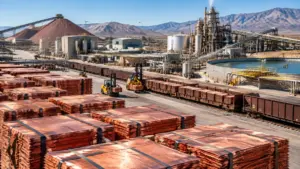
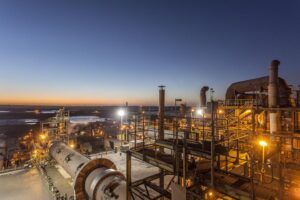
Albemarle Corporation shut down the final operating unit at its Kemerton lithium hydroxide facility in Western Australia this week. Effective immediately.

The closure of Train 1 marks the end of processing operations at what was supposed to be a flagship downstream facility for Western hard-rock lithium. Instead, it's become a $1.3 billion lesson in the economics of competing with Chinese refining capacity during a lithium price collapse.
CEO Kent Masters didn't mince words: "Recent lithium price improvements alone are not enough to offset the challenges facing Western hard-rock lithium conversion operations." Translation: the cost structure in Australia is broken, and incremental price recovery doesn't fix it.
The Full Retreat Timeline
This isn't a sudden decision. Kemerton's decline has been systematic.
Train 2 went into care and maintenance in 2024. Trains 3 and 4, which were supposed to expand capacity, were canceled entirely. That decision triggered a $1.3 billion impairment charge. Now Train 1, the last operational unit, joins its sister facility on ice.
More Read



The facility was designed to process spodumene concentrate from Greenbushes, one of the world's largest hard-rock lithium deposits where Albemarle holds ownership interest and 50% offtake rights. The vertical integration strategy made perfect sense on paper: control the mine, control the refining, capture margin at both ends.
Except the refining part never worked at competitive economics.
Albemarle spent years trying to reduce costs during extended lithium price volatility. They optimized processes, negotiated with suppliers, and streamlined operations. It wasn't enough. Australian labor costs, energy prices, and technical commissioning hurdles combined to make Kemerton economically unviable compared to Chinese competitors operating with lower input costs and established supply chains.
What This Means for 2026 Production
Albemarle insists the shutdown won't impact 2026 lithium hydroxide volumes. They'll meet customer commitments through other global production channels: likely meaning increased reliance on Chinese tolling arrangements or expanded output from their North American operations.
The financial impact is expected to be accretive to adjusted EBITDA beginning in Q2 2026. That's corporate speak for "we'll save more money by shutting it down than we'd make by running it." When that's your calculus for a recently commissioned facility, the underlying cost problem is severe.
But the strategic optics are uncomfortable. Albemarle is retreating from downstream value-add in one of the most mining-friendly jurisdictions in the world, at a time when Western governments are supposedly prioritizing domestic critical mineral processing capacity.

The company emphasizes that mining operations at Greenbushes and Wodgina remain core to their strategy. That's the pivot: exit the low-margin, high-cost refining and focus on what Australia does best: dig rock and ship concentrate.
It's a simpler business model. Higher margins per ton. Lower capital intensity. No wrestling with commissioning complex hydrometallurgical circuits or managing the energy-intensive conversion process.
The Western Refining Problem
Kemerton's failure illuminates a broader challenge facing Western lithium supply chains. Building hard-rock refining capacity outside China is expensive and operationally complex, particularly in high-cost jurisdictions like Australia.
Chinese lithium processors benefit from integrated supply chains, lower labor costs, established technical expertise, and: critically: energy prices that make energy-intensive hydroxide production economically viable even during price downturns. Western facilities face structural cost disadvantages that can't be engineered away through operational improvements alone.
This matters because lithium hydroxide, not lithium carbonate, is the preferred input for high-nickel NMC cathodes used in premium EVs and energy storage systems. If Western automakers and battery manufacturers want secure, non-Chinese hydroxide supply, they're increasingly facing a choice: pay premium prices to keep Western facilities running, or accept dependence on Chinese refining capacity.

The policy implications are significant. Governments in the U.S., Australia, and Europe have spent billions subsidizing critical mineral projects with the explicit goal of building non-Chinese supply chains. But subsidies don't change input costs. They don't make electricity cheaper or eliminate labor cost differentials.
Kemerton received support from the Australian government. It still couldn't compete.
Care and Maintenance: Exit or Pause?
Albemarle is keeping Kemerton in care and maintenance status rather than permanently decommissioning the facility. That's a hedge.
If lithium prices surge again: or if Australian cost structures somehow improve: the plant could theoretically restart. Industry sources suggest that process would require 12 to 18 months and either substantially higher lithium hydroxide prices or meaningful reductions in operating costs.
Neither scenario looks likely in the near term. Lithium prices have recovered from their 2023 lows but remain well below the peaks that justified Kemerton's initial economics. Australian energy and labor costs aren't trending downward. If anything, they're moving in the opposite direction.
The facility becomes a strategic option rather than an operating asset. It's there if needed. But "needed" requires a materially different market environment than what exists today.
The Broader Industry Trend
Albemarle isn't alone in pulling back from Australian lithium refining. The industry is consolidating around simpler upstream operations: mining and producing spodumene concentrate: while ceding downstream processing to Chinese operators with structural cost advantages.

This mirrors a pattern across multiple battery materials. Western jurisdictions dominate mining operations for lithium, nickel, and graphite. But China controls 70-80% of global refining capacity for these materials. The value chain bifurcation persists despite policy rhetoric about supply chain security and onshoring.
The economic logic is straightforward. Mining scales with geology and resource quality. Refining scales with input costs and process expertise. Australia has world-class lithium deposits. It doesn't have competitive refining economics.
That creates strategic vulnerability for Western battery supply chains, but it's a vulnerability rooted in fundamental cost structures rather than regulatory barriers or market access restrictions. You can't subsidize away a 30-40% operating cost disadvantage indefinitely.
What Happens to Greenbushes Concentrate?
With Kemerton offline, Albemarle's spodumene from Greenbushes will likely flow to third-party converters: predominantly in China. The company maintains offtake rights to 50% of Greenbushes production, so they'll continue extracting value from the mining operation while outsourcing the conversion step.
This is actually a cleaner business model from a margin perspective. Spodumene concentrate trades on global markets with transparent pricing. Albemarle can sell into strength during tight markets or convert through tolling arrangements during weak markets. The operational complexity and capital intensity shift to the converter.
For Western battery supply chains, it means continued dependence on Chinese refining for lithium derived from Australian hard-rock sources. The physical supply chain runs: Western Australia → Chinese refineries → Asian battery manufacturers → global EV assembly. Kemerton's shutdown cements that structure rather than disrupting it.

The Path Forward
Albemarle's decision reflects cold-eyed assessment of lithium market realities in 2026. Prices have recovered from catastrophic 2023 lows but remain insufficient to justify operating high-cost Western refining assets. The company is optimizing for profitability over vertical integration, margin over strategic positioning.
That's defensible from a shareholder perspective. Burning cash to operate uncompetitive assets serves no one.
But it leaves Western policymakers with an uncomfortable question: if subsidies, favorable permitting, and government support can't make critical mineral refining economically viable in Australia, what will it take to build genuinely competitive non-Chinese processing capacity?
The answer might be nothing short of dramatically higher lithium prices or fundamental shifts in Australian cost structures. Neither is on the horizon.
For now, Kemerton joins a growing list of Western lithium projects that looked strategic on paper but couldn't survive contact with market economics. Train 1 goes dark. The facility sits idle. And Australian spodumene concentrate continues its journey to Chinese converters, because that's where the competitive refining capacity actually exists.