First Quantum Minerals just doubled the value of its flagship Argentine copper project to $5.92 billion, and the timing isn't coincidental.

The Vancouver-based miner filed a technical report this week showing the Taca Taca copper-gold project in Salta Province now carries an after-tax net present value of $5.92 billion at an 8% discount rate. That's up from $2.36 billion in March 2021. The project's internal rate of return sits at 19.3%, assuming copper at $4.50 per pound and gold at $3,000 per ounce.
The revaluation reflects higher metal reserves, improved commodity price forecasts and the emergence of Argentina's RIGI program: a tax and foreign exchange incentive framework designed to attract mining investments exceeding $200 million. First Quantum plans to apply for RIGI benefits, which could materially improve project economics through tax stability guarantees and currency repatriation provisions.
But the numbers tell a more complex story about supply constraints, capital intensity and the structural shift underway in global copper markets.
Project Scale and Capital Requirements
Developing Taca Taca as an open-pit operation with initial processing capacity of 40 million tonnes per year carries an estimated price tag of $4.2 billion. That doesn't include the planned $1 billion expansion to 60 million tonnes annually, scheduled to begin in year five of operations.
More Read



Over the first decade, the project is expected to produce 291,000 tonnes of copper and 133,000 ounces of gold annually at all-in sustaining costs of $0.97 per pound. Life-of-mine production averages 209,000 tonnes of copper and 96,000 ounces of gold at $1.26 per pound.
The mineral reserve estimate totals 1,990 million tonnes grading 0.39% copper and 0.17 grams per tonne gold. That represents a 13% increase in combined copper-equivalent reserves compared to the 2021 prefeasibility study. Mine life: 35 years.
More Read
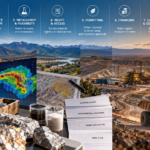
Those production figures matter in the context of global copper supply. The International Copper Study Group projects a deficit of approximately 475 kilotons in 2026, up roughly 110 kilotons from 2025. Projects of Taca Taca's scale: capable of producing nearly 300,000 tonnes annually at peak: represent the type of new supply required to close that gap.
But there's a timing problem. Material spending on Taca Taca isn't expected until 2028 at the earliest, meaning first production wouldn't occur until the early 2030s. The copper market needs supply now. New megaprojects require 7-10 years from final investment decision to first concentrate.
That disconnect between demand urgency and supply timelines is exactly why copper prices have sustained above $4 per pound for extended periods, and why projects previously considered marginal are getting reassessed.
Argentina's Strategic Pivot
First Quantum's revaluation doesn't happen in a vacuum. It directly corresponds with Argentina's shift under President Javier Milei toward mining sector liberalization.
The RIGI framework, formally known as the Large Investment Incentive Regime, offers qualifying projects 30-year tax stability, accelerated capital depreciation, and guaranteed access to foreign currency for profit repatriation. For mining companies evaluating projects in jurisdictions with histories of regulatory uncertainty, those provisions reduce political risk premiums embedded in discount rates.

The RIGI application deadline was extended to July 2027, giving First Quantum additional runway to finalize project configurations and submit for approval. The company expects environmental and social impact assessment approval from Argentina's Mining Secretariat in the first half of 2026.
Argentina holds the world's fourth-largest copper reserves but has historically struggled to attract mining capital relative to neighbors Chile and Peru. Policy volatility, export restrictions and currency controls created an investment climate that suppressed project development despite geological potential.
Milei's administration is attempting to reverse that trajectory. Multiple large-scale copper projects in Argentina: including BHP's Agua Rica and Glencore's El Pachón: are also evaluating RIGI applications. If successful, Argentina could add significant copper capacity in the 2030s, though none will address near-term deficits.
The strategic calculus for First Quantum is straightforward: RIGI benefits improve project returns enough to justify the capital commitment in a jurisdiction where previous political risk made the economics questionable. Without those incentives, $4.2 billion in upfront capital for a project that won't generate cash flow for years remains a difficult sell to shareholders and lenders.
Copper Market Context
Taca Taca's revaluation also reflects broader structural changes in copper markets that make large, long-life assets increasingly valuable.
Copper demand growth is being driven by electrification, renewable energy infrastructure and grid expansion: demand categories less sensitive to economic cycles than traditional construction and manufacturing applications. The International Energy Agency estimates copper demand from clean energy technologies will triple by 2040.

Meanwhile, the global copper project pipeline is thin. S&P Global projects new mine supply growth averaging just 1.8% annually through 2035, below the anticipated 2.4% demand growth rate. Chile, the world's largest producer, faces declining ore grades and water scarcity constraints. Peruvian expansions are stalled by permitting delays and community opposition.
That supply-demand imbalance is why projects like Taca Taca: large-scale, long-life operations with meaningful production capacity: are being reassessed with higher commodity price assumptions. The technical report assumes $4.50 copper and $3,000 gold, above the five-year averages but increasingly defensible as base-case assumptions given structural market tightness.
First Quantum has experience developing large copper projects. The company operates Cobre Panama, which produced 313,000 tonnes of copper in 2023 before the Panamanian government ordered its closure following a Supreme Court ruling that declared the mine's operating concession unconstitutional. That asset, now non-producing, had been the company's flagship operation.
Taca Taca represents First Quantum's primary growth option to replace lost Panama production, though the capital requirement and timeline create execution risk.
Financing and Development Timeline
The $4.2 billion construction cost estimate breaks down as follows: $2.8 billion for the processing plant and mining infrastructure, $800 million for pre-production development and working capital, and $600 million for power infrastructure and tailings facilities.
First Quantum will require a combination of project finance, corporate debt and potentially equity to fund development. The company ended 2025 with approximately $1.2 billion in liquidity and $6.8 billion in total debt, according to its most recent filings. Securing project-level financing under RIGI provisions could limit balance sheet strain, but construction won't begin until permitting and financing packages are complete.
The development timeline assumes:
- Environmental approval: first half 2026
- RIGI application and approval: 2026-2027
- Final investment decision: late 2027 or early 2028
- Construction period: 3-4 years
- First production: 2031-2032
That puts first concentrate production nearly a decade away, highlighting the challenge facing the copper industry. The projects being studied today won't address supply deficits materializing now.
Investors evaluating First Quantum will weigh the project's improved economics against execution risk, capital requirements and the company's ability to manage a complex construction timeline in Argentina. The NPV may be $5.9 billion on paper, but realizing that value requires navigating permitting, community engagement, contractor management and commodity price volatility over a multi-year construction phase.
What Comes Next
First Quantum's technical report provides a detailed roadmap for Taca Taca, but significant milestones remain before the project advances to construction. Environmental permitting, RIGI approval, and financing arrangements will determine whether the 2028 construction start date holds.
The broader implication is that Argentina is positioning itself to capture a larger share of global copper investment capital. Whether that translates to actual production depends on sustained policy stability, permitting efficiency and the ability to manage community and environmental concerns at scale.
For copper markets, projects like Taca Taca represent the type of new supply required to balance deficits in the 2030s. But the gap between today's shortfall and tomorrow's new production remains uncomfortably wide. Prices will need to stay elevated long enough to justify the capital commitments, construction timelines and political risks inherent in large greenfield developments.
First Quantum has a potentially world-class asset. Now it needs to build it.
For more analysis on copper market dynamics and supply constraints, see our coverage of the structural copper deficit outlook and 2026 price forecasts.