By Penny Laneford

The United States defense industrial base is currently built on a foundation of sand: specifically, a foundation of imported Chinese tungsten. While the D.C. circuit obsesses over the “shiny AI revolution” and software-driven warfare, the brutal reality of kinetic conflict remains unchanged: you can’t build armor-piercing rounds, high-temp aerospace components, or precision machine tools without tungsten. And right now, the U.S. doesn’t produce a single gram of it domestically.
That’s about to change.
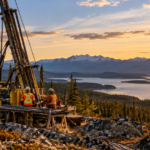
American Tungsten is currently sprinting to become the first domestic producer in decades, aiming to deliver its first product sale before the end of 2026. This isn’t just another speculative mining play. It is a targeted, brownfield restart of the historic IMA (IMO) Mine in Lemhi County, Idaho: a site that was once the fourth-largest tungsten producer in North America before it was shuttered in 1959.
The strategic calculus here isn’t subtle: either the U.S. secures its own supply, or it remains at the mercy of a geopolitical rival that controls over 80% of global production.
More Read

The Idaho Advantage: IMA Mine and Senatorial Support
The IMA Mine isn’t some greenfield fantasy where you spend a decade fighting for a permit to move the first shovel of dirt. It is a site with over 100 years of historical development and roughly $440 million in inflation-adjusted past spending. We are talking about 15 miles of existing underground workings.

Idaho Senator Jim Risch has been a vocal proponent of domestic critical mineral production, often highlighting the “stranglehold” foreign entities have on the American supply chain. For a project like American Tungsten, the political tailwinds in Idaho are significant. The state understands mining; more importantly, it understands the security implications of not mining.
By targeting a brownfield site, American Tungsten is effectively bypassing the “valley of death” that swallows most junior miners. They aren’t inventing a new process; they are rehabilitating a proven asset.
More Read


The $40 Million Strategic Play
In an industry where billion-dollar capex requirements are the norm for “tier one” assets, American Tungsten is moving with a lean, tactical $40 million budget. This includes a $25 million capital expenditure for the IMA Mine itself, plus the strategic acquisition of the Dutch Mountain Processing Facility and Fraction Lode mine in Utah.
Here’s the thing: you don’t always need a massive footprint to have a massive impact.
By pivoting from a direct shipping ore model to an on-site mill processing 500 tons per day, the company expects to produce roughly 1,825 tons of tungsten annually. That’s 8% of total U.S. tungsten demand from a single mine. That’s not a rounding error. That’s a significant dent in our national vulnerability.
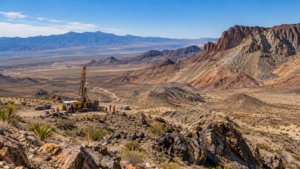
The January 2026 acquisition of the Utah facility was a masterstroke in speed-to-market. The mill is fully permitted, sits on private land, and operated as recently as 2017. While others are waiting for EPA signatures that may never come, American Tungsten is bolting together a turnkey supply chain.
Defense Framing: Why Tungsten Matters for Security
If you want to understand the urgency, look at a map of global processing hubs. The rare earth supply situation is grim enough, but tungsten is arguably more critical for immediate military readiness. It is the “heavy hitter” of the periodic table.
- Kinetic Penetrators: Tungsten’s density is nearly identical to gold but far harder. It is the primary material for armor-piercing sabot rounds used by the Abrams tank and the A-10 Warthog’s GAU-8 cannon.
- Aerospace and Defense: Its high melting point makes it indispensable for rocket nozzles and turbine blades.
- Industrial Tooling: You can’t build a submarine or a fighter jet without tungsten-carbide cutting tools.
Without a domestic source, the U.S. military is effectively outsourcing its “teeth” to Beijing. 2026 marks the inflection point where that trend finally begins to reverse.

Recent Drilling: Expanding the Resource
Data from February 2026 confirmed that the IMA project still has plenty of “meat on the bone.” Underground diamond drilling expanded the No. 5–No. 7 vein system over 300 feet up-dip and 350 feet along strike. This isn’t just confirming historical records; it’s proving that the mineralized system is larger and more robust than previously documented.
The company currently projects a minimum 10-year mine life, but with the latest drill results, that number looks conservative. The feasibility study and preliminary assessment scheduled for April 2026 will likely be the catalyst that forces the broader market to take notice.
But it’s not just about tungsten.
The Economic Moat: Silver and Molybdenum
The IMA mine is a multi-commodity beast. Beyond the primary tungsten production, the operation is slated to produce significant byproducts:
- Silver: An estimated 350,000 ounces annually.
- Molybdenum: Approximately 10% of total U.S. requirements.
These aren’t just “nice to haves.” These byproducts generate over $200 in credits per ton of ore processed. In simple terms, the silver and molybdenum pay for the overhead, allowing the tungsten to be produced at a highly competitive cost basis. It makes the project resilient to commodity price swings that often cripple smaller operators.

The Midnight Burst: 2026 Deadlines
The clock is ticking. American Tungsten claims to be “the only past producer in the United States that will be producing this year.” While full commercial production is slated for 2027, the goal of first product sale by year-end 2026 is the benchmark the industry is watching.
For those tracking the broader mining industry’s transformation, American Tungsten represents a shift toward “small-scale, high-impact” domestic projects. This is the same spirit seen in Nevada’s recent mining resurgence, where jurisdiction and speed-to-market are becoming more valuable than sheer deposit size.
The IMA Mine’s transition from a Cold War relic to a modern defense asset is exactly what the Department of Defense has been asking for. The question isn’t whether we need the tungsten: we do. The question is whether the execution can match the urgency.

Conclusion: A Crisis of Supply
We’ve seen this movie before. Whether it’s lithium races or gold price surges, the market eventually realizes that you cannot disrupt geology with software. You need mines. You need mills. You need domestic sovereignty.
American Tungsten is positioned at the intersection of national security and smart mining economics. With a $40 million capex, a seasoned talent pool, and a brownfield asset in a friendly jurisdiction, they are checking every box that the D.C. bureaucrats have been staring at for years.
By the time the feasibility study drops in April, the window for “early entry” into this story will likely have closed. The race for the first domestic tungsten supply is on, and for once, the U.S. might actually be in the lead.
The strategic calculus isn’t subtle: Idaho is the new frontline of defense mining.