By Charles Pitts

Most analysts are lying to you about 2026. They want you to believe in a smooth, predictable curve where supply meets demand and everyone walks away happy.
The reality is much more uncomfortable.
As we sit here in March 2026, the copper market isn’t just “tight.” It’s becoming a logistical and geopolitical knife fight. If you’re looking for a simple number to plug into a spreadsheet, you’re looking for a fantasy. Geology doesn’t care about your quarterly earnings reports.
Here is the uncomfortable truth: the industry is facing a structural deficit that no amount of “innovation” can fix in the next 18 months. We are staring down the barrel of a multi-year supply-demand mismatch that is going to hammer anyone who hasn’t secured their off-take agreements.
More Read

If you want to understand the copper price forecast for 2026, stop looking at the fluff. Here are the 10 things you actually need to know.

1. The Massive Analyst Disconnect
The big banks can’t agree on a single narrative, and that’s your first red flag.
J.P. Morgan is out here calling for a refined copper deficit of approximately 330 kilotons in 2026. They see prices averaging $12,075 per metric tonne (mt) for the year, with a spike hitting $12,500 in the second quarter. Meanwhile, Goldman Sachs is playing the contrarian, projecting a 160kt surplus and a more modest average of $10,710 for the first half of the year.
More Read
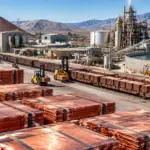
Think about that. The gap between a 330kt deficit and a 160kt surplus isn’t just a rounding error. It’s a total disagreement on the fundamental health of the global economy. One side sees the energy transition accelerating; the other sees a cooling period.

2. The Grid is the Real Story (Not Just EVs)
Everyone talks about electric vehicles like they are the only thing that matters. They aren’t.
Grid and power infrastructure investment is the primary demand catalyst now. It is projected to drive more than 60% of copper demand growth through 2030. If you want to decarbonize, you have to rewire the entire planet. That takes copper. Lots of it.
We aren’t just talking about a few more charging stations in California. We’re talking about massive, high-voltage transmission lines across continents. The Global Battery Revolution is part of it, sure, but without the grid to support it, those batteries are just expensive paperweights.
3. US Tariffs: The Great Wildcard
The strategic calculus here isn’t subtle.
There is significant uncertainty regarding potential US refined copper tariffs. Current projections suggest a 15% to 25% tariff could be announced mid-2026. If that happens, the price isn’t going to wait for the implementation date. We will see a massive front-loading of imports as companies try to beat the clock.
This creates an “uncertainty premium.” Traders will bid up prices simply because they don’t know what the rules of the game will look like in 2027. It’s a classic case of policy driving volatility.
4. The 2026 Supply Cliff is Structural
You can’t disrupt geology.
The mining industry has been under-investing in new discovery for over a decade. Now, the chickens are coming home to roost. We are seeing severe supply disruptions, mine delays, and a project pipeline that is effectively dry for the mid-2020s.
Look at what’s happening in South America. While Chile’s lithium race gets the headlines, their copper output is struggling with declining ore grades and aging infrastructure. Those two clocks: the demand clock and the supply clock: do not sync.
5. AI and the “Hidden” Copper Demand
The “shiny AI revolution” has a very heavy, very copper-intensive footprint.
Artificial intelligence requires data centers. Data centers require power: massive amounts of it. And power requires copper. While the world was focused on chips, they forgot about the wiring. AI-related investments are now a top-tier demand driver, competing directly with the renewable energy sector for every available ton of refined metal.
Every time a tech giant announces a new “hyperscale” data center, they are effectively placing a massive order for copper that wasn’t in anyone’s forecast three years ago.
6. China’s Demand Paradox
China accounts for roughly half of the world’s copper demand growth, but the signals are mixed.
In late 2025, Chinese refined copper demand actually fell 8% year-on-year. This has led some to believe the “China growth story” is over. That’s a mistake. China is simply shifting its usage from property development to high-tech manufacturing and renewable energy.
They are still the biggest player in the room. They are still the ones setting the floor for the copper price forecast in 2026. If their demand recovers even slightly faster than expected, the $12,500/mt target from J.P. Morgan starts to look conservative.

7. Peak Pricing in Q2 2026
If you are an operator or an investor, circle the second quarter of 2026 on your calendar.
Both J.P. Morgan and Deutsche Bank are flagging Q2 2026 as the potential peak. Deutsche Bank is even whispering about $13,000/mt. Why then? It’s the perfect storm: seasonal demand peaks, the peak of tariff uncertainty in the US, and the point where the 2026 deficit will feel most acute.
Prices may retreat in the second half of the year as some of that tariff clarity emerges, but the first six months of 2026 are going to be brutal for buyers.
8. The Aluminum Substitution Threat
High prices have consequences.
The copper-to-aluminum price ratio is projected to reach 4.5:1 in 2026. That is approaching record highs. When copper gets this expensive, engineers start looking at aluminum.
Substitution is a slow, structural process. You don’t just swap metals overnight in a complex transmission system. But the longer copper stays above $12,000, the more incentive there is to design it out of future projects. This is the “throttle” on the copper market: it can only go so high before it starts destroying its own demand.
9. Exploration Breakthroughs Are Too Late
We love a good headline about deep-sea mining technology or rare earth breakthroughs, like the Per Geijer project. But let’s be real: none of these will produce enough copper to move the needle by 2026.
Exploration is a 10-to-15-year game. Even if we found a massive new deposit tomorrow, it wouldn’t help us with the 2026 deficit. We are stuck with the mines we have, and many of them are tired.
10. The Long-Term Road to $15,000
If you can look past the 2026 volatility, the long-term picture is even more aggressive.
Goldman Sachs expects demand to consistently exceed supply from 2029 onwards. They are forecasting $15,000/mt by 2035. This makes the current $10,000 to $13,000 range look like a bargain in retrospect.
The structural demand shift from energy transition investments isn’t a fad. It’s a fundamental rebuilding of the global economy. Whether we hit a surplus or a deficit in 2026 is almost a secondary point to the fact that we are moving toward a world that needs more copper than we know how to produce.

The Bottom Line for 2026
The copper market is at an inflection point. The range of $9,800 to $13,000 per tonne for 2026 reflects a massive amount of uncertainty, but the trend is clear: the floor is rising.
Between the US Steel future crossroads and the volatility in gold prices predicted by J.P. Morgan, the commodities market is entering a era of extreme sensitivity to geopolitical shifts.
If you’re waiting for copper to get “cheap” again, you’re likely going to be waiting a long time. The era of cheap, easy-to-get copper is over. Welcome to the new reality.
For a deeper look at the historical data that brought us here, you can review our past analysis in the Skillings Mining Review January 2025 and March 2025 editions.