The copper industry loves a good narrative about “scarcity,” but it rarely puts its money where its mouth is with this much aggression. While most majors are busy trimming fat and “optimizing” existing brownfield sites, Lundin Mining is doing something significantly more ballsy. They are doubling down on a geological anomaly that straddles the border of Chile and Argentina.

The Vicuña District isn’t just a collection of mines. It’s a sovereign-scale mineral province.
Lundin Mining’s recent move to drop an additional $215 million to increase its stake in the Caserones mine and the Los Helados project isn’t a speculative gamble. It’s a strategic cornering of the market. They aren’t just buying copper; they are buying the infrastructure and the high-grade “sweetener” ore needed to dominate the next three decades of South American production.
The strategic calculus here isn’t subtle: if you control the processing hub and the highest-grade satellite deposits, you control the district. Period.
The $215M Calculation: Why Caserones?
Caserones is the tactical anchor of Lundin’s entire Vicuña strategy. Located in the Atacama Region of Chile, it’s a massive, functioning operation that provides what every developer in the district lacks: immediate cash flow and a massive mill.
More Read

By shelling out $215 million to increase their ownership, Lundin is effectively securing their seat at the head of the table. They’re not just an operator anymore; they are the landlord.


Lundin’s $215M stake increase targets strategic district dominance.
But here’s where it gets really uncomfortable for the competition. Caserones isn’t a young mine. Its grades have been declining, which is the standard “grim reality” of Chilean copper. However, Lundin isn’t looking at Caserones in isolation. They are looking at it as the hungry mouth that will feed on the high-grade ore from Los Helados, located just 10 kilometers away.
More Read

This is the “hub-and-spoke” model on steroids.
Instead of spending $5 billion to build a new concentrator at Los Helados, you simply truck the high-grade stuff to the existing mill at Caserones. It’s efficient. It’s ruthless. And it completely changes the internal rate of return (IRR) for the entire district.
The Vicuña District Gold Rush
If you haven’t been paying attention to the Vicuña District, you’re already behind. This is a 38-million-tonne copper monster. For context, that’s roughly enough copper to power the global EV transition for the next decade single-handedly.
The district includes:
- Josemaría: The massive starter project in Argentina.
- Filo del Sol: A high-grade beast that keeps getting bigger with every drill hole.
- Los Helados: The high-grade satellite that Lundin is now consolidating.
- Caserones: The operational heart of the Chilean side.
The sheer scale of the resources here: 81 million ounces of gold and 1.4 billion ounces of silver alongside the copper: makes this more than a mining play. It’s a generational wealth transfer from the earth to the balance sheets of Lundin and its partner, BHP.
We’ve seen similar consolidation moves in other critical mineral sectors, such as when USA Rare Earth consolidated control of the Round Top project. The logic is the same: in a world of fragmented supply chains, whoever controls the resource at scale wins.
Trucking Synergies: The Logistics of Dominance
The idea of trucking ore might sound like 19th-century mining, but in the high-altitude Andes, it’s a masterstroke of capital efficiency.
By integrating Caserones and Los Helados, Lundin is bypassing the two biggest killers of mining projects: permitting delays and massive upfront CAPEX. Building a new mill in the Andes in 2026 is a nightmare of environmental red tape and inflationary equipment costs. Using an existing one? That’s just smart business.
The high-grade ore from Los Helados acts as a “sweetener” for the Caserones mill. When you blend high-grade feed with lower-grade stockpiles, your recovery rates go up and your cost per pound goes down.

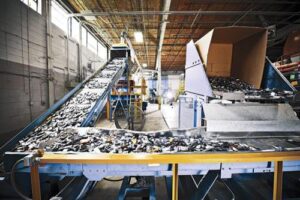
Caption: Advanced milling operations are the key to unlocking Vicuña’s value.
This isn’t just a theory. Lundin is already hammering out the logistics of this integration. The goal is to turn Caserones into a long-life, low-cost “super-hub” that can process ore from across the Vicuña District.
To understand the complexity of this, it’s worth looking at copper processing 101: from crushing to cathode. When you realize the energy and infrastructure required to move rock, you realize why Lundin is so desperate to own the mill.
The BHP Factor: A $11 Billion Marriage
Let’s be real: Lundin isn’t doing this alone. The 50:50 joint venture with BHP on the Filo del Sol and Josemaría assets is the ultimate validation. BHP doesn’t play in the “maybe” leagues. They only show up when the resource is “Tier One”: meaning it’s big enough to move the needle for a company with a $150 billion market cap.
The preliminary economic assessment for the combined district suggests a $7.1 billion first-stage development, eventually rising to $18 billion over the project’s life.
That’s not a typo. $18 billion.
This level of investment is the largest in Argentina’s history. It’s a massive bet on the stability of the San Juan province and the Antofagasta region. While other majors are fleeing “risky” jurisdictions, Lundin and BHP are planting a flag. They know that you can’t disrupt geology. The copper is there. The world needs it. The rest is just paperwork.
2026: The Inflection Point for Copper Supply
The timing of this $215 million bet is what makes it particularly nasty for Lundin’s competitors. We are entering the “Great Copper Gap.”
The industry is forecast to produce approximately 475 kilotons in 2026, which sounds like a lot until you look at the demand curve. Between AI data centers, the green energy transition, and the electrification of everything, we are looking at a structural deficit that no amount of recycling can fix.
Lundin is positioning itself to be the primary supplier when the “chickens come home to roost” for buyers who haven’t secured long-term contracts.

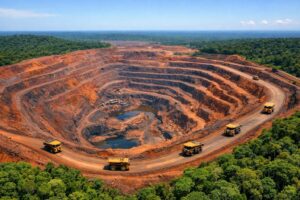
Operations in the Vicuña District are scaling up to meet global demand.
Most analysts are looking at 2030 for first production from the combined Vicuña assets. That sounds far away, but in mining time, that’s tomorrow. By securing Caserones and Los Helados now, Lundin ensures they have production today while they build the monsters of tomorrow.
The Geopolitical Tightrope
Operating a project that straddles the Chile-Argentina border is a logistical and legal headache. You have two different tax codes, two different labor laws, and two different currencies.
However, the Vicuña District is benefitting from a rare moment of regional alignment. Argentina is desperate for foreign investment to stabilize its economy, and Chile is waking up to the fact that its aging mines need a shot in the arm.
Lundin’s $215 million move is a vote of confidence in this cross-border cooperation. They aren’t just betting on copper; they are betting on the ability of South American governments to stay out of the way of $18 billion in capital investment.
It’s a gamble, sure. But compared to the risk of not having copper in 2028? It’s the safest bet in the room.
The Final Assessment: A District Transformed
Lundin Mining isn’t trying to build a mine; they’re trying to build a legacy.
The $215 million investment to consolidate Caserones and Los Helados is the final piece of the puzzle. It gives them the mill, the infrastructure, and the high-grade ore to bridge the gap between their current production and the massive payday that is Josemaría and Filo del Sol.
The strategic calculus is brutal and brilliant. By the time the rest of the industry realizes how dominant the Vicuña District has become, Lundin and BHP will already have the gates locked.
There’s not enough copper to go around. Lundin knows it. BHP knows it. And now, the market is starting to catch on.
This isn’t just a consolidation; it’s a coronation. The Vicuña District is the new king of copper, and Lundin just paid $215 million to make sure they’re the ones wearing the crown.