Taseko’s Florence Copper project marks the first major greenfield copper production in the United States since 2008.

Eighteen years. That is how long it took to get Florence Copper from a “maybe” to a “now.”
In an era where tech CEOs talk about building artificial general intelligence in eighteen months, the mining industry operates on a different clock. A geologic clock. A regulatory clock. And, quite frankly, a clock that has been broken for a long time. But as of March 2026, Taseko Mines has finally done what most thought was impossible in the current American permitting climate: they’ve brought a new, greenfield copper mine into production.
This isn’t just another corporate press release about “increased shareholder value.” It’s an inflection point. For the first time since 2008, the United States has a new greenfield copper source coming online.
And we’re going to need every single ounce.
More Read

The Greenfield Curse is Finally Broken
Let’s be blunt: the US has been coasting on legacy assets for decades. Most of our domestic copper comes from massive, aging pits that were permitted when black-and-white television was the height of technology. To see a project go from discovery and early development through the gauntlet of the EPA, state regulators, and local opposition, and actually pour metal, is a rarity.

Florence Copper isn’t just a win for Taseko. It’s a proof of concept for the entire US domestic critical mineral supply chain.
The project had a long, painful gestation. Before Taseko even entered the frame in 2014, names like Conoco, Magma Copper, and BHP had already sunk over $135 million into the ground. They knew the ore was there. They just didn’t know if the American regulatory system would ever let them touch it. Taseko spent $275 million on construction once they finally got the green light, and they did it largely on time.
More Read

That’s not a typo. A major mining project in the US finished on time.
Why 2008 Matters (and why it took so long)
The last time the US saw a greenfield copper project of this scale enter production was 2008. Think about what has happened since then. We’ve seen the rise of the smartphone, the explosion of the EV market, and the birth of the AI-driven data center boom. All of those things require copper. Lots of it.
While demand skyrocketed, domestic supply stagnated. We became comfortable with the idea that we could just buy what we needed from the global market. But as we’ve seen with China’s critical minerals export controls, the global market is no longer a friendly, open buffet. It’s a geopolitical minefield.
Florence Copper produces copper cathode. This is refined metal ready for industrial use. It skips the middleman. It doesn’t need to be shipped to a smelter in Asia and sold back to us at a premium. It stays here.

The VSF X modular technology at the heart of Florence Copper allows for a smaller footprint and higher efficiency.
The Tech: VSF X and the Modular Revolution
The secret sauce at Florence isn’t just the ore; it’s the extraction method. Traditional copper mining is a “brute force” exercise, you dig a massive hole, haul the rock, crush it, and process it. You can read more about that traditional path in our guide to copper processing 101.
Florence is different. It uses In-Situ Copper Recovery (ISCR).
They aren’t digging a pit. They are circulating a water-based solution through the ore body to dissolve the copper and then pumping it back to the surface. It’s surgical. It’s quiet. And it’s why they were able to get it permitted in the middle of Arizona without the usual decade of lawsuits that accompany open-pit designs.
The facility utilizes VSF X modular technology. This is the “plug-and-play” of the mining world. By using modular solvent extraction units, Taseko kept the footprint small and the construction timeline tight. These modules allow for a highly efficient SX/EW (solvent extraction and electrowinning) process.
At full tilt, this facility is designed to pump out 85 million pounds of copper annually.
For 2026, the target is 30 to 35 million pounds. That’s a massive jump for Taseko’s total output, roughly a 200% increase in their capacity when combined with their Gibraltar mine operations.
The Brutal Reality of the US Supply Chain
The strategic calculus here isn’t subtle. The US is currently facing a massive deficit in domestic copper production. We are looking at a global demand increase of 24% by 2035. Every AI chip, every EV battery, and every wind turbine is a copper hog.
But you can’t disrupt geology.
You can build a software startup in a garage. You can’t “build” a copper deposit. You have to find it, and then you have to hope it’s in a jurisdiction that won’t seize it or block it. Having 85 million pounds of annual capacity come online in central Arizona, not the DRC, not a volatile corner of South America, is a massive de-risking event for US manufacturers.
It is a domestic win that was desperately needed.
A New Standard for “Green” Copper?
The term “green mining” usually feels like corporate window dressing. In the case of Florence, the numbers actually back it up.
Because there is no massive open pit, no waste rock piles, and no tailings dams, the environmental footprint is microscopic compared to traditional mines. The energy intensity is lower. The water usage is lower.
This is the only way mining happens in the US from now on. The days of the “mega-pit” being the go-to solution are fading. If you want to get a project through the modern permitting gauntlet, you have to look like Florence. You have to be modular, you have to be surgical, and you have to be efficient.

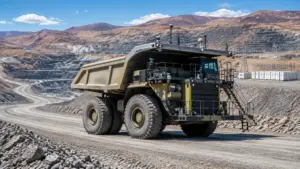
Operational safety and technical precision were key to meeting the 2026 production ramp-up targets.
The Bottom Line for 2026
Florence Copper is entering the market at exactly the right time. Copper prices are hovering near record highs, driven by the dual engines of electrification and digitization. The facility’s solvent extraction and electrowinning (SX/EW) plant is now fully operational following the successful wellfield acidification that started late last year.
What happens next is the “big ramp.” Taseko is already working on the wellfield expansion to hit that 85 million pound steady-state.
But there’s a broader lesson here for the industry: 18 years is too long. If the US wants to compete in the 2030s, we cannot wait two decades for every project to navigate the “valley of death” between discovery and production. Florence Copper is a triumph, yes, but it’s also a warning. We got lucky this time: the ore body was suited for in-situ recovery, and the company had the stomach to fight for 18 years.
Not every junior miner has that kind of endurance.
For now, the US supply chain can breathe a very small sigh of relief. We have a new source of domestic copper. It’s clean, it’s modern, and it’s finally producing.
There’s just one problem: we need ten more like it.
Key Data Points: Florence Copper 2026
| Metric | Detail |
|---|---|
| Project Type | Greenfield / In-Situ Copper Recovery (ISCR) |
| 2026 Production Target | 30 – 35 Million Lbs |
| Full Design Capacity | 85 Million Lbs Per Year |
| Technology | VSF X Modular Solvent Extraction |
| Total Construction Cost | ~$275 Million |
| Last US Greenfield Start | 2008 |
The clock is ticking on the energy transition. Florence Copper just proved we can still build things in America: even if it takes nearly two decades to get the permission to start. Let’s hope the next one doesn’t take until 2044.