The era of cheap, easy-to-access minerals ended while the market was looking at spreadsheets. Today, Sunday, March 22, 2026, we aren’t just looking at price fluctuations: we’re watching the complete rewiring of the global industrial base. The “wait and see” approach that paralyzed the sector in 2024 is officially dead.

Capital is moving. Not in the slow, tentative tranches of the last decade, but in multi-billion dollar surges backed by sovereign mandates and private equity firms that have finally lost their patience with the status quo. If you aren’t positioned for the structural shifts appearing this morning, you’re already behind the curve.
This is the Sunday Briefing. Let’s look at the numbers that actually matter.
The ‘Price Floor’ Era: Japan’s NdPr Line in the Sand
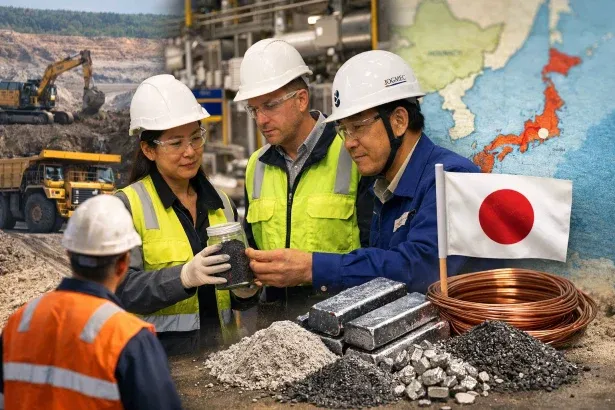
For years, the rare earths market has been a victim of volatility and a certain superpower’s ability to turn the supply tap on and off at will. That ended this week. Lynas Rare Earths and the Japanese government just hammered out a deal for Neodymium-Praseodymium (NdPr) at a fixed $110/kg.
That’s not a market price. It’s a structural floor.
More Read

Japan isn’t just buying metal; they are buying a guarantee that their high-tech manufacturing core won’t be throttled by geopolitical whims. By setting a $110/kg floor, they’ve essentially de-risked the balance sheet for Lynas, ensuring that no matter how low the “spot” price might theoretically drop, the mine stays operational and the supply stays western.

This is price-insensitive procurement. It’s the new reality for critical minerals. We expect to see similar floor-price models emerging for lithium and cobalt before the year is out. The message to the market is clear: security of supply now outweighs the search for the lowest possible cost.
More Read

Orion’s $2.2B War Chest: Smart Money Heads for the Pit
While retail investors are still chasing the “shiny AI revolution,” the institutional heavyweights are moving back to basics. Orion Resource Partners just closed their ‘Mine Finance Fund IV’ at a staggering $2.2 billion.
In the world of mining finance, this isn’t just a rounding error. It’s a massive injection of liquidity aimed specifically at the mid-tier producers who have been starved of capital. Orion is betting on the fact that the major miners: the Rio Tintos and BHPs of the world: have waited too long to build. The majors will now be forced to buy their way out of a production deficit, and Orion plans to be the one holding the keys to the best assets.
We are entering a period where rare earth processing and mine development are being treated as infrastructure plays rather than speculative bets. Per facility. That’s the level of commitment we’re seeing.
The Latin American Corridor: Washington Writes a Check
The U.S. government is finally putting its money where its mouth is regarding the global battery revolution. This week, a $1 billion critical minerals injection was greenlit for Latin America, with a razor-sharp focus on Argentina and Brazil.
For too long, the Western world allowed a vacuum to exist in the “Lithium Triangle.” China filled that vacuum with infrastructure and long-term contracts. Now, the U.S. is deploying capital to de-risk projects in the Vicuña District and beyond. This isn’t charity; it’s a desperate attempt to shorten supply chains that are currently stretched across half the globe.

If you’re watching the mining news, keep your eyes on the juniors in Argentina. The $1B isn’t going to the majors; it’s designed to push the small-cap explorers across the finish line and into production.
Atlantic Lithium and the Zijin Pivot
In Ghana, Atlantic Lithium has reached a critical milestone with the Ewoyaa approval. This is significant for two reasons. First, it proves that African lithium can be brought online under modern ESG standards. Second, it highlights the predatory: and effective: nature of the current M&A environment.
Meanwhile, Zijin Mining is executing a pivot that should make every Western CEO nervous. Traditionally a gold and copper powerhouse, Zijin is aggressively moving into Tungsten and Uranium. They aren’t just diversifying; they are cornering the markets that drive both defense and “clean” energy. While the West debates permit timelines, Zijin is building.
Commodity Supercycle 2.0: The Sprott Thesis
Sprott’s latest outlook has sent ripples through the trading desks this weekend. Their take on the copper price forecast 2026 is nothing short of bullish, bordering on alarmist. They argue that we aren’t just in a cyclical upturn; we are in a structural supply gap that cannot be closed by 2030, let alone 2026.
Copper is the “electrification bottleneck.” Uranium is the “baseload necessity.” Both are currently trading in a reality where demand is visible and locked in, but supply is theoretical and buried under 500 meters of rock. Sprott’s data suggests that even if every planned project comes online today: which they won’t: we still face a 5-million-ton copper deficit by the end of the decade.
The strategic calculus here isn’t subtle: buy the assets now, or pay ten times the price later.

Monday Outlook: The Deep-Dive Schedule
We aren’t slowing down for the work week. Tomorrow, March 23, Skillings Mining Intelligence is launching a 5-story deep-dive series to give you the granular data behind these headlines. Here is what is hitting the wire:
- 01:00 ET: Copper Price Forecast 2026. Why the structural deficit is the only metric that matters for your portfolio.
- 02:30 ET: Lithium’s Rebound. Are the lows finally dead? We analyze the 2026 recovery curve.
- 04:00 ET: The M&A Playbook. How scale premiums are fundamentally changing how we value projects in 2026.
- 05:30 ET: The Uranium Outlook. 10 things you need to know about the 2026 market before the opening bell.
- 07:00 ET: Critical Mineral Sourcing. 7 brutal mistakes companies are still making in their supply chains.
The Bottom Line
The “Green Transition” was a nice slogan. The “Digital Revolution” was a great pitch. But 2026 is the year we realize that neither exists without the drill bit.
We are seeing a convergence of national security and capital markets that hasn’t been witnessed since the 1940s. The Lynas/Japan deal isn’t an outlier; it’s the blueprint. The Orion fund isn’t a gamble; it’s a land grab.
Tomorrow morning, the markets will react to the headlines. But the real moves happened this weekend, in the closed-door meetings where supply floors were set and billion-dollar funds were finalized.
Welcome to the new reality. There’s not enough to go around.
For more in-depth analysis of past trends and how they shaped today’s market, see our previous reviews: