Myriad Uranium just pulled off a 6X return on its Red Basin project in New Mexico. In a sector where “junior miner” is often synonymous with “capital sink,” that’s not just a statistical outlier. It’s a flare fired directly into the 2026 energy market.

The buyer? Subatomic Industries. If you haven’t heard the name yet, look at the backers: 8VC. We are talking about high-tier tech venture capital: the kind of money that usually flows into SaaS and AI: now flowing into the literal dirt of New Mexico.
The strategic calculus here isn’t subtle: Big Tech is terrified of the dark.
As we cross the first quarter of 2026, the “AI revolution” has hit a physical wall. That wall is the power grid. Data centers are scaling at a rate that traditional renewables simply cannot support. You can’t power a 100-gigawatt AI cluster with hope and a few windy afternoons. You need baseload. You need nuclear. And for the first time in decades, the tech sector is realizing they can’t just buy the electricity: they have to own the fuel.
The Anatomy of a 6X Exit
Myriad Uranium’s sale of the Red Basin project is the definitive “proof of concept” for the 2026 uranium bull run. Myriad acquired the interest in Red Basin just as the market was beginning to wake up. By the time they shook hands with Subatomic Industries, the value had exploded.
More Read
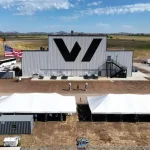
Red Basin is situated in the Grants Mineral Belt: a region that has historically produced more than 340 million pounds of U3O8. It’s not an exploration gamble; it’s a proven precinct. Subatomic isn’t buying a lottery ticket. They are buying a guaranteed feedstock for the next generation of Small Modular Reactors (SMRs).


This transaction highlights a massive shift in mining finance. Traditionally, a junior would sell to a mid-tier producer, who would eventually be swallowed by a major. That chain is broken. Now, tech-backed entities are skipping the middlemen and going straight to the source. They are securing domestic supply chains before the “Resource Realignment” leaves them stranded.
More Read

For a deeper look at the movers and shakers in this space, check out the Sunday Power List: The 10 Titans Defining the 2026 Resource Realignment.
Why Big Tech is Playing “Miner”
The Silicon Valley crowd spent the last decade disrupting software. Now, they’re disrupting geology.
Companies like Amazon, Google, and Microsoft have all signed nuclear-related power purchase agreements (PPAs) or direct investment deals. But the realization in 2026 is that a PPA is just a piece of paper if the utility can’t find the uranium.
The numbers are grim. The U.S. currently imports over 95% of its uranium. A significant chunk of that has historically come from Russia and Kazakhstan. In the current geopolitical climate, relying on those sources is a suicide pact for a data center operator.
Enter Subatomic Industries and 8VC. By acquiring assets like Red Basin, they are vertically integrating the energy stack.
- Step 1: Secure the ore (Myriad’s Red Basin).
- Step 2: Fast-track enrichment (U.S. government-backed initiatives).
- Step 3: Deploy SMRs directly next to data centers.
It’s efficient. It’s necessary. And it’s making early-moving uranium investors incredibly wealthy.

The 2026 Supply Crunch: A “Chickens Coming Home to Roost” Moment
We’ve been warned for years. The uranium market has moved from “demand uncertainty” to “acute supply shortage recognition.” Prices are currently hovering above $82/lb, and the consensus among analysts is that the ceiling is nowhere in sight.
Why? Because the supply-demand gap is a canyon, not a crack.
Global demand is projected to hit record highs as the U.S. government executes its plan to quadruple domestic nuclear power over the next 25 years. President Trump’s invocation of the Defense Production Act has put a floor under the market, but it can’t manifest ore out of thin air.
Mining takes time. Permitting takes longer.
Tech companies operate on 18-month cycles. Mining operates on 10-year cycles. Those two clocks do not sync. This is why we are seeing a frenzy in mining finance news. Tech giants are realizing they have to buy projects now if they want power by 2030.
Myriad’s Pivot: The Copper Mountain Alpha
While the Red Basin sale is the headline, the real story for Myriad investors might be what happens next. With the 6X windfall, Myriad is shifting its primary focus to Copper Mountain in Wyoming.
If Red Basin was the appetizer, Copper Mountain is the main course.
Wyoming is the uranium capital of the United States. Copper Mountain itself is a massive historical resource, previously explored and developed by Union Pacific. The project has a historical (non-43-101 compliant) estimate that suggests tens of millions of pounds of uranium.

In 2026, Wyoming is the safest jurisdiction on the planet for nuclear feedstock. The state government is actively pro-nuclear, and the infrastructure is already there. Myriad isn’t starting from scratch; they are standing on the shoulders of decades of data.
For investors, this is the “Investor Magnet” play. You take the win from New Mexico, recycle the capital into a Tier-1 Wyoming asset, and wait for the next tech-backed suitor to realize they need more pounds in the ground.
The Geopolitical Stranglehold
We cannot talk about uranium in 2026 without talking about the “National Security” premium.
The U.S. government recently awarded $2.7 billion to domestic nuclear fuel makers. This isn’t just about “green energy.” This is about breaking the Russian stranglehold on the nuclear fuel cycle. If you are a miner with a project on U.S. soil, you aren’t just selling a commodity; you are selling a strategic asset.
This is why companies like Myriad are commanding premiums. It’s also why we’ve seen similar movements in other critical minerals. Whether it’s the Nouveau Monde Graphite timeline or the rush for rare earth processing, the theme is the same: Onshoring is the only path forward.

Uranium vs. The Field
While gold has seen its own volatility: see our analysis on the gold price crash risks: uranium feels different. Gold is a hedge against chaos. Uranium is the fuel for the future.
Even as copper titans launch $7.5B expansions, the energy density of uranium makes it the most “concentrated” value play in the resource sector right now. One pellet of uranium has the energy equivalent of a ton of coal. For Big Tech, the math is inescapable.
The strategic alignment of venture capital (8VC), junior mining expertise (Myriad), and domestic policy (Defense Production Act) has created a perfect storm.
What Happens Next?
The “Tech-Nuclear” alliance is still in its infancy. We are going to see more deals like the Myriad-Subatomic transaction. We are going to see “SMR-ready” projects become the most sought-after real estate in the mining world.
Here is the reality for 2026:
- AI demand is inelastic. They will pay whatever it takes for power.
- U.S. supply is finite. There are only so many “Copper Mountains” left.
- Capital is shifting. The traditional mining investment pool is being joined by the deepest pockets in the world.
Myriad Uranium’s 6X win isn’t just a lucky break. It’s a blueprint. They identified a strategic asset, de-risked it, and sold it to the people who need it most.
As they move into Copper Mountain, the market is watching. In 2026, you don’t want to be the person wondering why the lights went out. You want to be the person owning the fuel.

For more updates on the uranium sector and the ongoing evolution of the global battery revolution, stay tuned to Skillings Mining Review. This isn’t just a commodity cycle; it’s a total realignment of the global economy.
The 2026 Uranium Playbook:
- Focus on Wyoming and New Mexico.
- Watch the Tech-VC entrance points.
- Follow the historical data (Copper Mountain).
The smart money has already moved. The only question is how much further this 6X win can go.