Africa holds roughly 30% of global mineral reserves. It captures less than 10% of the value. That gap isn't geology. It's infrastructure, capital access, and the brutal economics of shipping raw ore to China for processing.

Mining Indaba 2026 just delivered the most significant attempt yet to close that gap. The Development Bank of Southern Africa (DBSA) and Afreximbank signed a master risk participation agreement (MRPA) designed to accelerate critical minerals beneficiation across the continent. Not extraction. Beneficiation. That distinction matters.
This isn't a project finance deal. It's a trade finance framework built to support the working-capital-intensive, equipment-heavy, cross-border reality of turning raw ore into refined product. The emphasis is on local processing, regional value chains, and capturing more margin before the container ship leaves port.
The agreement represents a fundamental shift in how development finance institutions think about African mining. And if it works, it could reshape where battery metals get processed over the next decade.

More Read

What the MRPA Actually Does
A master risk participation agreement establishes a standing legal structure between two financial institutions. Instead of negotiating terms transaction by transaction, the MRPA creates pre-approved participation mechanisms that allow one bank to share risk on deals originated by the other.

The DBSA-Afreximbank framework expands approval capacity, extends financing tenors, and lowers the cost of trade finance for exporters, importers, and regional banks. It targets trade-intensive, working-capital-heavy value chains: specifically critical minerals: supporting equipment imports, processing inputs, inventory cycles, and cross-border movement of intermediate goods.
Translation: if you're building a cobalt refinery in the DRC or a lithium processing plant in Zimbabwe, this framework makes it faster and cheaper to finance the working capital you need to operate, not just the capex to build.

That's a critical distinction. Project finance for mines is relatively well-developed. Trade finance for beneficiation operations: especially in frontier markets: is sparse, expensive, and slow. The MRPA directly addresses that bottleneck.
The Mechanics of Faster Capital Deployment
Traditional development finance operates on long approval cycles. A mining company or processor applies for financing. The lender conducts due diligence. Risk committees meet. Terms get negotiated. Legal teams draft agreements. Months pass. Sometimes years.
The MRPA compresses that timeline by pre-establishing participation structures. When DBSA originates a deal that fits the framework's parameters, Afreximbank can participate without starting from scratch. The legal infrastructure is already in place. The risk-sharing mechanics are pre-approved. Capital moves faster.

According to DBSA CEO Boitumelo Mosako, the partnership delivers "scale, speed and impact: turning resources into sustainable jobs, factories and exports across the continent." The scale comes from Afreximbank's balance sheet. The speed comes from the MRPA structure. The impact depends on execution.
The framework also addresses tenor mismatch. Mining projects operate on 10-to-20-year timelines. Trade finance typically maxes out at three years. Beneficiation operations need something in between: long enough to justify the infrastructure investment, short enough to align with offtake contract cycles. The MRPA extends financing tenors to meet that middle ground.
From Extraction to Value Addition
The strategic emphasis of the agreement is unambiguous: beneficiation, local processing, and regional value-chain development. Not just digging ore out of the ground. Processing it domestically. Creating jobs. Building industrial capacity.
This marks a decisive shift in financing priorities. For decades, development finance institutions funded mine construction and infrastructure: roads, ports, power. Those projects matter. But they extract maximum value for downstream processors, not for the countries where the minerals originate.
The MRPA reorients capital toward the middle of the value chain. Equipment imports for processing plants. Working capital for refinery operations. Inventory financing for concentrate stockpiles. Cross-border trade finance for moving intermediate products between African facilities.
Consider the typical battery metals value chain: mine → concentrate → refined metal → precursor material → cathode → cell → battery. Africa dominates the first step. China dominates steps two through seven. The MRPA targets steps two and three: concentrate processing and metal refining: where margin multiplies but capital requirements spike.

That's where the jobs are. That's where the tax base grows. That's where industrial capacity gets built. And that's where African countries have struggled to attract patient, affordable capital.
Regional Integration and the AfCFTA Angle
The agreement directly supports African Continental Free Trade Area (AfCFTA) implementation. The free trade zone launched in 2021, creating a single market of 1.3 billion people with combined GDP exceeding $3 trillion. But cross-border trade infrastructure remains underdeveloped.
Critical minerals beneficiation requires regional value chains. Cobalt mined in the DRC might get concentrated in Zambia, refined in South Africa, and turned into precursor material in Morocco. Each step crosses a border. Each border creates financing friction.
The MRPA de-risks those cross-border transactions. By providing trade finance that spans multiple jurisdictions with pre-established risk-sharing mechanisms, the framework makes regional value chains financially viable. That's critical for beneficiation at scale.
AfCFTA promises duty-free movement of goods between member states. But tariff elimination alone doesn't build value chains. You need logistics infrastructure. Power reliability. Skilled labor. And working capital to finance inventory as it moves between processing stages. The MRPA addresses the last piece.
What This Means for Critical Minerals Markets
If the framework delivers on its objectives, it could accelerate the timeline for African beneficiation capacity coming online. That matters for three reasons.
First, it diversifies processing away from China's near-monopoly. China refines over 70% of global cobalt, 60% of lithium, and 90% of rare earths. Western governments and mining majors want alternative processing hubs. Africa has the reserves and could build the capacity: if financing becomes available.

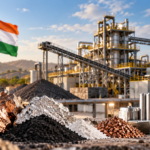
Second, it captures more margin in-country. Shipping raw lithium spodumene to China generates revenue at $600-$800 per ton. Converting it to lithium carbonate domestically generates revenue at $12,000-$15,000 per ton. The economics favor beneficiation. The capital access hasn't.
Third, it shortens supply chains. Processing minerals closer to source reduces transportation costs, lowers carbon emissions, and decreases exposure to shipping disruptions. For battery manufacturers chasing ESG metrics and supply chain resilience, African beneficiation makes strategic sense.
The question is execution. Development finance frameworks announce with fanfare. Delivering capital at scale, at speed, to viable projects is harder. The MRPA creates the infrastructure. Now it needs deal flow.
The Challenges Ahead
Trade finance solves one bottleneck. It doesn't solve all of them.
African beneficiation faces structural challenges that capital alone can't fix. Power reliability remains inconsistent across much of the continent. Skilled labor for processing operations is scarce. Logistics infrastructure: rail, ports, intermodal facilities: lags behind operational needs. Regulatory frameworks vary wildly between jurisdictions.
The MRPA addresses financing constraints. It doesn't build power plants. It doesn't train metallurgists. It doesn't harmonize mining codes between countries.
Beneficiation also requires long-term offtake agreements. Refineries need guaranteed feedstock supply from mines and guaranteed product demand from battery makers. Those contracts take years to negotiate. They require creditworthy counterparties. They depend on stable regulatory environments.

The mining industry has watched other beneficiation initiatives stall. Indonesia's nickel processing mandate succeeded because the government enforced an ore export ban. African countries lack unified policy enforcement across borders. Without coordinated industrial strategy, capital availability alone won't shift value chains.
The Bottom Line
The DBSA-Afreximbank MRPA represents the most serious institutional effort yet to finance African critical minerals beneficiation at scale. It addresses a real constraint: trade finance scarcity: with a practical mechanism. The framework is sound. The strategic logic is clear.
Now comes the hard part: deploying capital into viable projects that can deliver returns while building industrial capacity. That requires coordination between governments, mining companies, processors, and offtake partners. It requires patience from investors accustomed to shorter return timelines. It requires execution discipline from operators building new facilities in challenging environments.
If it works, Africa moves from resource exporter to value-added manufacturer. If it doesn't, the continent continues shipping raw ore at commodity prices while China captures the margin. The MRPA creates the opportunity. The industry determines the outcome.
Mining Indaba deals make headlines. Whether they make factories is what matters.