The global race for critical minerals has redirected the industry’s focus toward the Tethyan Belt, a vast metallogenic province stretching from Western Europe through Turkey and Iran to Pakistan and Southeast Asia. As of April 2026, this region represents one of the final frontiers for Tier-1 copper and gold discoveries. However, the geographic continuity of its geology is frequently interrupted by a fragmented geopolitical landscape.

For operators and investors, the Tethyan Belt offers a high-stakes trade-off: world-class mineral endowment versus a complex spectrum of jurisdictional risks. Navigating this belt requires more than geological expertise; it demands a sophisticated understanding of regional stability, evolving mining codes, and the increasing importance of local social licenses.
The Tethyan Tectonics: A 34-Country Opportunity
The Tethyan Belt covers approximately 7.7% of the Earth’s landmass, spanning 34 countries. Within this corridor, researchers have identified over 685 significant mineral deposits, ranging from porphyry copper-gold systems to high-grade epithermal veins. The belt’s sheer scale is matched only by its diversity in mining maturity.
While mature jurisdictions like Chile and Australia face declining grades and permitting delays: as seen in recent updates for Kinross Gold’s Lobo Marte project: the Tethyan frontier offers the potential for “elephant” discoveries in underexplored terrains.
Primary Frontier Hubs in 2026
- Southeast Europe (The Balkans): Serbia and Bosnia have become magnets for Western capital, driven by the European Union’s push for domestic mineral security.
- Turkey: A traditional mining powerhouse that still holds significant “blind” deposits hidden beneath rugged terrain and historical access barriers.
- Pakistan: Once considered too volatile for major investment, the country is repositioning itself through massive joint ventures like the Reko Diq project.

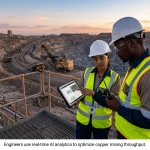
Geologists assessing drill cores in a remote frontier environment.
More Read

Southeast Europe: The Near-Shoring Magnet
The Western Tethyan Belt, particularly the Timok–Bor corridor in Serbia, has seen a resurgence of activity. This interest is not merely geological; it is strategic. With the implementation of the EU’s Strategic Move inside the $50B Critical Minerals Reserve Plan, European policymakers are prioritizing “near-shore” supply chains to reduce reliance on Asian processing.

Serbia offers a unique combination of proven geological systems and existing infrastructure. However, the “Social License to Operate” (SLO) remains the primary execution risk. Public opposition to large-scale projects in the region has forced companies to adopt more transparent, ESG-centric development models. In 2026, the successful operators are those who treat community engagement as a core technical discipline rather than a PR exercise.
Turkey and Pakistan: High Risk, High Reward
Further east, the risk profile shifts from social acceptance to regulatory and security concerns.
More Read
Turkey’s Exploration Breakthroughs
In Turkey, exploration is entering a new phase. Advanced geophysical surveys and remote sensing are revealing potential in areas previously deemed inaccessible. The challenge here is the fluctuating regulatory environment. While the mining code is robust, the speed of permitting often depends on shifting political priorities. Investors are increasingly looking at Turkey as a bridge between European standards and Asian growth.
Pakistan’s Strategic Pivot
Pakistan represents perhaps the most dramatic shift in the Tethyan Belt. The engagement of majors like Barrick Gold has provided a blueprint for navigating one of the world’s most complex jurisdictions. By involving federal and provincial governments as equity partners, operators are de-risking projects through shared incentives. This “partnership model” is becoming a standard for frontier regions where traditional sovereign guarantees may be insufficient.
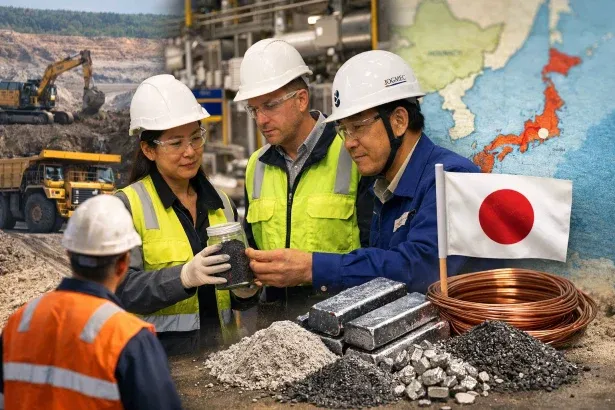
Strategic mineral sampling in complex jurisdictions.
Navigating the Geopolitical Risk Framework
Success in the Tethyan Belt in 2026 is predicated on a multi-layered risk management strategy. Companies can no longer rely on geological merit alone to secure funding or permits.
1. Regulatory Fragmentation
The belt spans everything from EU member states with stringent environmental protocols to developing nations with rapidly evolving mining codes. Compliance requires a localized approach. For instance, a project in Bulgaria must meet different environmental benchmarks than one in Uzbekistan, even if they share the same ore body.
2. Infrastructure Constraints
Many of the most promising Tethyan targets are located in mountainous, landlocked regions. The cost of building road access, power transmission, and water management systems can exceed the cost of the mine itself. As noted in the analysis of copper’s hidden bottleneck, the lack of integrated infrastructure can turn a world-class deposit into a stranded asset.
3. Execution and Security Risk
Political instability and border disputes in certain segments of the belt remain a reality. Forward-thinking companies are employing “portfolio diversification” within the same metallogenic province. By holding assets in three different Tethyan countries, a company can maintain geological focus while spreading jurisdictional risk.
| Risk Category | Tethyan Belt Challenge | Mitigation Strategy |
|---|---|---|
| Permitting | Multi-year delays and environmental opposition | Early ESG integration; alignment with EU Critical Raw Materials Act |
| Security | Regional instability in frontier zones | Government-level JVs and localized security protocols |
| Logistics | High-altitude, remote terrain | Modular processing units and public-private infrastructure partnerships |
| Fiscal | Changing royalty structures | Stabilized investment agreements (SIAs) |
The Role of Strategic Funding
In 2026, government intervention is playing a larger role in de-risking frontier projects. We are seeing a trend similar to the U.S. doubling down on critical minerals funding, where Western governments provide low-interest loans or insurance to companies operating in strategic Tethyan corridors. This financial “halo effect” makes junior miners more attractive to institutional investors who would otherwise shun frontier risks.

Advanced processing infrastructure is critical for remote Tethyan projects.
Conclusion: The 2026 Tethyan Outlook
The Tethyan Belt is no longer a “tomorrow” story: it is a “today” necessity. As the companies on the Skillings Power List continue to dominate the energy transition, their ability to navigate the Tethyan frontier will separate the leaders from the laggards.
The winners in this region will be those who combine old-school geological “boot-leather” exploration with modern geopolitical intelligence. The belt offers the scale needed to meet 2030 climate goals, but only for those who can navigate the 34 different ways the world works along its path.
Stay Informed with Skillings Mining Intelligence
For more deep-dives into the projects and policies shaping the 2026 mining landscape, visit Skillings.net.

Access the latest mining intelligence across all your devices.
Promotional Footer:
Get ahead of the curve: The 2026 Lithium Power Map Presale is now active. Secure your copy of the most comprehensive guide to the global lithium supply chain.