Mining innovators are the silent architects of the modern artificial intelligence revolution. As of April 2026, the narrative surrounding the AI boom has shifted from large language models and GPU architectures to a more grounded, physical reality: the AI-Energy Nexus. Without a massive influx of copper, lithium, and specialized ores, the high-density data centers required to process next-generation AI simply cannot function.

The energy demand of the global AI grid is projected to double by 2027, placing immense pressure on the mining industry to produce more with less environmental impact. This has led to a surge in internal AI adoption within the mining sector itself. From autonomous haulage systems to machine-learning algorithms that predict core sample composition, the industry is transforming.
In this inaugural edition of “The Weekly Power List,” we analyze the top 10 mining innovators who are not only providing the critical minerals for the AI grid but are also using AI to redefine the extraction process.
1. Tata Steel: The Algorithmic Heavyweight
Tata Steel has moved beyond traditional steelmaking to become a leader in industrial AI integration. With over 550 AI models deployed across its global production facilities, the company is optimizing everything from coke oven energy consumption to real-time safety monitoring. In 2026, Tata’s focus has shifted toward high-grade electrical steels essential for the transformers powering AI data centers. Their use of predictive maintenance has reduced downtime by 15%, ensuring a steady supply of structural materials for the expanding digital infrastructure.
2. Rio Tinto: Digital Twins and Biodiversity
Rio Tinto remains a powerhouse in the “Silicon-Lithium Nexus.” By utilizing advanced digital twins of their mines, they can simulate operational changes before moving a single ton of earth. Beyond production, Rio Tinto has pioneered AI-driven biodiversity tracking to meet 2026’s stringent ESG requirements. Their use of AI in the Jadar project (lithium) and various copper assets is critical for the long-term sustainability of the AI supply chain.
More Read
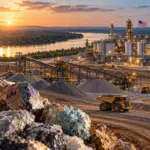

Caption: Advanced processing facilities like these are becoming “digital brains” for the global mineral supply chain.

3. BHP: Optimizing the Copper Flow
BHP is currently focused on maximizing copper recovery: a metal that has seen its smelting capacity become a major bottleneck in 2026. Through specialized analytics at the Escondida mine, BHP uses machine learning to adjust milling parameters in real-time based on ore hardness and mineralogy. This “precision mining” approach is vital as the industry seeks to provide the millions of tons of copper required for AI power grids and cooling systems.
4. KoBold Metals: The AI Discovery Engine
Unlike legacy producers, KoBold Metals is an AI-first exploration company. Backed by high-profile tech investors, KoBold uses massive datasets and machine learning to “see” deposits that traditional geology might miss. Their focus on the Mingomba project in Zambia has made them a central figure in the race for copper and cobalt. In early 2026, the company secured additional funding, bringing its total valuation to a point that rivals mid-tier producers, highlighting the market’s appetite for AI-driven mineral discovery.
More Read
5. Fortescue Metals Group: Autonomous Scale
Fortescue (FMG) has set the gold standard for autonomous operations. Their haulage systems operate with surgical precision, managed by AI-based scheduling algorithms that minimize fuel consumption and maximize throughput. As they pivot toward “Green Iron” and hydrogen, their AI systems are being retrained to manage complex renewable energy microgrids that power their remote Australian operations: a blueprint for how the AI grid itself might one day be powered.
6. Barrick Gold: Predictive Exploration
Barrick Gold has integrated AI-driven exploration tools across its Nevada and African portfolios. By analyzing seismic data and historical drilling records through deep-learning models, Barrick has significantly improved its “hit rate” for new gold and copper-gold deposits. This technological edge is proving essential as high-altitude and frontier exploration becomes the new norm for securing the next decade’s mineral supply.

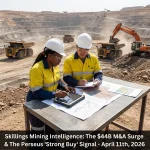
Caption: Geologists now use AI-augmented tablets to analyze core samples in real-time at remote sites.
7. Newmont Corporation: Safety and Resource Optimization
Newmont’s 2026 strategy centers on the “Intelligent Mine.” By deploying AI for environmental monitoring and predictive maintenance, they have lowered their operational risk profile. Their systems monitor tailings dam stability and air quality in real-time, providing an AI-backed safety net that allows for more aggressive production targets without compromising worker safety.
8. POSCO: The Supply Chain Strategist
South Korea’s POSCO has utilized AI simulations to navigate the increasingly volatile 2026 supply chain. By modeling geopolitical shifts and transport bottlenecks, POSCO ensures that the lithium and nickel they refine reach battery manufacturers with minimal delay. Their advanced analytics platform is a key reason why they remain a preferred partner for tech companies looking to de-risk their hardware supply chains.
9. Freeport-McMoRan: Milling at the Speed of Data
Freeport-McMoRan has turned its milling and crushing operations into a data-driven science. By using AI to optimize the energy-intensive process of grinding ore, they have realized significant cost savings. Given Freeport’s massive copper footprint, even a 1% increase in efficiency translates to thousands of tons of additional metal for the AI grid. This focus on digital brains for copper production is what keeps them in the top 10.
10. Sibanye-Stillwater: Workflow Automation
Sibanye-Stillwater rounds out the list with its innovative use of AI in plant optimization and geological data analysis. In South Africa and their US operations, they have automated complex workflows that previously required manual oversight. This transition to AI-managed plant flows has stabilized production in regions where energy supply can be inconsistent, making them a resilient link in the critical minerals chain.
Market Snapshot: AI Innovation Index
| Rank | Company | Primary Focus | 2026 AI Strategy |
|---|---|---|---|
| 1 | Tata Steel | Steel/Energy | 550+ models for energy & safety |
| 2 | Rio Tinto | Diversified | Digital twins & biodiversity |
| 3 | BHP | Copper | Precision milling & recovery |
| 4 | KoBold Metals | Exploration | AI-only mineral discovery |
| 5 | Fortescue | Iron/Hydrogen | Autonomous scheduling & microgrids |
| 6 | Barrick Gold | Gold/Copper | Predictive exploration |
| 7 | Newmont | Gold | Predictive maintenance & safety |
| 8 | POSCO | Lithium/Steel | Supply chain simulations |
| 9 | Freeport-McMoRan | Copper | Milling/Crushing optimization |
| 10 | Sibanye-Stillwater | PGM/Lithium | Plant flow automation |
The 2026 Energy Transition: A Mining Story
As we look toward the remainder of 2026, the link between mining innovation and the AI grid will only strengthen. Policymakers are beginning to realize that “data” is not just code; it is physical infrastructure. The U.S. funding bills for critical minerals are a testament to this shift.
The companies on this list are not just mining; they are calculating. They are using the very technology they help enable: AI: to ensure they can keep up with the world’s insatiable demand for it. For operators and investors, the “Power List” serves as a reminder that the most valuable asset in a 2026 mine might not be the ore in the ground, but the algorithms used to find and extract it.

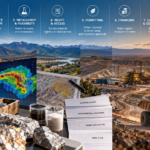
Caption: Keeping pace with the AI-Energy nexus requires multi-platform industry intelligence.
Stay Ahead of the Curve:
The 2026 mining landscape is moving faster than ever. For a deep dive into the most critical commodity for the AI-Energy nexus, check out our 2026 Lithium Power Map Presale. Get the data you need to navigate the Silicon-Lithium nexus before the market reacts.
By Salini Krishnan, Skillings Mining Intelligence