The global race for critical minerals is reaching a fever pitch as the mid-decade mark approaches, and few regions have shifted the needle quite like the Argentine Puna. At the heart of this transformation is the newly enacted Régimen de Incentivo para Grandes Inversiones (RIGI), an ambitious legislative framework designed to de-risk high-stakes mining projects. By 2026, Argentina’s lithium sector is expected to be one of the most significant contributors to the global supply chain, underpinned by multi-billion-dollar investments from industry heavyweights and strategic partnerships.
As the energy transition accelerates, the lithium price forecast 2026 points to a more mature, yet supply-heavy market. For operators and investors, understanding how Argentina is bypassing regional neighbors like Chile and Bolivia to secure its spot as a top-tier producer is essential for navigating the next phase of the battery metal cycle.
The RIGI Framework: A 30-Year Anchor for Capital
Argentina’s RIGI is not merely a tax break; it is a structural redesign of the country’s investment climate. For decades, the primary hurdle for Argentine mining was “country risk”: volatility in tax regimes, currency controls, and shifting political winds. RIGI addresses these head-on for projects exceeding $200 million.
Key Pillars of the Regime
- 30-Year Fiscal Stability: Projects approved under RIGI are guaranteed three decades of stability regarding tax, customs, and exchange rate regulations.
- Tax and Customs Incentives: Substantial reductions in corporate income tax (dropping to 25%) and full exemptions on import duties for capital goods and equipment.
- Foreign Exchange Freedom: Perhaps most crucially, the regime allows for the gradual easing of capital controls, permitting companies to keep a percentage of their export revenues in foreign accounts to service debt or pay dividends.
This legal “ring-fencing” has already catalyzed a surge in activity. As of mid-2026, the Argentine government has approved multiple high-profile projects, including massive expansions for existing operations and greenfield developments that were previously stalled. This stability is a primary driver for mining stocks to watch 2026, as it lowers the cost of capital for Western and Asian firms alike.
More Read
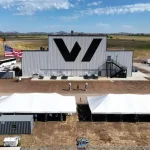


Spotlight on Lithium Argentina (LAAC) and Cauchari-Olaroz
If there is a flagship for the RIGI era, it is the Cauchari-Olaroz project in Jujuy Province. Operated by Lithium Argentina (LAAC) in joint venture with China’s Ganfeng Lithium and the provincial mining company JEMSE, the project represents a significant portion of Argentina’s immediate capacity growth.
Stage 2 Expansion and the RIGI Factor
Cauchari-Olaroz Stage 1 already reached a nameplate capacity of 40,000 tonnes per annum (tpa) of lithium carbonate equivalent (LCE). However, the real story for the 2026 supply chain is Stage 2. Approved under the RIGI framework in early 2026, the Stage 2 expansion aims to add another 45,000 tpa, bringing the total site capacity to 85,000 tpa.
More Read

The project’s inclusion in the RIGI regime provides the fiscal certainty needed to deploy approximately $1.24 billion in expansion capital. For Lithium Argentina, this de-risks the capital-intensive ramp-up phase and secures the operation’s competitiveness even if the lithium price forecast 2026 leans toward a mid-cycle “correction” rather than a vertical boom.
Strategic Synergy: The Ganfeng Connection
The partnership with Ganfeng Lithium ensures not only the capital but also the technical expertise and a guaranteed offtake route to the Chinese market. This synergy is a blueprint for other critical minerals stocks to buy 2026, as vertical integration from brine pond to battery chemicals remains the most resilient business model in a volatile pricing environment.
The 2026 Supply Pipeline: Competition and Growth
Argentina’s rise is not a single-company story. The RIGI regime has opened the floodgates for a diverse array of global players, creating a competitive cluster in the “Lithium Triangle.”
Major Projects to Watch
- Rio Tinto – Rincón Project: Following its RIGI approval, Rio Tinto has accelerated its direct lithium extraction (DLE) plant at Rincón. With a targeted capacity of 60,000 tpa LCE, this project marks a major entry for a diversified mining major into the lithium brine space.
- POSCO – Sal de Oro: The South Korean giant is nearing completion of its massive multi-stage facility at the Salar de Hombre Muerto, eyeing an eventual total capacity of nearly 100,000 tpa LCE.
- Galan Lithium – Hombre Muerto West: Focused on high-grade lithium chloride, Galan’s RIGI-approved status has allowed it to secure favorable financing for its initial production phases.
| Project | Operator | Target Capacity (LCE tpa) | RIGI Status |
|---|---|---|---|
| Cauchari-Olaroz (Stage 2) | Lithium Argentina / Ganfeng | 85,000 | Approved |
| Rincón | Rio Tinto | 60,000 | Approved |
| Sal de Oro | POSCO | 50,000 (Initial) | Approved |
| Hombre Muerto West | Galan Lithium | 20,000+ | Approved |
| Pozuelos-Pastos Grandes | Lithium Argentina | 30,000 (Target) | Applied |

Lithium Price Forecast 2026: The Competitive Edge of Brine
Market analysts generally expect the 2026 lithium market to be characterized by balanced supply and demand rather than the extreme deficits seen in 2022. While spot prices for battery-grade lithium carbonate are forecasted to hover in the $15,000 to $22,000 per tonne range, the “floor” is set by the marginal cost of production.
This is where Argentina’s brine assets shine. Brine-based extraction in the Puna typically sits at the lower end of the global cost curve compared to Australian or Chinese hard-rock (spodumene) mining. Even in a lower-price environment, Argentine projects remain highly profitable. The RIGI incentives further suppress the “effective” cost of production by reducing the tax burden and simplifying imports of specialized reagents and equipment.
For investors identifying critical minerals stocks to buy 2026, the focus is shifting away from high-risk, high-cost explorers and toward established brine operators with protected fiscal status.
Strategic Implications: Why Argentina Matters for 2026 and Beyond
The emergence of Argentina as a lithium powerhouse has broader geopolitical implications. While Chile has moved toward a more state-centric mining model through its National Lithium Strategy, Argentina has leaned into the private-sector-led approach enabled by RIGI.
This policy divergence has made Argentina the preferred destination for Western capital seeking an alternative to the increasingly complex Chinese-dominated supply chain. Although many Argentine projects have Chinese equity partners (like Ganfeng), the country remains open to a wide range of investors from the US, South Korea, Australia, and Europe.
The Role of Operational Technology
Success in the Puna is increasingly a matter of operational efficiency. Modern control rooms, such as those monitored by specialized logistics teams, are integrating real-time data to manage the complex chemistry of evaporation ponds and the logistical hurdles of high-altitude mining.

Conclusion: A New Era of Stability
The Argentina lithium boom is no longer a speculative “land grab.” It has matured into a multi-generational industrial buildup anchored by the RIGI framework. By providing 30 years of stability, Argentina has effectively de-risked some of the world’s most important lithium deposits, allowing projects like Lithium Argentina’s Cauchari-Olaroz to move forward with massive capital commitments.
As we look toward 2026, the convergence of favorable fiscal policy, low-cost brine assets, and a more stable global price environment makes Argentina the cornerstone of the battery metal supply chain. For those monitoring the industry, the question is no longer whether Argentina can deliver, but how quickly the global market can absorb the volumes now coming online from the Puna.
By Charles Pitts
Editorial Note: For further analysis on market valuations and critical mineral trends, subscribe to our daily digital magazine at Skillings.net.