By Charles Pitts
As the 2026 exploration season gains momentum in the North, Silver North Resources Ltd. (TSX-V: SNAG) has initiated a critical airborne geophysical survey at its Veronica project in the Yukon. The move signals a shift from surface-level geochemical “sniffing” to deep-target definition in one of the most promising silver-lead-zinc districts in Canada.
Located in the Silvertip-Midway district, approximately 80 kilometers west of Watson Lake, the Veronica project sits in the shadow of Coeur Mining’s high-grade Silvertip mine. For investors and operators watching the silver market, the scan of Veronica isn’t just about one property; it’s a test of the district-scale potential for Carbonate Replacement Deposits (CRDs) at a time when industrial demand for silver is hitting historic highs.
The Geophysics of Discovery: VTEM and Magnetics at Veronica
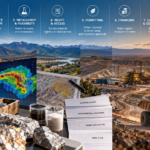
The current program, contracted to Geotech Ltd., involves a 253 line-kilometer airborne survey utilizing Versatile Time Domain Electromagnetic (VTEM) and magnetic sensors. Flying at 100-meter line spacing, the survey is designed to “see” through the overburden and identify conductive anomalies that could represent massive sulphide “mantos” or feeder pipes: the hallmarks of a CRD system.
More Read

For Silver North, the timing is strategic. The company recently consolidated its financial position with an $11.6 million financing, ensuring that follow-up drilling for 2026 and 2027 is fully funded.

“The goal here is structural architecture,” notes the project’s technical brief. By integrating this new Veronica data with existing surveys from the adjacent Tim property: currently under option to Coeur Mining: Silver North is building a 3D model of a potential mineralized corridor that spans several kilometers.
Why CRD Systems are the “Holy Grail” for Silver Explorers
Carbonate Replacement Deposits are among the most coveted targets in the mining industry due to their high grades, large scale, and favorable metallurgy. Unlike vein-hosted systems which can be narrow and erratic, CRDs form when hot, metal-rich fluids replace carbonate rocks (like limestone) with massive sulphides.
More Read

These systems typically manifest as:
- Mantos: Horizontal, bed-like replacement bodies.
- Chimneys: Vertical or steeply dipping pipe-like structures.
- Stockworks: Complex networks of smaller veins near the source.
The Veronica project has already yielded surface evidence of these systems. Previous mapping and trenching identified the “Betty Anomaly,” a massive 1,000m by 1,000m soil footprint rich in silver, lead, and zinc. High-grade float samples from the area have returned assays as high as 2,860 g/t silver. The VTEM survey’s job is to pinpoint exactly where those surface “smoke” signals are coming from at depth.
Regional Context: The Yukon Silver Play
The Yukon has long been a Tier-1 jurisdiction for silver, anchored by the legendary Keno Hill district. However, the Silvertip-Midway district in the south is emerging as a distinct, high-value alternative. The proximity to Coeur Mining’s Silvertip: one of the highest-grade silver-lead-zinc mines in the world: provides both a geological blueprint and potential midstream infrastructure for any future discovery.
Strategic interest in the region is high. Coeur’s active involvement in the adjacent Tim property suggests that major producers are looking for “satellite” deposits or a second major core area to feed the regional supply chain. As mining news continues to focus on domestic supply chains, the Yukon’s stable regulatory environment and rich mineral endowment make it a focal point for North American critical mineral security.
Silver Price Breakout 2026 Factors: The Macro Tailwinds
While Silver North focuses on the geology, the macro environment for silver is providing a powerful backdrop. Several silver price breakout 2026 factors have aligned to create what analysts describe as a structural supply deficit.
1. Industrial Demand and the Green Energy Nexus
The primary driver remains the photovoltaics (PV) sector. Despite efforts to “thrift” or reduce the amount of silver used per solar cell, the sheer volume of global solar installations has overwhelmed efficiency gains. Silver is essential for its conductivity, and with the 2026 energy transition targets approaching, industrial demand is projected to consume over 50% of total annual silver production.

2. The Supply-Demand Deficit
Silver production from primary mines has remained relatively flat for a decade. Much of the world’s silver is produced as a by-product of lead-zinc or copper mining. While base metal prices have been volatile, the lack of new, high-grade primary silver discoveries means that any significant uptick in demand must be met by depleting above-ground stocks: which have been falling for several consecutive years.
3. Geopolitical and Monetary Hedging
With global inflation remaining “sticky” and geopolitical tensions impacting currency markets, silver has re-established its role as a monetary hedge. Unlike gold, silver’s lower price point makes it accessible to a broader range of retail and institutional investors seeking a “hard asset” during periods of fiscal uncertainty.
Silver Price Prediction 2026: Base, Bull, and Bear Case
As we look toward the remainder of the year and into 2027, the silver price prediction 2026 landscape is divided by macro-economic outlooks:
| Scenario | Price Target (USD/oz) | Key Drivers |
|---|---|---|
| Bull Case | $34.00 – $40.00 | Accelerated solar build-out, deep USD weakness, continued central bank gold buying pulling silver higher. |
| Base Case | $27.00 – $31.00 | Steady industrial demand, moderate interest rate cuts, balanced investment flows. |
| Bear Case | $19.00 – $23.00 | Global recession leading to industrial slowdown, prolonged “higher for longer” interest rates, tech shift away from silver in PV. |
For explorers like Silver North, a base case price above $25/oz is transformative. It lowers the “cut-off grade” for what constitutes an economic discovery and makes the high-grade nature of CRD targets even more attractive to potential M&A partners.
Operational Risks and The Road Ahead
Despite the optimism, exploration in the Yukon is not without challenges. Seasonal windows are short, and the logistical costs of operating in remote mountainous terrain are high. The success of the Veronica project depends on:
- Target Correlation: Does the geophysics align with the soil anomalies?
- Drill Success: Can the company hit “manto” style mineralization in the first pass?
- Permitting: Navigating the Yukon’s environmental and First Nations consultation processes, which are thorough and time-consuming.
Silver North’s two-year contract with Boart Longyear suggests they are prepared for a multi-stage campaign. The results of the airborne survey, expected to be processed and interpreted by late summer 2026, will dictate the drill coordinates for the autumn program.

Conclusion: A Pivotal Moment for Yukon Silver
The scan of the Veronica project is more than a technical exercise; it is a search for the next major anchor in the Yukon’s silver portfolio. In an era where critical minerals strategy dominates headlines, the discovery of a new high-grade CRD system would provide a significant boost to North American mineral independence.
For the market, the coming months will be a waiting game as the VTEM data is processed. If the conductive “blobs” appear beneath the Betty Anomaly, the Yukon silver play may be entering its most exciting chapter yet.
Market Snapshot: Precious & Critical Metals (May 17, 2026)
| Commodity | Price (Spot) | 24h Change | YTD Change |
|---|---|---|---|
| Silver (oz) | $29.42 | +1.1% | +14.5% |
| Gold (oz) | $2,385.10 | -0.2% | +9.2% |
| Copper (lb) | $4.65 | +0.5% | +11.8% |
| Zinc (tonne) | $2,910.00 | +0.8% | +5.4% |
For more in-depth analysis on the mining sector and critical minerals, subscribe to the Skillings Mining Intelligence digital magazine.