By Charles Pitts
Rio2 Limited (TSX: RIO) marked a definitive shift in its corporate identity during the first quarter of 2026. The company officially transitioned from a pure-play gold developer into a multi-metal producer. This transformation stems from the successful acquisition of the Condestable copper mine and the commencement of production at the Fenix Gold Project.
The Q1 2026 results highlight a significant financial inflection point. Rio2 reported a net income of $22.3 million. This stands in stark contrast to the net losses reported throughout 2025. The integration of copper revenue and the steady ramp-up of gold operations in Chile have fundamentally altered the company’s risk profile and cash flow projections for the remainder of the year.
The Condestable Acquisition: Immediate Copper Exposure
The most significant driver of Rio2’s quarterly performance was the acquisition of the Condestable copper mine in Peru. The deal closed on January 30, 2026. This allowed Rio2 to book two months of production and revenue from the asset.
More Read
Condestable contributed 6.4 million pounds of copper to the quarterly totals. It also added 3,201 ounces of gold and over 48,000 ounces of silver. The timing of the acquisition proved fortuitous. Average realized copper prices reached $5.69 per pound during the quarter. This high-price environment, coupled with a cash cost of $2.01 per pound, generated immediate and substantial margins.

The acquisition does more than just add cash flow. It diversifies Rio2’s commodity mix. As the global energy transition accelerates, copper remains a critical mineral. By adding a producing copper asset, Rio2 has aligned its portfolio with long-term copper market deficits driven by infrastructure and AI data center demand.

More Read

Fenix Gold Project: Navigating the High-Altitude Ramp-Up
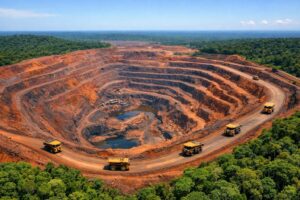
While Condestable provided the financial foundation, the Fenix Gold Project in Chile represents the company’s internal growth engine. Fenix saw its first production in Q1 2026, yielding 4,648 ounces of gold.
The ramp-up phase at Fenix has not been without challenges. Operating at high altitudes in the Maricunga belt presents unique logistical hurdles. Management identified early constraints related to water transport, blasting fragmentation, and leach kinetics. However, the company reported that these “teething issues” are largely rectified.
Rio2 expects Fenix to produce more than 60,000 ounces of gold in 2026. The project is currently on track to reach commercial production by Q4 2026. As the heap leach pads reach full saturation and the mining sequence enters higher-grade zones, unit costs are expected to normalize. Fenix is designed as a scalable, low-strip operation. Its success is vital for Rio2 to meet its 2026 production guidance.

Enhancing Grades: The Role of Ore-Sorting Technology
A key technical highlight of the quarter is the implementation of sensor-based ore-sorting technology. Rio2 is deploying this technology specifically to enhance copper grades and optimize processing efficiency at its operations.
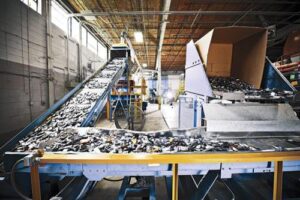
Ore-sorting uses high-speed sensors to identify and reject waste rock before it enters the primary processing circuit. In the context of copper production, this allows the mine to “upgrade” the feed material. By removing barren or low-grade rock early, the mill processes a higher concentration of metal. This reduces energy consumption, lowers water usage, and decreases the volume of tailings produced.
For Rio2, this technology is a margin protector. It helps offset the inflationary pressures currently affecting the mining sector. By maximizing the grade of the material sent to the concentrator at Condestable, the company can maintain a competitive All-In Sustaining Cost (AISC). In Q1, the AISC for copper production sat at $2.84 per pound. Ongoing optimization through ore-sorting is expected to keep these costs stable even if labor or energy prices rise.

Financial Performance Snapshot: Q1 2026
The transition to production has fundamentally strengthened Rio2’s balance sheet. The company ended the quarter with $93.1 million in cash and equivalents. This liquidity was bolstered by a $103.5 million financing round, which allowed for the voluntary repayment of $20 million in debt.
| Metric | Q1 2026 Result | Q1 2025 Comparison |
|---|---|---|
| Copper Produced | 6,403,188 lbs | 0 lbs |
| Gold Produced (Total) | 7,849 oz | 0 oz |
| Income from Operations | $24.6 Million | $0 |
| Net Income (GAAP) | $22.3 Million | ($1.3 Million) |
| Cash on Hand | $93.1 Million | $46.4 Million* |
| Copper AISC | $2.84 / lb | N/A |
| *Dec 31, 2025 balance |
This financial stability is critical for the next nine months. Rio2 must fund the remaining capital expenditures for the Fenix ramp-up and the completion of the tailings filtration facility at Condestable. The current cash position suggests that no further equity dilution will be required to reach commercial production at Fenix.
Strategic Outlook and Market Impact
Rio2’s move into copper changes how investors view the stock. It is no longer just a junior gold play. It is now a mid-tier producer with exposure to the two most critical metals for the 2026 economy. The company’s focus on autonomous technology and ROI in its operations suggests a management team focused on modernizing the traditional mining model.
The 2026 outlook for Rio2 depends on two factors:
- Execution at Fenix: Achieving the 60,000-ounce gold target is essential for market confidence.
- Stability at Condestable: Maintaining copper production levels while copper prices fluctuate near historical highs.
The inclusion of ore-sorting technology provides a technical buffer against grade variability. It reflects a broader industry trend where operators use data and sensors to squeeze more value out of every ton of rock moved. For decision-makers, Rio2 now serves as a case study in aggressive but calculated portfolio expansion.