By Charles Pitts
Canada Nickel Company and GeoRedox have launched a first-of-its-kind stimulated geologic hydrogen program at the Crawford Nickel Project in Ontario.
The partnership aims to develop a demonstration well to produce zero-carbon hydrogen via chemical reactions in ultramafic rock.
This initiative is a foundational step toward creating a proposed zero-carbon industrial cluster in Northeast Ontario.
More Read

The project aligns with Canada Nickel’s “NetZero Nickel” strategy to eliminate carbon emissions from its large-scale operations.

GeoRedox will fund the demonstration program in full while Canada Nickel provides site access and technical data.
Crawford is currently being developed as a major low-carbon nickel source for the global electric vehicle battery supply chain.
More Read

The Science of Stimulated Geologic Hydrogen
The program focuses on stimulated geologic hydrogen which involves engineering natural rock-water reactions deep underground.
Ultramafic rocks like those found at Crawford are rich in magnesium and iron.
When water interacts with these iron-rich minerals a natural process called serpentinization occurs.
This chemical reaction oxidizes the iron and releases molecular hydrogen gas.
GeoRedox uses proprietary Advanced Weathering Enhancement technology to accelerate these natural weathering cycles.
By injecting water and specific catalysts into the rock mass the team can stimulate the production of hydrogen.
The resulting gas is then captured and brought to the surface through a production well.
Unlike traditional “blue” hydrogen this method does not require natural gas feedstocks.
It also avoids the massive energy requirements associated with “green” hydrogen produced via electrolysis.
If successful the program could prove that hydrogen can be “mined” directly from the earth as a primary energy source.

Strategic Partnership and Funding
Under the terms of the Memorandum of Understanding GeoRedox takes on the financial risk of the demonstration.
The MIT-spinout technology company is responsible for deploying its proprietary equipment and managing the drilling operations.
Canada Nickel contributes its extensive geological database and technical expertise from years of exploration at Crawford.
The mining firm also provides the physical site and rock samples required for laboratory testing.
This collaboration allows Canada Nickel to explore new energy frontiers without diverting capital from its core mining development.
The project benefits from Crawford’s unique geology which is identical to the rock types targeted for geologic hydrogen globally.
This makes the Timmins Nickel District an ideal testbed for GeoRedox’s technology.
Success at the Crawford site could lead to similar installations across Canada Nickel’s 20-plus regional properties.
Such a rollout would transform the local mining landscape into a clean energy hub.
The two companies believe this could set a global precedent for integrating hydrogen production into active mine sites.
The Crawford Project: A Critical Minerals Powerhouse
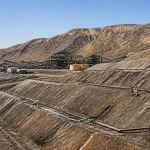
The Crawford Nickel Project is positioned to become one of the largest nickel sulphide operations in the world.
Located in Ontario’s Critical Minerals Corridor it is a cornerstone of North American supply for critical minerals.
Feasibility studies suggest the project will generate more than $70 billion in GDP over its 40-year lifespan.
It is expected to support roughly 1,000 direct jobs and 3,000 indirect roles in the region.
The project has already been designated as a priority under Ontario’s “One Project, One Process” framework.
This regulatory status helps streamline permitting for projects vital to the energy transition.
Canada Nickel is also the first mining company to submit an Impact Statement under the amended Impact Assessment Act.
The inclusion of hydrogen production adds another layer of strategic value to the site’s environmental profile.
It complements the company’s existing plans for large-scale carbon capture and storage.
Crawford is designed to use In-Process Tailings Carbonation to permanently store 1.5 million tonnes of CO2 annually.

Building a Zero-Carbon Industrial Cluster
The ultimate vision for Canada Nickel is the creation of a regional zero-carbon industrial cluster.
This ecosystem would center around Crawford’s low-carbon nickel production and carbon storage capacity.
The addition of zero-carbon hydrogen would provide the fuel needed to decarbonize heavy machinery and processing plants.
Downstream facilities like nickel refineries and stainless steel plants could also plug into this clean energy grid.
Northeast Ontario is uniquely suited for this model due to its high concentration of ultramafic rock.
A local hydrogen supply would reduce the cost and emissions associated with transporting fuel from distant sources.
It also provides a hedge against fluctuating energy prices and carbon taxes.
The cluster model aims to attract further investment into the Timmins Nickel District.
By offering both critical minerals and the clean energy to process them Ontario can compete for top-tier EV battery manufacturers.
This integrated approach represents the future of sustainable mining operations.
Decarbonizing the EV Supply Chain
The automotive industry is under increasing pressure to ensure that the minerals used in electric vehicles are sourced responsibly.
Currently the production of nickel often involves energy-intensive smelting or high-pressure acid leaching.
These processes can have high carbon footprints especially in regions reliant on coal power.
Canada Nickel’s “NetZero Nickel” initiative addresses this challenge by focusing on carbon-neutral extraction and processing.
Stimulated geologic hydrogen provides a path to replace fossil fuels in the mining fleet and site power generation.
This lowers the “embedded carbon” in every tonne of nickel produced at Crawford.
Automakers like Tesla and Volkswagen have already expressed interest in sourcing materials with the lowest possible environmental impact.
By eliminating carbon from the very start of the supply chain Canada Nickel gains a competitive edge.
The geologic hydrogen program is a critical component of this market positioning.
It proves that the mining industry can be a provider of clean energy solutions rather than just a consumer.

Regional and National Implications
The success of the Crawford hydrogen program could influence federal and provincial energy policies.
Canada has set ambitious targets for hydrogen adoption as part of its 2050 net-zero goals.
Most current policy focus remains on green hydrogen from renewables or blue hydrogen with carbon capture.
Geologic hydrogen represents a third way that leverages Canada’s existing strength in the extractive sectors.
The program demonstrates how traditional mining expertise can be pivoted toward new energy technologies.
It also supports the economic development of Northern Ontario which remains heavily dependent on the natural resources sector.
If the pilot succeeds the Timmins region could become a world leader in “gold” hydrogen production.
This would attract tech talent and secondary industries to the area.
It would also strengthen Canada’s position in the global race for energy security.
The project serves as a model for how the copper deficit and other mineral shortages can be addressed alongside climate goals.
Next Steps for the Demonstration Well
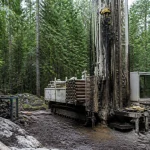
The demonstration program will begin with the drilling of a specialized test well at the Crawford site.
This well will allow the team to monitor the rate of hydrogen generation and the pressure within the rock formation.
Sensors will track the chemical composition of the gases produced to ensure high purity.
Data from the pilot will be used to calibrate the GeoRedox technology for commercial-scale use.
If the initial results are positive the partners will move toward a multi-well production system.
The project timeline is designed to coincide with the broader development of the Crawford mine.
Engineering work is already underway to integrate the potential hydrogen output into the site’s energy plan.
Stakeholders and investors will be watching the results of this pilot closely over the coming months.
It represents a high-stakes test for a technology that could redefine the economics of clean fuel.
For Canada Nickel it is the latest step in a mission to lead the global mining industry into a carbon-free future.