By Charles Pitts

ACCRA, Ghana : The Ghana Minerals Commission has formally announced that the lease renewal for Gold Fields’ Tarkwa mine, a cornerstone of the nation’s gold production, will be subjected to a rigorous multi-stage technical and ministerial review. With the current mining lease set to expire in 2027, the Commission has signaled a departure from historical administrative norms, stating that renewals for major tier-one assets will no longer be “automatic.”
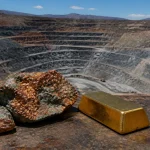
The Tarkwa mine remains one of the most significant gold-producing assets in West Africa. In 2025, the operation produced approximately 427,000 ounces of gold, generating an estimated US$1.05 billion in gross value. Given this scale, the regulatory body is prioritizing a “value-first” approach that balances investor certainty with national economic interests.
Technical Review and Ministerial Presentation
Isaac Andrews Tandoh, Chief Executive Officer of the Minerals Commission, emphasized that while the government is not intentionally stalling the process, the complexity of modern mining governance requires a thorough audit of past performance and future development plans.
“It won’t be business as usual where we just automatically renew the lease,” Tandoh stated in a recent press briefing. “Gold Fields must submit detailed development plans to our technical committee. Following that, a ministerial-level presentation is required before any recommendation is made to the government.”
More Read

The technical committee is tasked with evaluating several key pillars of the operation:

- Environmental Reclamation: Assessment of the mine’s closure and reclamation plans to ensure long-term ecological stability.
- Local Value Creation: Verification of local procurement percentages and the integration of Ghanaian businesses into the supply chain.
- Technology Transfer: Evaluation of how the operator has trained local engineers and transitioned technical expertise to the domestic workforce.
- Life-of-Mine Strategy: Review of the 2026-2040 production profile and exploration potential.
The Tarkwa Asset: A Strategic Pillar
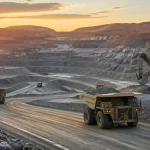
Tarkwa is a large-tonnage, low-grade open-pit operation located in southwestern Ghana. It utilizes a combination of heap leaching and carbon-in-leach (CIL) processing. For Gold Fields, the site is a critical component of its global portfolio, providing a stable production base as the company navigates Gold Price Forecast 2026 volatility and inflationary pressures on All-In Sustaining Costs (AISC).

More Read

Market Snapshot: Tarkwa Mine Performance (2025)
| Metric | Performance Data |
|---|---|
| Annual Gold Production | 427,000 oz |
| Gross Estimated Value | ~US$1.05 Billion |
| Lease Expiration Date | 2027 |
| Mining Method | Open-pit (CIL & Heap Leach) |
| Primary Regulatory Oversight | Ghana Minerals Commission |
| Current Review Status | Active / Technical Audit |
The 2027 expiration represents a pivotal moment for Gold Fields. The company has invested billions into the site’s infrastructure since acquiring the asset in the 1990s. Industry analysts suggest that while a renewal is the most likely outcome, the terms of the new lease may include higher royalties, increased mandatory local ownership, or more stringent community development agreements.
Precedent: The Damang Site Rejection
The Commission’s tougher stance is viewed by many as a continuation of policy shifts observed at the Damang mine. In a previous cycle, the Ghanaian government rejected the automatic extension of Gold Fields’ lease at Damang, eventually assuming a higher level of operational and oversight control.
This precedent has emboldened civil society groups and host-community leaders in the Tarkwa-Nsuaem municipality. These stakeholders have historically argued that the wealth generated from the “Gold City” has not translated into sufficient local infrastructure or sustainable economic diversification for the region.

“The scrutiny is a signal to all Tier-1 operators in Ghana,” says a regional mining analyst. “The Minerals Commission is leveraging these high-value lease renewals to enforce the ‘Green Minerals Policy’ and broader ESG mandates. They want to ensure that the 2027-2040 period provides more tangible benefits to the Ghanaian economy than the previous decade.”
Regulatory Framework and Act 703
Ghana’s mining sector is governed primarily by the Minerals and Mining Act, 2006 (Act 703). Under this legislation, the government maintains the right to review mining leases to ensure they align with the current national interest. The Act provides the Minister of Lands and Natural Resources with significant discretionary power, guided by the recommendations of the Minerals Commission.
The shift toward non-automatic renewals aligns with a broader trend across West Africa, where nations like Mali and Burkina Faso have also sought to revise mining codes to increase the state’s share of mineral wealth. However, Ghana remains a preferred destination for Mining M&A Deals 2026 due to its relative political stability and established legal framework compared to its regional neighbors.
Economic and Operational Impact
Gold Fields has remained collaborative throughout the initial stages of the review. The company has highlighted its “Tarkwa 2030” vision, which focuses on decarbonization and increased automation to extend the mine’s life while reducing its environmental footprint.
Operational efficiency will be a major focal point for the Commission’s technical committee. As ore grades fluctuate, the ability of the operator to maintain 400,000+ oz production levels without excessive environmental degradation is paramount.

For investors, the scrutiny introduces a layer of regulatory risk that must be priced in over the next 18 months. Gold Fields’ ability to navigate this review successfully will serve as a bellwether for other major miners in the region, such as AngloGold Ashanti and Newmont, who also operate significant assets within the Ghanaian borders.
Outlook: The Road to 2027
As the 2027 deadline approaches, the following milestones will be critical:
- Q3 2026: Expected completion of the Technical Committee’s audit of the Tarkwa development plan.
- Q4 2026: Ministerial presentation by Gold Fields executive leadership in Accra.
- H1 2027: Formal recommendation and potential signing of the new lease agreement.
The Minerals Commission has made it clear that “the door is open for dialogue,” but the terms of the engagement have fundamentally changed. The era of “business as usual” has concluded, replaced by a data-driven, scrutiny-heavy process aimed at maximizing the lifespan and local impact of Ghana’s most precious mineral resources.