By Charles Pitts

Beijing has officially moved to consolidate its grip on the global resource landscape, designating the China Mineral Resources Group (CMRG) as the central coordinator for all overseas mining acquisitions and investments. This structural shift, finalized in the first half of 2026, marks the end of an era defined by fragmented, project-by-project activity among state-owned enterprises (SOEs).
The centralization under CMRG is designed to eliminate internal bidding wars between Chinese firms and to present a unified front in negotiations with global mining majors. For the critical minerals supply chain 2026, this move signals a transition from market-driven expansion to a disciplined, state-directed strategy aimed at securing the raw materials essential for the electric vehicle (EV) and defense sectors.
The New Mandate: From Trading Hub to Strategic Architect
Established in 2022 primarily to aggregate iron ore purchasing power, CMRG’s remit has expanded significantly. While its early years were focused on dampening price volatility in the $130 billion iron ore market, its 2026 mandate covers the entire spectrum of strategic minerals.
Under the new directive, individual SOEs like China Minmetals, CMOC Group, and Zijin Mining must now clear large-scale overseas M&A through CMRG. This “clearinghouse” model ensures that Chinese capital is not competing against itself for the same Tier-1 assets in jurisdictions like the Democratic Republic of Congo (DRC), Indonesia, and South America.
More Read

“The goal is simple: maximize leverage,” says an analyst familiar with Beijing’s industrial policy. “By centralizing the decision-making process, China can better align its overseas investments with its domestic industrial targets, particularly in the rare earths supply chain 2026, where processing dominance is already established but upstream security remains a priority.”

Strategic Resource Security and the EV Nexus
The timing of this centralization reflects growing anxiety over resource scarcity and the rise of Western “friendshoring” initiatives. With the U.S. and its allies aggressively funding domestic mining through the Mineral Security Partnership, Beijing views centralized coordination as a necessary countermeasure to maintain its lead in the energy transition.
The critical minerals supply chain 2026 is increasingly bifurcated. While Western nations focus on de-risking and building out midstream processing, China is doubling down on “mine-to-magnet” vertical integration. By tasking CMRG with the coordination of mining M&A deals 2026, Beijing can ensure that any new acquisition comes with a guaranteed offtake agreement for Chinese refineries, further tightening the loop on global supply.
More Read


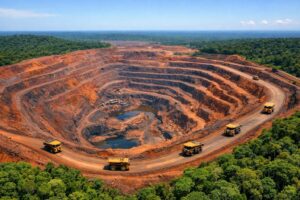
The scale of centralized operations allows for more efficient logistics and long-term planning.
Market Impact: Valuations and Deal Speed
For junior miners and mid-tier producers, the CMRG era introduces a new layer of complexity. Historically, a project in a “riskier” jurisdiction could attract multiple Chinese bidders, driving up the valuation. Now, with CMRG acting as the single gatekeeper, the competitive tension that previously benefited sellers may diminish.
However, the centralized approach also brings significant financial firepower. CMRG has the backing of China’s policy banks, meaning once a deal is coordinated, it can be executed with a speed and scale that Western consortiums often struggle to match. This is particularly relevant for mining investment P/NAV resets, where capital availability is the primary driver of project advancement.
Global Resource Distribution Table (2026 Outlook)
The following table outlines the primary regions and commodities targeted under CMRG’s coordinated strategy for the remainder of 2026:
| Region | Primary Commodities | Strategic Objective |
|---|---|---|
| Sub-Saharan Africa | Cobalt, Copper, Lithium | Securing EV battery feedstock; infrastructure-for-minerals deals. |
| Southeast Asia | Nickel, Tin, Rare Earths | Downstream integration in Indonesia; countering regional competition. |
| South America | Lithium, Copper, Iron Ore | Maintaining dominant market share in the “Lithium Triangle.” |
| Central Asia | Uranium, Rare Earths | Diversifying uranium supply forecasts; overland logistics. |
Rare Earths: Tightening the Upstream Loop
While China already controls over 90% of global rare earth magnet production, the 2026 strategy focuses on securing heavy rare earths (HREE) that are often harder to find in domestic deposits. By coordinating acquisitions of HREE-rich projects in Africa and Southeast Asia, CMRG is effectively future-proofing the rare earths supply chain 2026 against potential export restrictions from other regions.
The centralization move also serves as a defensive play. As Western firms attempt to diversify away from processing bottlenecks, China is responding by entrenching its position as the indispensable partner for upstream development.

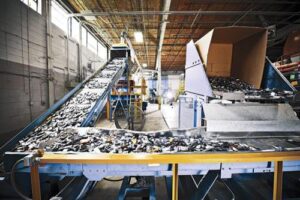
Advanced extraction technologies are a key component of China’s overseas mining strategy.
Geopolitical Implications: The Western Response
The centralization of Chinese mining M&A is likely to trigger further regulatory scrutiny in the West. Foreign investment screening boards in Australia, Canada, and the United States have already tightened their criteria for “critical” assets.
The move by Beijing to use CMRG as a single point of contact makes it easier for Western regulators to identify and block transactions on national security grounds. However, in “neutral” or “unaligned” resource-rich nations, the CMRG model: which often packages mining investment with infrastructure and low-cost financing: remains a highly attractive proposition.
Analyst Outlook: What Operators Need to Know
For mining operators and investors, the “CMRG Era” necessitates a shift in strategy.
- Consolidated Negotiations: Companies currently negotiating with Chinese entities should expect more standardized terms and less room for playing one firm against another.
- Tier-1 Asset Focus: CMRG is expected to prioritize large-scale, long-life assets that can provide a “national reserve” of materials, rather than smaller, speculative plays.
- Increased M&A Activity in 2026: Despite the centralization, the volume of mining M&A deals 2026 is expected to rise as Beijing seeks to deploy capital before Western supply chains become fully independent. This is reflected in regional strategies like Agnico Eagle’s Ontario strategy, which highlights the race for secure jurisdictions.
Conclusion: A Unified Front in a Fragmented World
Beijing’s decision to centralize overseas mining under CMRG is more than an administrative change; it is a declaration of intent. By treating the global mining sector as a unified chessboard rather than a series of disconnected markets, China is preparing for a long-term struggle over resource dominance.
For the global industry, the implications are clear: the competition for the critical minerals supply chain 2026 has entered a new, more disciplined phase. Whether this centralization leads to greater market stability or heightened geopolitical tension remains to be seen, but for now, the path to global resources runs through the offices of the CMRG.