By Charles Pitts

The historical narrative surrounding silver has long been one of dual identity: a precious metal tethered to gold’s shadow and a versatile industrial component. However, as the 2026 global energy landscape takes shape, that duality is collapsing in favor of a singular, dominant reality. Silver is no longer just “poor man’s gold”: it has become the indispensable backbone of the electrification era.
With the metal’s industrial demand reaching record highs and a structural supply deficit entering its fifth consecutive year, market analysts and institutional investors are recalibrating their valuation models. The consensus is shifting toward a reality where $70/oz is not a ceiling, but a fundamental support level grounded in industrial utility rather than speculative sentiment.
The Photovoltaic Pivot: Driving the Deficit
The primary engine behind this revaluation is the global solar industry. Silver’s unparalleled electrical conductivity, thermal efficiency, and optical reflectivity make it virtually irreplaceable in the production of photovoltaic (PV) cells. While the industry has attempted to “thrift” or reduce the silver content per cell for years, the transition to high-efficiency technologies like TOPCon (Tunnel Oxide Passivated Contact) and HJT (Heterojunction Technology) has actually increased the silver loading required per unit of power output.
According to data from The Silver Institute, solar-related silver demand reached approximately 232 million ounces in 2024 and is projected to sustain or exceed these levels through 2026. As nations accelerate their decarbonization targets, the silver market is struggling to keep pace with the deployment of green energy infrastructure.
More Read

Silver Market Balance: 2024–2026 Projections
| Metric | 2024 (Actual/Est) | 2025 (Forecast) | 2026 (UBS Projection) |
|---|---|---|---|
| Total Demand (Moz) | 1,219 | 1,240 | 1,210 |
| Total Supply (Moz) | 1,004 | 1,091 | 1,140 |
| Market Balance (Moz) | -215 | -149 | -70 |
| Industrial Share of Demand | 56% | 59% | 61% |
Note: While the deficit is projected to narrow slightly by 2026 as new mine supply comes online, the cumulative drawdown of global above-ground inventories remains a critical price driver.

The Silicon-Silver Nexus in Power Electronics
Beyond solar, the surge in electric vehicle (EV) production and the expansion of AI-driven data centers are creating a secondary, yet equally potent, demand pull. Silver is essential for power electronics, sensors, and control systems within the automotive sector. A single EV can contain between 25 and 50 grams of silver: roughly double the amount used in a traditional internal combustion engine vehicle.

More Read
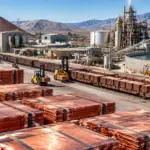
As we noted in our recent analysis of the 2026 Lithium Power Map, the electrification of the global transport fleet is a multi-decade trend. The silver-lithium-copper nexus is the triad of metals defining the current industrial cycle. Just as copper prices are being reshaped by AI data center demand, silver is benefiting from the same push toward high-density power management and connectivity.
Institutional Targets: Why $70 is Conservative
While a $70/oz price target may seem ambitious compared to historical averages, it sits at the conservative end of current institutional forecasts for 2026. J.P. Morgan Global Research recently projected an average price of $81/oz for 2026, citing the prolonged structural deficit and the exhaustion of exchange-held inventories. HSBC has also raised its outlook, targeting a $75/oz average as industrial users begin to engage in strategic stockpiling to mitigate supply chain risks.
The shift toward $70 as a “floor” is supported by the rising cost of production and the significant depletion of inventories at the LBMA and COMEX. When the physical market becomes this tight, price discovery shifts from the futures market to the physical delivery reality. For industrial users: who now represent over 60% of total demand: ensuring supply is more important than price sensitivity.

Supply Constraints: The Mining Reality
The supply side of the silver equation remains notoriously inelastic. Nearly 70% of silver production is a byproduct of lead, zinc, and copper mining, meaning that silver supply does not necessarily increase just because silver prices rise. Even primary silver producers, such as those seeing a surge in production following strategic acquisitions in 2026, face long lead times for exploration and permitting.
The lack of major new “pure-play” silver discoveries over the last decade means the market is reliant on incremental production from existing assets. With ESG regulations and permitting hurdles slowing down new project starts, the gap between supply and industrial demand is unlikely to close meaningfully before the end of the decade.
2026 Outlook: Risks and Opportunities
As we approach 2026, the case for silver as a critical industrial metal is stronger than ever. However, investors and operators must remain cognizant of the risks:
- Thrifting Technology: If silver prices remain consistently high, the incentive for PV and electronics manufacturers to find substitutes (such as copper-plated cells) will intensify.
- Recycling Efficiency: A high-price environment could trigger a massive increase in secondary silver supply from recycled electronics and jewelry, potentially softening the deficit.
- Macro Volatility: While industrial demand is the floor, investment demand (ETFs and physical bars) remains the ceiling. A sustained “risk-off” environment or higher-than-expected real interest rates could dampen the speculative fervor needed to push prices beyond institutional targets.
Despite these risks, the fundamental shift is clear. The silver market has moved from a surplus era to a structural deficit era. As the green transition moves from policy to physical infrastructure, the demand for the most conductive metal on earth is only heading in one direction.