As the global energy transition accelerates and the copper demand for AI data centers hits new peaks, the mining sector has turned its gaze toward the operators capable of delivering stability in a structurally short market. Lundin Mining (TSX: LUN) has emerged as a primary anchor in this landscape, unveiling a refined three-year blueprint for 2026–2028 that prioritizes production consistency and strategic portfolio high-grading.

Following the divestment of its nickel-heavy Eagle Mine in early 2026, Lundin has effectively repositioned itself as a copper-dominant producer. The company’s updated guidance reflects a “steady-as-she-goes” approach for the next 36 months, targeting a consolidated copper output of 310,000 to 335,000 tonnes per year. This production floor arrives at a critical juncture: institutional forecasts for the 2026 copper price now cluster between US$10,000 and US$13,500 per tonne, placing Lundin’s low-cost operations in a high-margin “sweet spot” for investors and industrial end-users alike.
The 2026–2028 Production Horizon
Lundin’s operational strategy is built on three pillars: Candelaria, Caserones, and Chapada. By stripping away the operational complexities of the Eagle Mine: sold to Talon Metals Corp. in January 2026: the company has streamlined its management focus onto large-scale, long-life copper assets in the Americas.
The consolidated production profile for the next three years shows remarkable resilience. Despite the removal of Eagle’s contribution, Lundin expects to maintain production levels consistent with 2025, with a notable step-up forecast for 2027.
Lundin Mining Copper Guidance 2026–2028 (kt Cu)
| Year | Guidance Range (kt) | Key Drivers |
|---|---|---|
| 2026 | 310 – 335 | Insourcing of Candelaria underground; stable Caserones output. |
| 2027 | 315 – 340 | Improved grades at Chapada and Candelaria; optimized sequencing. |
| 2028 | 290 – 315 | Mine sequencing adjustments; focus on Saúva integration. |
Data Source: Lundin Mining 2026 Operational Outlook
More Read

Asset Pillars: Candelaria and Caserones
The Candelaria Copper Mining Complex in Chile remains the crown jewel of the portfolio. For 2026, guidance is set at 135,000 to 145,000 tonnes. While production in the first half of 2026 may reflect lower underground mining rates: a result of Lundin’s decision to insource the underground mining contract: the long-term benefits are clear. By taking direct control of underground operations, Lundin aims to capture significant cost efficiencies and improve safety metrics.


Furthermore, the Candelaria underground expansion is a massive “hidden” upside not fully baked into the 2026–2028 guidance. The project aims to increase throughput from approximately 14,000 tonnes per day (t/d) to 22,000 t/d. Once fully commissioned, this expansion is expected to deliver an incremental 14,000 tonnes of copper per year: roughly a 10% boost to the site’s total output.
More Read
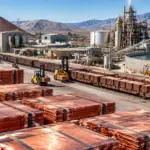
Adjacent to Candelaria, the Caserones mine provides a steady secondary engine, with 2026 guidance holding firm at 130,000 to 140,000 tonnes. The synergy between these two Chilean assets allows Lundin to leverage shared regional infrastructure and procurement power, a vital component of its cost-reduction initiative in a period of global resource realignment.
Operational Efficiency and Cost-Reduction
In a high-price environment, the temptation for many miners is to chase volume at any cost. Lundin, however, is leaning into margin protection. The company’s 2026 strategy emphasizes “The Efficiency Mandate”: a series of internal programs designed to lower C1 cash costs and improve fleet availability.
Key initiatives include:
- Contractor Insourcing: Beyond Candelaria, Lundin is reviewing maintenance and haulage contracts across its South American sites to reduce reliance on third-party vendors.
- Fleet Optimization: Integration of ultra-class haul trucks and advanced telemetry to minimize downtime.
- Saúva Integration: At Chapada (Brazil), the focus is on the Saúva deposit, which offers higher copper and gold grades than the main pit. Higher-grade ore feed is the most effective organic “cost reducer” in mining.

Market Context: The 2026 Copper Deficit Impact
The relevance of Lundin’s 310kt+ annual supply cannot be overstated when viewed against the 2026 market fundamentals. Most institutional analysts, including Cochilco and S&P Global, highlight a structurally tight market. While the refined copper market might teeter on a “near-balance” in 2026, the concentrate market: the raw ore Lundin produces: is in a deep, multi-year deficit.
According to S&P Global Commodity Insights, more than 99% of global copper production remains profitable at the 2026 consensus price of US$12,100 per tonne. For a producer like Lundin, which has spent years optimizing its cost curve, this translates into significant free cash flow. This capital is already being earmarked for the next phase of growth: the Vicuña district.
Beyond 2028: The Path to 500,000 Tonnes
While the current blueprint anchors the company through 2028, the “Investor Magnet” for Lundin remains its long-term growth pipeline. The company has articulated a clear ambition to exceed 500,000 tonnes of copper per year by the turn of the decade.
The primary driver for this leap is the Vicuña district, a world-class copper-gold belt spanning the border of Chile and Argentina. Through strategic stakes in projects like Josemaria and Filo del Sol, Lundin is positioning itself to control one of the few remaining “mega-projects” globally. These assets are capable of producing upwards of 400,000 tonnes of copper at peak scale, providing a growth runway that extends far beyond the current three-year guidance.

Conclusion: A Low-Risk Entry to a High-Growth Commodity
Lundin Mining’s 2026–2028 blueprint is a masterclass in disciplined mining. By divesting non-core assets like Eagle and focusing on the core Chilean and Brazilian “copper machines,” the company has insulated itself from the volatility typical of diversified mid-tiers.
For decision-makers and investors, the takeaway is clear: Lundin provides a stable, high-margin exposure to a metal that is effectively the “currency” of the energy transition. With a production floor of 310,000 tonnes and significant brownfield expansion upside at Candelaria and Chapada, Lundin is no longer just a participant in the copper market: it is an anchor for global supply.
By Charles Pitts