By Charles Pitts

The narrative of African mining is undergoing a structural realignment. For decades, the continent has functioned primarily as a source of raw ore, with the high-margin value addition of smelting and refining occurring thousands of miles away. In 2026, Nigeria has signaled a definitive end to this "extract and export" model.
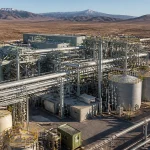
The commissioning of the Diamond New Energy lithium processing plant in Endo, Nasarawa State, represents more than just a capital investment; it is a 6,000 tonnes-per-day (TPD) pivot toward domestic industrialization. With a processing capacity of 3 million metric tonnes per year, this $250 million facility has effectively established Nigeria as the premier downstream hub for critical minerals in West Africa.
This development arrives at a volatile juncture for the global battery metals market, where supply chain security and "friend-shoring" are driving mid-stream investments closer to the point of extraction.
The Nasarawa Hub: Diamond New Energy’s 6,000 TPD Anchor
The Diamond New Energy facility is the physical manifestation of Nigeria’s new mineral policy. Located in the Endo community of Nasarawa Local Government Area, the plant is a partnership between the Chinese firm Diamond New Energy Company Ltd and the Nasarawa State Government.
More Read

At full throttle, the plant processes 6,000 metric tonnes of lithium ore daily. This scale is designed to absorb production from surrounding artisanal and small-scale miners (ASM), as well as larger industrial ventures, centralizing the beneficiation process into a single, high-efficiency ecosystem.


The technical significance of the plant lies in its ability to produce high-grade spodumene concentrate. By upgrading the ore on-site, Nigeria reduces the logistical burden of transporting low-grade material: a move that significantly improves the carbon footprint of the local lithium supply chain. For investors tracking critical minerals tickers, the emergence of Nigerian mid-stream capacity provides a new variable in the cost-curve analysis of global lithium supply.
More Read

Decoupling from the "Raw Export" Era
President Bola Tinubu’s administration has been vocal about its refusal to allow Nigerian minerals to leave the country in raw form. The Ministry of Solid Minerals Development has implemented strict beneficiation requirements, effectively mandating that any company mining lithium in Nigeria must also invest in processing infrastructure.
"This is the new standard," noted a senior ministry official during the launch. "We are no longer interested in being just a pit on the map. We are becoming a factory."
This policy shift mirrors similar moves made by Zimbabwe and Namibia, yet Nigeria’s advantage lies in its proximity to European and North American markets and its aggressive push for integrated industrial zones. The Diamond New Energy plant is the first of several planned facilities, with the government aiming to replicate this model for other critical minerals such as tin, columbite, and tantalite.
Market Dynamics: The $19,000 Lithium Floor and African Supply
The launch of the Nasarawa plant comes as the lithium market stabilizes around a $19,000 per tonne floor for lithium carbonate equivalent (LCE). While 2023 and 2024 saw significant price corrections, the 2026 outlook is defined by a more mature understanding of the supply deficit.
Nigeria's entry into the downstream sector adds a layer of resilience to the market. By processing ore locally, Nigeria can maintain export volumes even when prices are lean, as the value-added concentrate commands a premium over raw spodumene. This localized processing strategy is a key component of current uranium and lithium price forecasts, where cost-efficiencies in the mid-stream are becoming the primary driver of project viability.
| Metric | Diamond New Energy Plant Data |
|---|---|
| Daily Capacity | 6,000 Metric Tonnes |
| Annual Capacity | 3,000,000 Metric Tonnes |
| Investment | $250 Million USD |
| Direct Jobs Created | 1,000+ |
| Indirect Jobs Created | 2,000+ |
| Location | Endo, Nasarawa State, Nigeria |
Socio-Economic Engine: Jobs and Infrastructure in Endo
Beyond the balance sheets, the industrialization of Nasarawa has immediate human consequences. The Diamond New Energy plant has already accounted for over 1,000 direct jobs and upwards of 2,000 indirect roles in logistics, maintenance, and support services.

For the local Endo community, the facility has brought improved road infrastructure and more reliable power access: a necessity for a plant of this magnitude. This localized economic uplift is essential for securing a social license to operate, particularly in regions where mineral wealth has historically failed to translate into community development.
The integration of local workers into the technical operations of the plant also addresses the "skills gap" that has long plagued African mining. Nigerian engineers and technicians are being trained in modern beneficiation techniques, creating a pool of specialized labor that will support future projects.
High-Tech Control: The Brain of the Operation
Modern mining in Nigeria is increasingly digital. The Diamond New Energy plant utilizes a centralized control room to monitor flow rates, chemical grades, and equipment health in real-time. This level of oversight ensures that the facility can maintain the high-purity standards required by international battery manufacturers.

Similar to the technological integration seen at Kamoa-Kakula's recent expansions, the use of data analytics in Nasarawa allows for rapid adjustments to processing parameters. This agility is crucial when dealing with the geological variability of lithium-bearing pegmatites common in the region.
Downstream Ambitions: Beyond Spodumene Concentrate
While the production of spodumene concentrate is a significant first step, Nigeria’s ultimate goal is the domestic production of battery-grade lithium chemicals: lithium carbonate and lithium hydroxide.
The Diamond New Energy plant is designed with modularity in mind, allowing for the potential addition of secondary refining stages. If Nigeria can successfully move further down the value chain, it will bypass the traditional reliance on Chinese refineries, which currently dominate the mid-stream. This would place Nigeria in a unique geopolitical position as a supplier to both East and West, leveraging its neutral status to secure diverse off-take agreements.

Conclusion: A New Chapter for African Critical Minerals
The 6,000 TPD pivot in Nasarawa is a clear signal that Nigeria is no longer a passive participant in the global energy transition. By building the infrastructure required to process lithium at scale, the country is capturing a larger share of the value chain and insulating itself from the boom-and-bust cycles of raw commodity markets.
For operators and investors, the message is clear: the future of African mining is downstream. As more facilities like the Diamond New Energy plant come online, the continent will transition from a resource reservoir to a manufacturing powerhouse, fundamentally altering the logistics and economics of the global lithium trade.
Shareable Social Media Snippet
LinkedIn/X Style:
Nigeria has officially transitioned from ore exporter to processing powerhouse. With the launch of the Diamond New Energy 6,000 TPD lithium plant in Nasarawa, Africa's downstream lithium strategy is no longer a concept: it's industrial reality. $250M investment, 3,000+ jobs, and a pivot that could redefine the $19,000/t price floor. #Mining #Lithium #Nigeria #CriticalMinerals #EnergyTransition