By Penny Langford

The global iron ore market is standing on the precipice of its most significant structural shift in decades. For over fifty years, the "Big Three": Rio Tinto, BHP, and Vale: have maintained a functional duopoly over the high-grade iron ore supply from Australia’s Pilbara and Brazil’s Carajás regions. However, deep in the heart of Guinea’s Nzérékoré Region, a $27 billion infrastructure sprint is nearing its climax, threatening to redraw the map of global steel production.
The Simandou project, often described as the "Mount Everest of iron ore," is no longer a distant theoretical prospect. As of July 2026, the Compagnie du Trans-Guinéen (CTG) rail link is nearing 80% total completion, with the main 650-kilometer heavy-haul corridor already beginning to handle initial test shipments. This is not merely a mining project; it is the construction of a sovereign industrial backbone for Guinea and a strategic necessity for the world's largest steelmakers.
The Engineering Feat: The CTG Rail Link
The centerpiece of the Simandou development is the Trans-Guinéen railway. To unlock the world’s largest untapped high-grade iron ore deposit, a consortium including Rio Tinto (SimFer), Winning Consortium Simandou (WCS), Baowu, and the Republic of Guinea had to solve a 650-kilometer logistics puzzle through some of the most challenging terrain in West Africa.

More Read
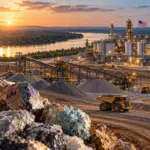
The rail system is engineered for a staggering 120 million tonnes per annum (Mt/year) capacity, split equally between the SimFer and WCS mining operations. Unlike traditional rail projects, the CTG is a common-user infrastructure, meaning it is designed to serve as a multi-purpose corridor for the nation’s economic development beyond iron ore.

As of Q3 2026, the progress is accelerating:
- Main Line: The 536 km main corridor is largely laid, with major bridges like the Milo River bridge already completed.
- Tunnels: Tunneling works, which represent the most technically demanding portion of the project, are approximately 75% complete.
- Spurs: SimFer’s 70 km spur from the mine area to the main line reached mechanical completion in early 2026.
- Early Exports: Initial commercial shipments began moving through the corridor in the first half of 2026, with current throughput averaging roughly 70,000 tonnes per day as the system moves through its ramp-up phase.
Breaking the Australian and Brazilian Stranglehold
For investors and operators, the arrival of Simandou ore is a market-defining event. For years, the iron ore price has been tethered to the production costs and operational stability of the Pilbara and Brazil. Simandou’s 120 Mt/year capacity represents a massive supply shock that offers an alternative to the traditional dominant players.
More Read
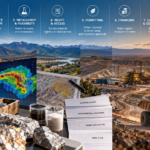
The geopolitical necessity of China’s supply security cannot be overstated. As the world’s largest steel producer, China has long sought to reduce its 70% dependence on Australian iron ore. By backing the Simandou project through state-owned giants like Baowu, Beijing is effectively buying a seat at the table of global price discovery. This diversification move provides China with a "safety valve" against geopolitical tensions and supply disruptions in the Pacific.
This shift mirrors similar moves in other commodities, such as the massive copper expansions we've seen at Kamoa-Kakula, where scale and infrastructure are being leveraged to challenge established market leaders.
The 65% Fe Factor: Fueling the Green Steel Transition
While the volume of Simandou is impressive, its quality is what truly matters for the next decade of industrial growth. The ore from Simandou consistently assays at or above 65% iron content (Fe), putting it in a elite class of "Direct Reduction" (DR) grade material.
In the current push for decarbonization, steelmakers are increasingly moving away from carbon-intensive Blast Furnaces (BF) and toward Electric Arc Furnaces (EAF). However, EAFs require high-grade feedstock, typically in the form of Direct Reduced Iron (DRI) or Hot Briquetted Iron (HBI). Simandou’s low-impurity, high-grade ore is the ideal feedstock for this transition.

Moreover, the demand for "green steel" is being driven by the explosive growth of AI infrastructure. Data centers: the cathedrals of the AI age: require massive amounts of structural steel. As technology giants face increasing pressure to report lower Scope 3 emissions, the demand for steel produced via the DRI-EAF route using high-grade Guinean ore is expected to skyrocket. By providing a reliable source of 65%+ Fe ore, Simandou helps cap the soaring premiums for high-grade material that have plagued the market in recent years.
Industrial Scale and Operational Reality
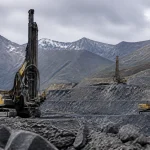
Walking through the SimFer mine site or the WCS blocks, the scale of operations is breathtaking. This is not a "boutique" high-grade play; it is a Tier-1 industrial complex. The project employs thousands of workers and utilizes ultra-class haulage fleets and autonomous drilling technologies to manage the extraction process.

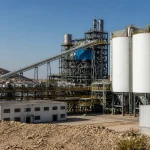
The logistics of moving 120 million tonnes of ore annually requires more than just rail. The Morebaya port facility, currently nearing 78% completion, is designed to handle massive Capesize vessels. Once the port and rail integration are fully synchronized: targeted for early 2027: the ramp-up to full capacity will begin in earnest. Rio Tinto has indicated a 30-month ramp-up period once the infrastructure is fully commissioned, suggesting that by 2029 or 2030, Simandou will be a dominant force in the Atlantic market.
Strategic Implications for 2026 and Beyond
The "infrastructure sprint" in Guinea is about more than just moving rocks; it’s about the reorganization of global resource flows. Similar to how Viridis Mining’s Colossus project is attempting to re-center the rare earth market, Simandou is the catalyst for a new era of iron ore competition.
However, the project is not without its risks. The heavy-haul rail corridor passes through ecologically sensitive areas and requires complex cross-consortium management. Seasonal rainfall in Guinea can also present logistical hurdles, as seen in the slight construction delays during the 2025 monsoon season. Yet, the momentum is now undeniable.
As we look toward 2027, the primary questions for the industry are no longer if Simandou will happen, but how quickly the market can absorb 120 million tonnes of high-grade supply. For the traditional "Big Three," the arrival of a new, high-quality competitor in the Atlantic signifies the end of the old guard's undisputed reign. For the steelmakers of the world, it signifies a long-awaited opportunity to secure the high-grade material necessary for a low-carbon future.

At Skillings Mining Intelligence, we will continue to monitor the CTG rail commissioning and the initial export volumes as they reach the Chinese and European markets. The sprint to 100% completion is on, and the finish line is finally in sight.
Simandou Infrastructure Snapshot
| Feature | Specification | Status (July 2026) |
|---|---|---|
| Rail Length | 650 km (Main line + spurs) | ~80% Complete |
| Annual Capacity | 120 Million Tonnes | Early Operation / Ramp-up |
| Ore Grade | ~65% – 68% Fe | Production Started |
| Port Facility | Morebaya (Atlantic Coast) | 78% Complete |
| Key Partners | Rio Tinto, WCS, Baowu, Republic of Guinea | Operational JV |