By Charles Pitts

The global mining sector’s pursuit of high-grade, tier-one mineral assets has entered a critical phase. As major producers grapple with declining head grades across mature operations, recent exploration results from August 2026 highlight a significant shift in project pipelines. Across South America, Canada, and Zimbabwe, junior and intermediate miners have delivered standout drill intercepts that redefine the resource potential of established camps and undeveloped porphyry systems alike.
From Copper Giant Resources confirming continuous, high-grade mineralization at its massive Mocoa copper-molybdenum deposit in Colombia to Hecla Mining expanding bonanza silver grades at Keno Hill, these discoveries offer vital technical data for operators and investors navigating tight commodity markets. This analysis examines four marquee exploration breakthroughs from August 2026, breaking down intercept widths, geological contexts, and their wider implications for project development timelines.
Copper Giant Resources: Unlocking Massive Scale at Mocoa
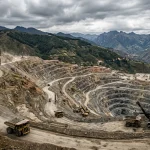
In southern Colombia, Copper Giant Resources has reinforced the global significance of its flagship Mocoa copper-molybdenum porphyry project. Porphyry deposits of this scale are increasingly scarce, making infill and expansion drilling critical for validating pre-feasibility and preliminary economic assessments (PEA).
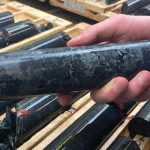
Recent drilling at Mocoa yielded infill hole MD-066, which intercepted 584 meters of continuous mineralization grading 0.73% CuEq (comprising 0.40% copper and 0.062% molybdenum), including a higher-grade core of 183 meters at 0.94% CuEq (0.54% copper and 0.076% molybdenum). This intercept substantially exceeds the deposit’s current Mineral Resource Estimate (MRE) average grade of 0.51% CuEq, confirming robust grade continuity across infill spacing.
More Read



Furthermore, subsidiary drilling at the adjacent La Estrella target (hole MD-065) returned 176 meters at 0.30% CuEq from 610 meters downhole, finishing entirely in mineralization. These results validate the geological model for Mocoa’s high-grade core: estimated at approximately 190 million tonnes at 0.94% CuEq: and point toward potential footprint expansion as the company moves toward advanced engineering studies.
Hecla Mining: Extending Bonanza Silver Grades at Keno Hill
In the Yukon Territory of Canada, Hecla Mining continues to unlock the district-scale potential of the historic Keno Hill silver camp. High-grade vein systems require precision, underground agility, and rigorous grade control to maximize margins, characteristics that Keno Hill has increasingly demonstrated following its operational restart.
More Read

August exploration updates highlight successful step-out drilling along the primary trend, where underground intercepts recorded exceptional grades reaching 62.7 oz/ton silver over mineable widths. In narrow-vein high-grade silver systems, bonanza intervals of this magnitude disproportionately impact project economics, offsetting broader inflationary pressures on consumables and labor.
Hecla’s ongoing underground development aims to convert these inferred extensions into indicated and measured categories, supporting sustainable mine life and cementing Keno Hill’s status as one of North America’s premier primary silver assets.
Dryden Gold: Greenfield Discoveries at Gold Rock
Moving eastward into northwestern Ontario, junior explorer Dryden Gold has reported early-stage success at its Gold Rock project within the prolific Eagle-Wabigoon greenstone belt. Historic past-producing camps are increasingly drawing capital as explorers apply modern geophysical modeling to identify overlooked structures.
Dryden Gold confirmed the discovery of two parallel, near-surface gold-bearing structures at Gold Rock, defined by systematic surface trenching and initial diamond drilling. The newly identified shear zones exhibit classic orogenic gold characteristics, featuring quartz-carbonate veining with visible gold hosted in altered mafic volcanics.
While the project remains at an earlier stage than advanced deposits like Mocoa or Blanket, these discoveries demonstrate the ongoing prospectivity of Canadian greenstone belts for high-grade, shallow-depth ounces that could support decentralized modular mining concepts.
Caledonia Mining: Defining Near-Surface Potential at Blanket
In Zimbabwe, Caledonia Mining Corporation has reported encouraging exploration progress at its long-running Blanket gold mine. While Blanket is primarily recognized as a deep underground operation: bolstered by the commissioning of the Central Shaft: recent near-surface exploration has focused on identifying supplementary feed sources to optimize mill throughput.
Drilling targeting extensions outside the main production blocks defined a new near-surface mineralized zone. By identifying shallow ounces close to existing haulage and processing infrastructure, Caledonia can potentially integrate lower-cost open-pit or ramp-accessible stopes into the mine plan, enhancing operational flexibility and free cash flow generation.
August 2026 Exploration Highlights Drill Results
To provide a clear comparative baseline of these recent milestones, the table below summarizes the key intercepts, commodities, and project locations highlighted in August 2026 reports.
| Company | Project | Location | Primary Commodity | Key Drill Intercept / Highlight | Target / Significance |
|---|---|---|---|---|---|
| Copper Giant Resources | Mocoa | Colombia | Copper / Molybdenum | 584m @ 0.73% CuEq (incl. 183m @ 0.94% CuEq) | Infill hole confirming grade continuity and high-grade core in porphyry system. |
| Hecla Mining | Keno Hill | Yukon, Canada | Silver | 62.7 oz/ton Ag intercepts | High-grade vein extension supporting underground mine life and margin expansion. |
| Dryden Gold | Gold Rock | Ontario, Canada | Gold | Two new parallel shear structures | Greenfield discovery in historic greenstone belt with near-surface potential. |
| Caledonia Mining | Blanket | Zimbabwe | Gold | New near-surface mineralized zone | Shallow resource definition to supplement deep underground mill feed. |
Strategic Implications for Project Pipelines
The concentration of high-grade copper, silver, and gold discoveries reported in August 2026 underscores several broader themes across the global mining industry:
- Grade Quality Over Bulk Tonnage: As permitting timelines lengthen and capital expenditure requirements rise, developers are prioritizing higher-grade intervals that reduce processing intensity per payable ounce or pound of metal.
- Brownfield Optimization: Assets like Blanket and Keno Hill demonstrate that brownfield exploration within established districts remains one of the lowest-risk avenues for extending mine life and boosting net asset value (NAV).
- Porphyry Scale: Massive systems like Mocoa remain irreplaceable anchors for the long-term copper supply pipeline, particularly as electrification drives structural deficits toward the end of the decade.

For mining executives, institutional investors, and policymakers, tracking these exploration milestones provides vital insight into where future capital will flow. As junior and intermediate explorers continue to de-risk their pipelines, the discoveries of August 2026 serve as a reminder of the sector’s underlying geologic resilience.
Operational Outlook and Next Steps
The coming quarters will test whether these August discoveries can successfully transition through resource estimation, engineering design, and permitting hurdles. At Mocoa, upcoming economic studies will evaluate the trade-offs between bulk-tonnage throughput and selective high-grade mining. Meanwhile, underground development at Keno Hill and Blanket will focus on translating drill-bit success into stope-ready reserves.
Investors and operators monitoring these developments can access further intelligence via our Gold Mining Investments Analysis and explore ongoing macroeconomic trends across the Skillings Insights Portal.