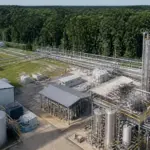
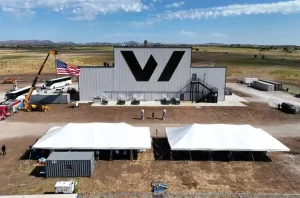
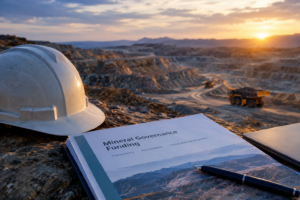
Industrial equipment representative of the oxide-to-metal stage in a rare-earth supply chain.

By Charles Pitts
Energy Fuels has completed its acquisition of Australian Strategic Materials, adding operating rare-earth metal and alloy capacity in South Korea to its oxide production and upstream project portfolio as companies and governments seek alternatives to China-centered supply chains.
The transaction, completed on Aug. 28, gives Energy Fuels control of ASM’s Korean Metals Plant in Ochang, South Korea, along with the Dubbo rare-earth and critical-minerals project in New South Wales, Australia. ASM’s shares have been delisted from the Australian Securities Exchange following completion.
The immediate operational addition is the Korean plant’s commercial capability to produce neodymium-praseodymium, or NdPr, metal and neodymium-iron-boron, or NdFeB, alloy. Energy Fuels said the plant has installed NdFeB alloy capacity of 1,300 tonnes per year and is being expanded toward 3,600 tonnes per year.
More Read

The acquisition links Energy Fuels’ rare-earth oxide production at the White Mesa Mill in Utah with a downstream conversion platform that can produce materials used by permanent-magnet manufacturers. It does not, by itself, complete the company’s planned entry into finished magnet production or turn the Dubbo project into an operating mine.

Acquisition adds a missing processing step
Rare-earth supply chains involve more than mining. Ore must be concentrated, separated into individual oxides, converted into metals and then alloyed before the material can be supplied to magnet manufacturers.
Energy Fuels already produces NdPr oxide and is advancing production of dysprosium and terbium oxides at White Mesa. ASM adds the metallization and alloying stage, allowing the combined company to move further along the chain from separated oxides to magnet-ready feedstock.
More Read
Ross Bhappu, president and chief executive of Energy Fuels, said ASM brings “technical expertise, commercial experience and proven capabilities in rare earth metals and alloys” that strengthen the company’s strategy to develop a Western mine-to-magnet supply chain.
The transaction also brings ASM’s technical team, intellectual property and customer relationships into Energy Fuels. Those assets are relevant because metal and alloy production involves different engineering, quality-control and customer-qualification requirements from oxide separation.
| Supply-chain stage | Asset or capability | Status after acquisition |
|---|---|---|
| Resource base | Dubbo project, New South Wales | Development project |
| Oxide production | White Mesa Mill, Utah | Operating platform |
| NdPr metallization | Korean Metals Plant, South Korea | Commercial capability |
| NdFeB alloy | Korean Metals Plant | 1,300 tonnes per year installed capacity |
| NdFeB expansion | Korean Metals Plant | Targeting 3,600 tonnes per year |
| Finished permanent magnets | Planned VAC acquisition | Separate transaction, not completed |
The distinction between these stages is important for manufacturers and policymakers evaluating non-Chinese supply. A new rare-earth mine can add raw material without resolving downstream dependence if the material must still be processed, metallized or alloyed elsewhere.
Korean plant provides the near-term capacity
ASM opened the Korean Metals Plant in May 2022 in the Ochang Foreign Investment Zone, about 115 kilometres south of Seoul. According to ASM, the facility has commissioned its NdPr metal and NdFeB strip-alloy production lines and is supplying an international customer base.
The plant is one of the few facilities outside China capable of producing the metals and alloys used in clean-energy technologies, advanced manufacturing, defense and aerospace applications, ASM said.

Rare-earth alloy material at the metallurgy stage of the supply chain.
Its Phase 1 configuration has installed NdFeB alloy capacity of approximately 1,300 tonnes per year. Phase 2, which began in 2025, is designed to lift capacity to 3,600 tonnes per year.
Energy Fuels said the expansion could be commissioned as early as the end of 2026. The company has also said that the expanded capacity could provide enough NdFeB alloy for magnets used in more than 1 million electric vehicles annually.
That figure is a capacity comparison rather than a production forecast. Actual output will depend on commissioning, feedstock availability, operating performance, customer qualification and demand.
NdPr is particularly important in high-performance permanent magnets, which are used in electric motors, wind turbines, robotics, drones and other equipment requiring high magnetic strength in a compact form. Dysprosium and terbium can improve magnet performance at elevated temperatures, although their production and qualification add further technical requirements.
ASM said the plant achieved its first commercial sale of dysprosium and terbium metals in 2025. Energy Fuels described those capabilities as developing additions to the Korean operation.
Dubbo expands the upstream project pipeline
The acquisition also adds Dubbo, a multi-commodity rare-earth and critical-minerals project in New South Wales.

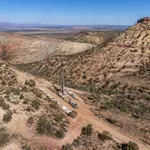
The Dubbo project adds an Australian rare-earth and critical-minerals resource to Energy Fuels’ portfolio.
Dubbo is not an operating mine. Its contribution to the combined supply chain is therefore prospective rather than immediate. Future development would require further engineering, permitting, financing, construction and commissioning.
The project is designed to produce rare earths and other critical minerals and has been positioned by ASM as a potential long-life resource for downstream processing. For Energy Fuels, the project may provide an Australian source of feedstock that complements its heavy-mineral-sands portfolio and Utah-based processing operations.
Energy Fuels also holds interests or development rights in heavy-mineral-sands projects in Brazil, Australia and Madagascar. The company said the combined portfolio gives it exposure to mining, processing, oxide production, metals and alloys across several jurisdictions.
That geographic spread may support supply-chain diversification, but it also introduces multiple execution points. The company must advance separate mines, processing facilities and conversion plants while coordinating material specifications across jurisdictions.
Planned U.S. plant remains a future step
Energy Fuels said it intends to use the Korean plant’s technical experience to support a proposed American Metals Plant in the United States when market conditions warrant.
A U.S. facility would extend rare-earth metallization and alloying closer to White Mesa and to North American customers. It could also reduce reliance on cross-border movement between Utah and South Korea for some products.
The American plant remains planned capacity rather than an operating asset. Energy Fuels has not represented the project as completed, and its development would depend on commercial conditions, engineering, permitting and capital decisions.
The company’s planned acquisition of permanent-magnet manufacturer Vacuumschmelze, or VAC, is a separate transaction. If completed, Energy Fuels has said it would extend the platform into finished permanent magnets in North America and Europe.
That means the ASM closing establishes a substantial mine-to-metal-and-alloy platform, but not yet a completed mine-to-magnet chain through the final magnet-manufacturing stage.
Geopolitical relevance lies downstream
The strategic importance of the transaction is concentrated in the processing steps between oxides and finished magnets.
Rare-earth supply discussions often focus on mine production and geological resources. However, separation, metallization, alloying and magnet manufacturing can be equally important bottlenecks. The addition of a functioning Korean facility gives Energy Fuels operating exposure to a stage that is difficult to build quickly and requires specialized process knowledge.
South Korea also provides a manufacturing location within a major industrial and technology economy, while the company’s Utah operations give it a North American base for oxide production. Australia’s role is centered on the Dubbo resource and other potential feedstock sources.
The structure does not remove geopolitical risk. It creates a chain spanning multiple countries, each with its own permitting, trade, logistics and regulatory requirements. It also leaves the company dependent on successful plant expansion, customer qualification and the development of future resource projects.
For operators and industrial buyers, the relevant question will be whether Energy Fuels can convert ownership of these assets into reliable, specification-compliant supply. For policymakers, the transaction illustrates why support for critical-minerals security increasingly extends beyond mining to refining, metallization and alloy production.
What to watch next
The next milestones will include:
- Progress on the Korean Metals Plant expansion toward 3,600 tonnes per year of NdFeB alloy capacity.
- Production rates, product qualification and customer contracts at the Korean facility.
- Development decisions and permitting progress at Dubbo.
- Further work on dysprosium and terbium metallization.
- Plans and approvals for the proposed American Metals Plant.
- The status of the separate VAC acquisition.

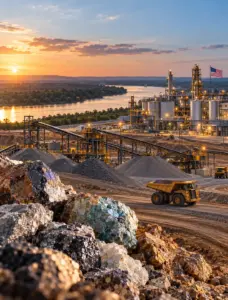
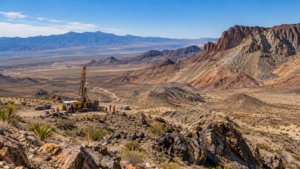
Mining and processing infrastructure representative of the upstream-to-midstream chain.
Energy Fuels’ acquisition of ASM changes the company’s operating profile by adding commercial rare-earth metal and alloy capabilities to an existing oxide platform. It also gives the company a larger role in the downstream segment of the critical-minerals market.
Whether the combination develops into a fully integrated mine-to-magnet business will depend on execution across the remaining stages. For now, the most tangible change is the addition of NdPr metallization and NdFeB alloy production in South Korea, alongside a broader Australian resource and project pipeline.
Related Skillings coverage: Energy Fuels completes Australian Strategic Materials acquisition to build mine-to-magnet chain, Rare Earths coverage, and Critical Minerals Supply Chain 2026.
Sources: Energy Fuels completion announcement, Energy Fuels release via PR Newswire, and ASM Korean Metals Plant.