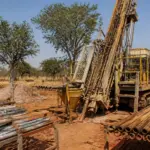
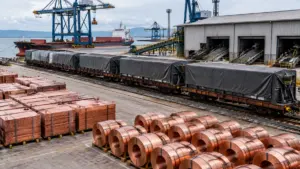
Copper processing infrastructure at a large-scale mining and smelting complex.

Global copper mine production fell 1.1% in the first half of 2026, even as installed capacity increased, according to industry data reported by BigGo Finance. At the same time, treatment charges paid to smelters have collapsed toward zero, highlighting a widening mismatch between available copper concentrate and downstream processing capacity.
The combination is creating pressure at both ends of the copper value chain. Mining companies are gaining bargaining power over scarce concentrate, while smelters are being forced to operate with little or no income from the fees that traditionally support their margins.
The development is important for operators, investors and policymakers because it shows that announced mine capacity is not translating into near-term supply. Existing mines are facing declining grades, operational disruptions and longer ramp-up periods, while new smelting capacity: particularly in China: continues to expand.
Mine output declines despite higher capacity
Global copper mine production reached about 11.34 million tonnes in the first half of 2026, down from approximately 11.47 million tonnes in the same period a year earlier, according to figures attributed to the International Copper Study Group.

The decline came despite global installed mine capacity rising by an estimated 3.8%. That gap suggests that nominal capacity additions are not yet sufficient to offset production losses at mature or disrupted operations.

Concentrate production was particularly weak, falling 2.6% in the first half. Solvent extraction-electrowinning, or SX-EW, output increased by 4.3%, providing some support to overall mine supply. The divergence matters because smelters depend primarily on copper concentrate, while SX-EW cathode generally bypasses the conventional concentrate-smelting route.
| Indicator | First-half 2026 result | Market implication |
|---|---|---|
| Global mine production | 11.34 million tonnes | Down 1.1% year over year |
| Copper concentrate output | Down 2.6% | Tighter feed for smelters |
| SX-EW production | Up 4.3% | Supports cathode supply outside smelting |
| Installed mine capacity | Up about 3.8% | Capacity growth has not translated into output |
| Annual benchmark TC | $0 per dry metric tonne | Smelter processing income eliminated |
| Mysteel spot TC index | -$201.56/dmt on Sept. 4 | Miners hold strong negotiating leverage |
Chile has been a major contributor to the weakness. Production has been affected by lower grades, operational constraints and disruptions at large assets. Codelco’s first-half output was reported to have fallen 11% year over year to about 564,000 tonnes, while the country’s 2026 production forecast was reduced.

Other disruptions have added to the shortfall. Grasberg in Indonesia has been undergoing a phased recovery following an underground incident, while Ivanhoe Mines reduced its 2026 target for the Kamoa-Kakula complex in the Democratic Republic of Congo as development work takes priority.
The result is a market in which capacity exists on paper but is not available in the form of reliable, usable concentrate.
Treatment charges fall through zero
Treatment charges, or TCs, are fees paid by miners to smelters for converting copper concentrate into refined metal. Refining charges, or RCs, are generally calculated separately and relate to the conversion of contained copper into refined output.
Together, TC/RCs are a central component of smelter revenue. When concentrate is plentiful, smelters can negotiate higher charges. When concentrate is scarce, miners can demand lower charges or discounts because smelters are competing for feedstock.
The 2026 annual benchmark TC was reported at zero, the lowest level in the modern market. Spot charges have moved even lower. Mysteel said its imported copper concentrate spot TC index reached negative $201.56 per dry metric tonne on Sept. 4, continuing a decline that has accelerated over the past three years.
A negative TC does not mean that miners are paying smelters. It indicates that the value of the contained copper and associated terms is strong enough for miners to negotiate away the processing fee and, in some cases, receive an effective payment or discount from the smelter.

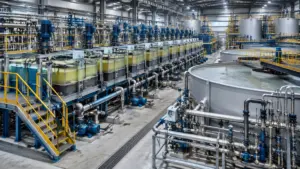
Industrial equipment inside a modern copper smelting and refining operation.
For smelters, the change is material. A zero benchmark removes a traditional source of processing income, while negative spot charges can turn concentrate procurement into a direct margin burden.
Mysteel estimated that Chinese smelters typically require a TC of roughly $17–$25 per dry metric tonne to break even before by-product revenue. Yet refined copper production in China still rose by about 1.7% year over year in the first half of 2026.
By-products are cushioning the losses
Smelters have not reduced output as sharply as the fee collapse might suggest because revenue from by-products has temporarily softened the impact.
Sulfuric acid is particularly important. Copper smelting produces several tonnes of sulfuric acid for each tonne of refined copper, and prices rose sharply during the first half of the year before easing from their peak.
Mysteel estimated that Chinese smelters faced a core smelting loss of roughly 6,227–6,282 yuan per tonne of refined copper in July based on prevailing treatment charges and refining economics. Sulfuric acid revenue contributed an estimated 7,206 yuan per tonne, more than offsetting that calculation at some facilities.
That support is not guaranteed to persist. Sulfuric acid prices have declined from their July peak, while demand has remained relatively weak. Scrap has also provided an alternative feedstock, but tighter tax policies have raised costs and constrained some scrap flows.
As these buffers weaken, smelters may have fewer options than reducing operating rates, delaying maintenance, consolidating capacity or seeking greater control over upstream supply.
Mine projects will not solve the near-term shortage
The weakness in mine output also reflects the long development cycle of copper projects.
Greenfield mines can take years to permit, finance and construct. Even after commissioning, production often increases gradually as operators complete infrastructure, improve recoveries and access higher-grade ore zones. Brownfield expansions may arrive sooner but generally provide smaller additions.
This timing problem has become more visible in 2026. The market had expected production growth from projects and expansions in Chile, Peru, Zambia and Indonesia. Instead, losses from existing operations have outweighed the early contribution of new capacity.
Mysteel noted that the gap between mining and refining growth has widened. Between 2020 and 2025, global refining capacity grew at an estimated compound annual rate of 2.53%, compared with 1.87% for mine production. China’s refining capacity expanded at an even faster rate of about 8.92% over the same period.
The imbalance is particularly pronounced in copper concentrate. Chinese concentrate imports remained above 2 million tonnes per month in 2026, but first-half arrivals fell roughly 9% year over year. Smelter raw-material coverage also declined to around 15–20 days, compared with a more typical 25–30 days, according to Mysteel.

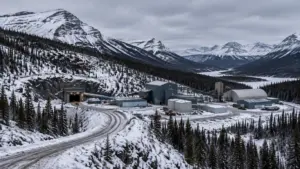
Copper mine and processing infrastructure connected by conveyors and haul roads.
The market may therefore continue to show apparently conflicting signals: refined copper output can remain resilient in the short term, while concentrate availability becomes increasingly constrained.
That distinction is important when assessing copper market developments. Refined inventories and production data may not immediately reflect the severity of the upstream shortage if smelters continue processing material from inventories, long-term contracts or alternative feedstocks.
Smelter consolidation becomes more likely
The pressure is also changing the competitive structure of the smelting sector.
Integrated producers with their own mines, long-term concentrate contracts and strong by-product revenue are better positioned to operate through a period of negative TCs. Smaller, standalone smelters that rely on spot purchases are more exposed.
Mysteel reported that leading Chinese smelters agreed to reduce concentrate-based utilization by more than 10% in 2026, covering about 70% of the country’s refined copper capacity. Implementation remains difficult because individual plants have incentives to maintain output, particularly where continuous operations, long-term contracts or by-product revenues provide support.
That creates a collective-action problem. Reducing production may improve industry-wide conditions, but an individual smelter that cuts output risks losing market share or access to supply.
The likely result is a gradual adjustment rather than a uniform shutdown cycle. Higher-cost and less-integrated capacity will face the greatest pressure, while companies with secure feedstock and downstream integration may maintain higher utilization.

Operators monitor production and processing systems at a copper facility.
What the supply squeeze means
The immediate impact of the copper concentrate shortage is a transfer of value from smelters toward miners. Low treatment charges give producers greater leverage, while smelters absorb more of the cost of securing feedstock.
The longer-term impact may be broader. Persistent negative TCs could encourage more vertical integration, upstream acquisitions, long-term offtake agreements and investment in alternative feedstocks. They may also accelerate consolidation among smelters that cannot operate profitably without unusually strong by-product markets.
For mine developers, the situation reinforces the value of reliable project delivery. Capacity announcements alone will not resolve the shortage if construction delays, lower grades, permitting constraints or operating disruptions postpone actual production.
For policymakers, the data point to a supply chain that is expanding unevenly. Refining and smelting capacity can be added more quickly than new mines, but without sufficient concentrate those assets face weaker margins and higher strategic dependence on upstream producers.
The first-half decline in mine output and the collapse in treatment charges therefore represent more than a short-term pricing event. They show that copper’s next supply response will depend not only on how many projects are announced, but on how quickly existing mines stabilize and new operations produce commercial volumes.
Sources: BigGo Finance; Mysteel.