By Charles Pitts

Lithium prices are entering a more uncertain phase as demand from electric vehicles and energy storage rises while project delays limit the amount of new material reaching the market. The central issue for 2026 is no longer simply how much lithium exists underground. It is whether mines, refineries and conversion plants can deliver battery-grade chemicals on schedule.
Published forecasts for lithium carbonate vary widely. A Reuters survey cited a 2026 Chinese spot-price range of roughly 80,000 to 200,000 yuan per tonne, equivalent to approximately US$11,000–29,000/t depending on exchange rates. Fastmarkets, as reported by Panorama Minero, raised its 2026 forecast to about US$23,800/t, while UBS has projected prices near US$26,000/t.
The spread between those estimates reflects a market approaching balance but not yet in a confirmed structural deficit. For operators and investors, the key variables are project timing, conversion capacity, product mix and the pace of energy-storage deployment.
Supply growth is becoming a timing problem
Global lithium production continues to rise. The U.S. Geological Survey’s 2026 Mineral Commodity Summaries estimates 2025 mine production at approximately 290,000 tonnes of lithium content, up from 222,000 tonnes in 2024.
More Read

Australia, China, Chile and Argentina remain the principal sources of mined lithium, while Zimbabwe, Brazil, Canada and Mali have also added supply. That growth has helped keep the market supplied after the sharp price decline of 2023 and 2024.

However, announced capacity is not the same as delivered supply. A project scheduled to start in the second half of 2026 contributes little to a market that tightens during the first half. The same applies to a refinery that reaches nameplate capacity but struggles with feedstock quality, recovery rates or customer qualification.
Analysts are therefore using a wider range of supply assumptions. Morgan Stanley has pointed to a potential deficit of roughly 80,000 tonnes of lithium carbonate equivalent (LCE) in 2026, while UBS has outlined a smaller deficit in its central view. By contrast, S&P Global expects a narrower surplus, with supply still exceeding consumption.
More Read

These forecasts are not directly comparable because they use different definitions, conversion factors and assumptions about inventory. They do show that the market cushion is narrowing.

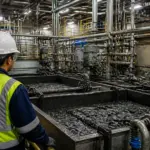
Lithium conversion capacity is increasingly important to effective supply.
Conversion capacity is the less visible constraint
Lithium is mined or extracted as concentrate, brine or intermediate material. It must then be converted into battery-grade lithium carbonate or lithium hydroxide.
That conversion stage is concentrated geographically and technically. China remains the dominant processing hub, with industry estimates placing its share of global lithium conversion capacity at roughly 70% or more. China also has substantial flexibility to switch some facilities between carbonate and hydroxide production depending on margins and cathode demand.
That flexibility can obscure a shortage. Nameplate capacity may appear large, but actual output can be limited by economics. In 2025, China’s lithium hydroxide production was reported at about 305,000 tonnes, down approximately 14% year over year, as weak margins reduced operating rates at some conversion plants.
Carbonate capacity is more abundant. China’s nameplate lithium carbonate capacity was estimated at roughly 1.61 million tonnes per year by the end of 2024, although actual production remained well below that level. The gap between installed capacity and operating output illustrates why capacity figures alone do not determine prices.
Hydroxide is more exposed to bottlenecks. High-nickel cathode supply chains require lithium hydroxide, while some newer battery applications, including many lithium-iron-phosphate systems, rely primarily on carbonate-based inputs. If hydroxide projects are delayed or operators redirect flexible capacity toward carbonate, the overall market may have sufficient lithium but still face a shortage of a particular chemical product.
Project delays are removing near-term supply
The lithium development pipeline has been affected by lower prices, higher construction costs, permitting disputes and financing constraints.
In the United States, the Thacker Pass project remains in the construction phase, with first production expected later than the earliest development schedules. Rhyolite Ridge in Nevada has also faced timing pressure linked to permitting and market conditions.
In Argentina, Posco has delayed the second phase of its Sal de Oro project, which includes additional lithium hydroxide capacity. The project was initially expected to advance earlier, but the company has adopted a more cautious approach while market conditions remain unsettled.
Chile’s Maricunga project provides another example of schedule risk. Codelco’s project is targeting approximately 55,000 t/y of LCE, but first production has been pushed toward 2034, later than earlier government expectations. That delay removes a significant potential source of South American supply from the near-term market outlook.
Canada’s Nemaska Lithium project also highlights the importance of conversion infrastructure. Rio Tinto has slowed construction activity at the Bécancour lithium hydroxide project while it reviews the development plan. A delay at a chemical plant can have the same market effect as a delayed mine when alternative conversion capacity is limited.
Concrete milestone to watch
One of the most important near-term milestones is the commissioning and ramp-up of new hydroxide capacity in China, including the planned 50,000-t/y Tianqi Lithium hydroxide project in Chongqing, which has been associated with a second-half 2026 start-up target.
The significance is not only the headline volume. Operators will need to demonstrate stable feedstock supply, product qualification, recovery performance and commercial operating rates. A delayed commissioning schedule or prolonged ramp-up would reduce effective hydroxide supply even if the plant remains listed as “under development.”
Energy storage is changing the demand equation
Electric vehicles remain the largest source of lithium demand, but stationary energy storage is becoming a more important marginal consumer.
Reuters has reported that lithium demand from energy storage could grow by approximately 55% in 2026, following strong growth in the previous year. UBS has used an even higher assumption in its more bullish scenarios.
Energy storage demand is supported by renewable-power additions, grid congestion, peak-demand management and the need for backup capacity. Unlike passenger-vehicle demand, storage deployment is often driven by utility procurement, power-market rules and government reliability programs.
This matters because storage batteries commonly use lithium-iron-phosphate chemistry. The chemistry reduces dependence on nickel and cobalt, but it does not eliminate lithium demand. As storage expands, the lithium market becomes less dependent on premium EV sales and more sensitive to electricity infrastructure and policy.
The International Energy Agency estimates that lithium demand could reach approximately 3.7 million tonnes LCE by 2035, around three times its 2024 level. That longer-term trajectory raises the cost of repeated project delays.

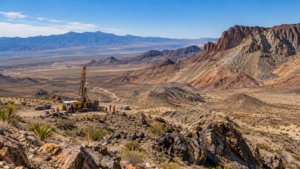
Brine projects must prove chemistry, flow rates and long-term recovery performance.
Lithium price forecast: base, bull and bear cases
The following framework synthesizes published forecasts and supply-risk assumptions. It is a scenario tool, not a point-price prediction.
| Scenario | Indicative 2026 lithium carbonate price | Market balance | Main conditions |
|---|---|---|---|
| Bear | US$12,000–17,000/t | Surplus of roughly 100,000–200,000 t LCE | New mines ramp on schedule, storage growth slows and conversion plants operate at high rates |
| Base | US$18,000–25,000/t | Near balance to a modest deficit | Demand remains firm, some projects slip and inventories gradually tighten |
| Bull | US$26,000–32,000/t | Deficit of roughly 80,000–123,000 t LCE | Storage accelerates, major projects miss milestones and high-cost supply is curtailed |
The bear case would require a strong supply response. Argentina, Australia, China and African projects would need to ramp with limited disruption, while EV and storage growth would have to soften.
The base case is the most consistent with the current forecast range. It assumes that new supply arrives, but later or less efficiently than planned. Under that outcome, lithium carbonate prices could remain well above the 2025 average without returning to the extreme levels seen during the earlier price spike.
The bull case depends on several risks occurring together. Delays at mines, refineries and conversion plants would coincide with faster storage deployment and tighter inventories. In that environment, hydroxide could outperform carbonate if flexible Chinese capacity remains directed toward carbonate production.
What operators should monitor
The most useful indicators for the next 12 to 24 months are execution measures rather than project announcements:
- Commissioning progress at new carbonate and hydroxide plants.
- Actual operating rates versus nameplate capacity.
- Recovery rates at brine and direct-lithium-extraction projects.
- Chinese conversion margins and product-mix decisions.
- Inventory levels among cathode producers and battery manufacturers.
- EV sales, battery-production utilization and energy-storage installations.
- Permitting and construction milestones at major projects.
- Contract prices compared with Chinese spot assessments.
- Availability of qualified feedstock for non-Chinese refineries.
Skillings’ previous analysis of the lithium market’s supply, demand and project risk provides additional context, while its coverage of the critical-minerals supply chain examines the wider policy and processing risks affecting battery materials.
Outlook: a tighter market with wide price risk
The most defensible lithium outlook is a range. Geological resources are sufficient for long-term demand, but the industry continues to face a narrower and more practical constraint: building and operating qualified conversion capacity at the required pace.
A 2026 carbonate price range of US$18,000–25,000/t is a reasonable base framework if demand remains firm and project delays continue to remove part of the expected supply increase. Prices could move toward the upper-20s or low-30s if storage demand accelerates and hydroxide or carbonate conversion capacity underperforms.
Conversely, a faster-than-expected supply response could return the market to a surplus and pull prices toward the mid-teens.
For mining companies, the decisive measure will be delivered tonnes, not announced capacity. For policymakers, the strategic question is whether new refining and conversion projects can operate competitively outside established processing hubs. For investors and analysts, the main signal will be whether project schedules translate into qualified, saleable battery chemicals.
Sources: U.S. Geological Survey Mineral Commodity Summaries 2026; International Energy Agency Global Critical Minerals Outlook; Reuters lithium and energy-storage outlook; S&P Global lithium outlook; Fastmarkets outlook via Panorama Minero.