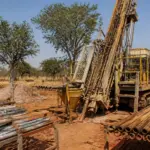
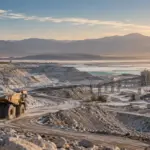
Editorially illustrative view of a Western Australian gold processing hub.

Forrestania Resources has completed its A$300 million ($215 million) acquisition of the Edna May Gold Project from Ramelius Resources, taking control of a mothballed processing plant and a broader package of mining and exploration assets in Western Australia.
The transaction gives Forrestania ownership of Edna May Operations, Tampia Operations, associated exploration licences and related contractual rights. It also places two major processing hubs under the company’s control: Edna May and Lake Johnston, which Forrestania is separately refurbishing.
The deal marks a significant change in ownership for Edna May, but the more important test now is operational. Forrestania must restart the Edna May mill, secure a reliable supply of ore and demonstrate that its proposed dual-hub strategy can convert installed capacity into sustainable gold production.
Deal gives Forrestania control of Edna May hub
Under the completed transaction, Forrestania paid Ramelius A$210 million in cash and issued 225 million Forrestania shares valued at A$90 million.

Ramelius retains exposure to the asset through the share component, becoming a substantial shareholder in Forrestania. That structure gives Ramelius continuing financial exposure to the value created by a successful restart while allowing it to redirect capital and management attention toward its core portfolio.

The acquisition also expands Forrestania’s regional land position. The company already holds projects around Western Australia’s Southern Cross and Eastern Goldfields regions, including ground adjacent to Edna May.
Forrestania’s Westonia region portfolio, for example, includes tenements near the Edna May mine and a growing resource base. The proximity of these assets is central to the company’s strategy of using processing hubs to treat ore from multiple deposits rather than building a standalone plant for every project.

The company completed the acquisition alongside the second tranche of a A$310 million institutional placement. That tranche raised approximately A$215 million before costs after shareholder approval.
The two figures are closely linked but not identical: the A$300 million consideration is the purchase price for the Edna May Gold Project, while the A$215 million figure refers to the latest funding tranche and is also broadly equivalent to the transaction value in U.S. dollars.
| Item | Detail | Immediate significance |
|---|---|---|
| Acquisition value | A$300 million, or about US$215 million | Sets the capital value of the Edna May hub |
| Cash consideration | A$210 million | Provides direct proceeds to Ramelius |
| Share consideration | 225 million Forrestania shares valued at A$90 million | Keeps Ramelius financially exposed to the restart |
| Edna May mill | 2.9 million tonnes per year | Provides the initial processing platform |
| Combined targeted capacity | More than 6 million tonnes per year | Depends on refurbishment and recommissioning |
| Capital raising | A$310 million placement | Funds the acquisition and broader growth strategy |
Restart plan starts with the mill
Forrestania has said it plans to restart the Edna May processing plant in the first half of next year. The first feed is expected to come from nearby Forrestania resources, including the British Hill and Johnson Range deposits, rather than from an immediate full-scale restart of mining at the historic Edna May operation.
That sequencing is important.
Restarting a processing plant can offer a faster route to production than reopening every part of an integrated mining operation at once. It allows the owner to focus initially on plant readiness, ore logistics, metallurgical performance, workforce mobilisation and maintenance requirements.
It also creates a practical test of the hub-and-spoke model. Forrestania will need to prove that nearby deposits can provide sufficient volume, grade and continuity to keep the mill operating at an economic rate while the company evaluates a longer-term restart of mining at Edna May itself.

Processing infrastructure will be central to Forrestania’s restart sequence.
Edna May was placed into care and maintenance in April 2025 after producing about 760,000 ounces of gold between 2018 and 2025, according to transaction coverage. The period since closure means Forrestania will have to establish the condition of the plant and supporting infrastructure before it can determine the scale and cost of recommissioning work.
The company has not presented the transaction as an immediate return to historical production levels. Instead, the initial objective is to restart milling using regional ore and build a platform for further development.
That approach reduces the need to solve every technical and permitting issue simultaneously. It also creates dependencies: if nearby deposits do not deliver the expected feed, the plant could face lower utilisation while additional resources are drilled, permitted or developed.
Dual-hub strategy raises execution stakes
Forrestania’s existing Lake Johnston processing hub is also undergoing refurbishment. Together, the Lake Johnston and Edna May facilities could provide targeted combined milling capacity of more than 6 million tonnes per year once the required work is complete.
Forrestania executive chairman David Geraghty described the transaction as a “transformational milestone” and said the combined platform would support a dual processing hub strategy.
The operational logic is straightforward. Two facilities can provide greater flexibility over where ore is treated, potentially allowing the company to match ore characteristics with the appropriate mill. A hub-and-spoke system may also reduce the infrastructure burden for smaller deposits that would not justify their own processing plant.
However, the strategy also increases the company’s execution responsibilities. Forrestania will need to manage two refurbishment and recommissioning programs, coordinate regional haulage and maintain a pipeline of suitable ore.
The key risks include:
- Plant condition: Care and maintenance can reduce operating costs during a shutdown, but restart work may expose equipment, electrical and structural requirements not visible during normal operations.
- Ore availability: The planned feed sources must provide sufficient tonnes and acceptable metallurgical performance to support the mill.
- Capital discipline: The acquisition and placement provide scale, but refurbishment, development and working capital requirements will determine how far the funding extends.
- Permitting and workforce: Restarting an established operation does not remove the need for regulatory approvals, skilled labour and contractor availability.
- Integration: Forrestania must combine the acquired assets with its existing portfolio while maintaining exploration and development activity across several regions.
Regional consolidation could support exploration
The acquisition gives Forrestania more than a processing plant. It also creates a larger regional position around a known mining district, which could support exploration and third-party feed opportunities over time.
The company’s corporate investor centre is expected to provide further information on funding, resource development and restart milestones as the integration progresses.
For Western Australia’s gold sector, the transaction reflects a broader trend: operators are placing greater value on existing infrastructure as construction costs, permitting timelines and labour constraints complicate the development of new standalone mines.
A mill with available capacity can change the economics of nearby deposits. Resources that might be too small or too remote to support an independent operation may become viable if they can be trucked to a regional hub. That potential, however, depends on haulage distances, road capacity, ore characteristics and the cost of maintaining production consistency.

Regional exploration and satellite deposits will determine how effectively the hub-and-spoke model develops.
Forrestania’s acquisition therefore sets up a two-stage test. The first is whether the Edna May plant can be safely and economically recommissioned. The second is whether the company can build enough regional production around the plant and Lake Johnston to support a larger, more resilient gold business.
The company has targeted a total gold resource base approaching 2 million ounces following the transaction. That figure provides scale, but it does not by itself establish production timing, operating costs or project returns. Those will depend on additional drilling, mine planning, metallurgical work, approvals and capital allocation.
For Ramelius, the sale converts a non-core asset into cash and equity exposure. For Forrestania, it is a move from exploration-led growth toward operating responsibility.
The immediate milestones will be practical rather than financial: completion of plant inspections, confirmation of refurbishment requirements, definition of initial ore sources and a credible schedule for first feed. Until those steps are delivered, the value of the Edna May acquisition will remain tied to its restart potential rather than demonstrated production.

Operational control and maintenance planning will be critical during the recommissioning phase.
The transaction strengthens Forrestania’s position in Western Australian gold, but it also raises the standard against which the company will be judged. Owning two processing hubs offers capacity and strategic flexibility. The next challenge is to keep both assets supplied, funded and operating reliably.
For investors, operators and regional suppliers, the Edna May restart will be an important indicator of whether Australia’s existing gold infrastructure can support a new wave of consolidation and satellite development.
Source: Mining Technology report on the completed Edna May acquisition.
Related reading: Mining M&A deals, consolidation drivers and deal risk and Mining exploration financing and discovery trends.