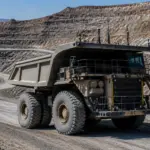
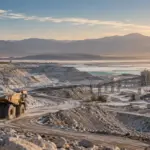
Mining ESG compliance is increasingly being tested through site-level evidence, environmental controls and community commitments.

Mining ESG compliance is moving from a reporting issue to a condition of access, renewal and continued use of mineral rights. Across Zimbabwe, Brazil, the Philippines and the European Union, governments are trying to accelerate critical-minerals development while facing stronger scrutiny over water, Indigenous rights, biodiversity, rehabilitation and public participation.
The result is a more complex permit environment. Strategic importance may shorten administrative timelines or improve coordination, but it does not remove the need to demonstrate that a project can manage its environmental and social impacts.
For operators and investors, the practical question is no longer whether a company publishes an ESG report. It is whether its evidence is strong enough to support a permit application, withstand regulatory review, secure financing and maintain community confidence.
Zimbabwe: ESG moves closer to the mining-rights gate
Zimbabwe provides one of the clearest examples of ESG becoming linked directly to mining tenure.

According to Mining Zimbabwe, Mines and Mining Development Minister Dr. Polite Kambamura said the government is preparing legislation that would make ESG compliance a prerequisite for applying for, renewing and extending mining rights.

Kambamura said environmental impact assessments should be treated as commitments rather than documents prepared only to obtain approval.
“An environmental impact assessment is not just a mere paper but a commitment that is to be recognised,” he said.
The proposed framework would cover the full life cycle of a mining title. That could make rehabilitation, environmental monitoring, community obligations and governance controls relevant not only at the project approval stage, but also when an operator seeks to maintain or expand its rights.

The legal position remains important. Zimbabwe’s existing mining framework and related environmental rules continue to apply, while several ESG-related provisions remain part of proposed reforms and policy development. Operators should therefore distinguish between obligations already in force and requirements that could become binding once legislation is enacted.
The direction of travel is nevertheless clear: an operator that cannot demonstrate compliance may face greater difficulty securing renewal, expansion or continued title security.
Brazil: faster critical-minerals approvals, deeper scrutiny
Brazil is promoting critical and strategic minerals including copper, nickel, lithium, graphite, rare earths, cobalt, manganese and niobium. The country’s policy push reflects the importance of domestic mineral supply to industrial development, energy-transition manufacturing and geopolitical resilience.
The permitting regime is also evolving. Brazil’s environmental licensing system generally requires a sequence of approvals, which can include preliminary, installation and operating licences, alongside environmental impact studies, water authorisations, waste-management plans and forest-clearance approvals where applicable.
Recent measures and proposals seek to make qualifying critical-minerals projects faster and more predictable. Brazil’s Ministry of Mines and Energy investor guide describes the regulatory and project-development pathway for investors.
But faster processing does not eliminate ESG exposure. Environmental groups and legal experts have raised concerns about proposals that could reduce scrutiny for some exploration or strategic-minerals projects. The Socioenvironmental Institute has criticised rare-earth legislation for lacking stronger safeguards on Indigenous and traditional communities, sensitive areas and socio-environmental impacts.
Judicial and community scrutiny can also change the practical timeline. Projects near Indigenous territories, forests or water-sensitive regions may face additional studies, consultation requirements or court challenges even when national policy favours faster approvals.
For mining companies, Brazil’s critical-minerals opportunity therefore carries a dual requirement:
- Demonstrate that the project qualifies for strategic or accelerated treatment.
- Maintain a permitting and engagement record that can withstand scrutiny from regulators, communities, courts, investors and customers.
Climate and sustainability disclosures add another layer. Listed companies and financial institutions in Brazil are moving toward ISSB-aligned sustainability and climate reporting, increasing expectations around governance, risk management, emissions, water and material environmental liabilities.

Nickel operations in the Philippines illustrate the scale of critical-minerals development and its permitting implications.
Philippines: simultaneous permitting and the consent test
The Philippines has adopted a national framework intended to accelerate critical-minerals development. Executive Order No. 122 identifies at least 9 million hectares of prospective mineral areas and directs the government to support exploration, downstream processing, investment and responsible mining.
The order also calls for a virtual one-stop shop through which national and local permits can be processed simultaneously rather than sequentially.
Industry groups have welcomed the prospect of faster and more predictable permitting. But environmental and Indigenous rights groups warn that speed could weaken the quality of public participation if communities are asked to make decisions before they have adequate information about a project’s impacts.
In a Mongabay report, the Legal Rights and Natural Resources Center said the policy could increase pressure on forests and ancestral domains. The group estimates that 424,830 hectares, or 54% of the country’s existing approved mining area, potentially overlaps with ancestral domains.
Rogelio Andrada II, a forestry professor and director of the Institute of Renewable Natural Resources at the University of the Philippines Los Baños, told Mongabay that mining is disruptive to ecosystems whether the setting is forest, freshwater or grassland.
LRC Executive Director E.M. Taqueban questioned whether communities can provide informed consent if the full environmental impacts have not yet been established.
That concern goes to the core of permit readiness. A faster administrative process is not necessarily a faster path to production if it produces incomplete consultation, legal challenges or a loss of community trust.

Community concerns often focus on how mining may affect forests, farms, water retention and local livelihoods.
EU: strategic status comes with sustainability conditions
The EU Critical Raw Materials Act is designed to strengthen Europe’s supply of strategic raw materials through domestic projects, international partnerships, processing capacity and recycling.
The regulation allows qualifying projects to seek recognition as Strategic Projects. To qualify, a project must contribute to supply security, be technically feasible, comply with relevant legal requirements and demonstrate sustainability in environmental and social terms.
Strategic Projects receive coordinated permitting support and maximum permitting durations of 27 months for extraction projects and 15 months for processing or recycling projects, subject to the regulation and applicable national law.
Those timelines should not be interpreted as automatic approval. Environmental impact assessments, public participation and national permitting requirements remain important. The regulation also treats Strategic Projects as matters of public interest, requiring authorities to balance supply-security benefits against environmental impacts and mitigation obligations.
For projects supplying the European market, the Act also points toward greater environmental-footprint information, including data on greenhouse-gas emissions, water use, pollution and access to water. That means operators outside the EU may face commercial pressure to provide information even when their primary mine permit is issued under national law.
Permit-readiness checklist
The following checklist can help project teams test whether ESG controls are sufficiently developed before submitting an application or seeking a renewal.
| Readiness area | Evidence decision-makers should expect | Common warning sign |
|---|---|---|
| Mining rights | Current title records, obligations register and renewal timetable | Rights data held in separate spreadsheets or incomplete files |
| Water | Site water balance, source authorisations, recycling plan and drought scenarios | Water demand based only on feasibility-study assumptions |
| Environmental impact | Baseline studies linked to the mine plan and mitigation measures | Commitments are not assigned to operating owners |
| Tailings | Facility inventory, engineering reviews, monitoring data and closure plan | Outstanding corrective actions lack dates or funding |
| Indigenous and community rights | Consultation record, consent process, grievance log and benefit commitments | Engagement begins after the project design is largely fixed |
| Rehabilitation | Progressive rehabilitation schedule and closure-cost model | Closure costs are treated as a distant liability |
| Governance | Named ESG owners, board oversight and controlled reporting boundaries | Site data cannot be reconciled with corporate disclosures |
| Financial provision | Security, insurance, trust or other approved funding mechanism | Rehabilitation depends on future cash flow |
| Supply-chain evidence | Contractor, processor and customer due-diligence records | ESG controls stop at the mine gate |
| Assurance | Independent review of material environmental and social metrics | Reported figures cannot be traced to source records |
The most useful test is traceability. A reported water figure should connect to meters, laboratory results or invoices. A rehabilitation commitment should have a budget, schedule and accountable manager. A community agreement should identify what was promised, who is responsible and how delivery will be verified.
Water is becoming a permit and production risk
Water is one of the clearest points where ESG and mine economics overlap.
A project may have sufficient average annual water availability but still face restrictions during drought, seasonal shortages or competing agricultural and community demand. Regulators and lenders increasingly expect operators to model those conditions rather than rely on a single long-term average.
Water risks can affect:
- Ore-processing rates.
- Treatment and recycling capital.
- Permit conditions.
- Community relations.
- Production sequencing.
- Insurance and financing assumptions.
- Closure and post-closure obligations.
The same principle applies to tailings. Monitoring systems, independent reviews, emergency response plans and closure funding are no longer separate technical matters. They are evidence that a company can control a material environmental risk over the full mine life.

Water monitoring connects environmental commitments with operating decisions and permit conditions.
What operators and investors should monitor
A short set of operating indicators can provide a more useful picture than a broad ESG score:
- Unresolved permit conditions by site.
- Percentage of operations with current water balances.
- Tailings facilities with completed independent reviews.
- Land disturbed compared with land rehabilitated.
- Closure liabilities covered by approved financial provisions.
- Open community grievances and average resolution time.
- Scope 1 and Scope 2 data subject to assurance.
- ESG-related capital expenditure as a share of sustaining capital.
- Number of material data gaps carried into the next reporting cycle.
The regulatory approaches differ across Zimbabwe, Brazil, the Philippines and the EU. Their common feature is that ESG performance is becoming harder to separate from the legal and commercial right to develop minerals.
For critical-minerals projects, strategic importance may create new opportunities. It may also attract more scrutiny from governments, communities, civil society and downstream buyers.
The strongest permit applications will therefore be built around evidence: credible water data, funded rehabilitation, defensible impact studies, meaningful consultation and governance systems that remain functional after approval.
Mining ESG compliance is no longer only about what a company reports. It is increasingly about whether the company can prove that its commitments are operational, financed and capable of protecting the rights, water resources and communities connected to a mine.
Further reading
- Mining ESG compliance: disclosure, permitting and operating risk
- Critical minerals supply chain: drivers, risks and scenarios
- Critical minerals demand and energy-transition supply gaps
- Brazilian Ministry of Mines and Energy critical-minerals investor guide
- EU Critical Raw Materials Act
- Philippines critical-minerals policy and Indigenous rights concerns
LinkedIn snippet
Mining ESG compliance is becoming part of the mining-rights test. Zimbabwe is moving toward ESG-linked title conditions, Brazil is balancing critical-minerals acceleration with environmental scrutiny, the Philippines faces questions over consultation and permitting speed, and the EU is tying strategic-project status to sustainability criteria. Our analysis includes a practical permit-readiness checklist for operators, investors and policymakers. #Mining #ESG #CriticalMinerals #Water
X snippet
ESG is moving into the mining permit critical path. A comparison of Zimbabwe, Brazil, the Philippines and the EU shows why water, rehabilitation, Indigenous rights and evidence quality increasingly affect project timelines and operating continuity. #Mining #ESG #CriticalMinerals