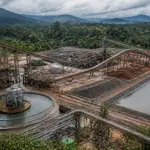
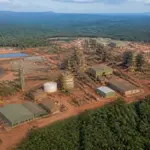
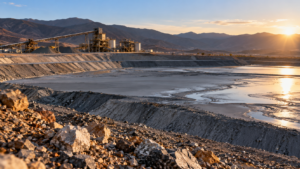
Surface facilities at an underground platinum-group-metals mine in Montana.

By Charles Pitts
About 420 workers at Sibanye-Stillwater’s Stillwater East mine and Columbus Metallurgical Complex in Montana walked off the job on Sept. 3 after more than four months of contract negotiations failed, creating a new operational risk for the only significant primary palladium producer in the United States.
United Steelworkers Local 11-0001 began the strike at 7 a.m. local time. The action covers employees at the underground Stillwater East mine and the Columbus facility, which includes the company’s smelting, refining and recycling operations.
The East Boulder mine, which operates under a separate collective bargaining agreement, is not included in the strike. Negotiations covering East Boulder are continuing.
More Read

The dispute centers on proposed changes to employee health benefits and a new incentive-pay structure. The union has described the walkout as an unfair labor practice strike, accusing the company of refusing to bargain in good faith and declaring an impasse prematurely.

Sibanye-Stillwater has rejected that characterization. The company says it has negotiated with the union for more than four months and that its proposed agreement includes a 5% wage increase for 2026. Management has argued that changes to benefits and incentive payments are necessary because palladium prices have fallen from earlier highs while operating costs have increased.
Contract dispute reaches Montana’s largest mining employer
The strike affects a workforce operating across two linked parts of the PGM supply chain.
More Read

Stillwater East extracts ore from the J-M Reef, a high-grade platinum-group-metals deposit in south-central Montana. Ore from the mine is processed through the Columbus Metallurgical Complex, meaning that a prolonged work stoppage could affect both mine production and downstream treatment.
The union says the proposed health plan would increase employee costs through higher deductibles, maximum out-of-pocket expenses and other changes to coverage. It has also objected to changes in short-term disability benefits.
The proposed incentive system is another major point of contention. Union representatives say a shift from individual incentives to a broader team-based structure could reduce accountability and discourage employees from reporting injuries or environmental incidents. Sibanye-Stillwater says the proposed structure would provide a higher budgeted total payout than the historical plan and distribute payments more evenly among hourly workers.
The company has also said its Montana operations are under significant financial pressure. In comments reported by Montana Free Press, Sibanye-Stillwater said current metal prices left the business operating close to break-even, with some days generating losses.
The disagreement follows earlier production reductions and layoffs at the Montana operations. Sibanye-Stillwater cut output and reduced its workforce in 2024 as lower palladium prices weakened the economics of the mines.

Underground drilling equipment at a hard-rock PGM operation.
Production impact will depend on duration and restart
Sibanye-Stillwater has not provided a definitive estimate of lost production from the strike. The company has said the impact will depend on the length of the action, operating arrangements during the strike, the availability of processing facilities and the time required to restart production after an agreement is reached.
The distinction between the affected and unaffected operations is important. East Boulder remains outside the strike notice, but Stillwater East and Columbus are closely connected operationally. A disruption at the mine could reduce the flow of concentrate into the metallurgical complex, while a disruption at Columbus could constrain the company’s ability to process material even if some mining activity continues.
The company’s U.S. PGM operations produced 68,386 ounces of 2E PGMs in the first quarter of 2026, according to market reports citing Sibanye-Stillwater’s operating update. The 2E measure generally refers to platinum and palladium on a combined basis.
Stillwater East produced about 76,334 ounces of PGMs in the first half of 2026, according to figures cited in reporting on the strike. On a simple average, that represents roughly 446 ounces a day, although actual daily production varies and a strike would not necessarily eliminate all output immediately.
That figure offers a broad indication of the potential exposure but should not be treated as a forecast of lost production. Mine inventories, stockpiles, nonunion staffing, maintenance activity and the condition of the processing circuit could all affect the outcome.
PGM market remains divided between global balance and regional tightness
The strike comes as the palladium market presents a mixed picture.
Global forecasts differ sharply. Johnson Matthey has projected a modest palladium surplus for 2026, supported by recycling and available supply. Metals Focus, by contrast, has pointed to further declines in mined PGM supply and expects tighter physical conditions across parts of the market.
Those views are not necessarily contradictory. A market can appear adequately supplied globally while remaining vulnerable to regional disruptions, trade restrictions or a lack of immediately deliverable material.
The United States is particularly exposed because domestic primary palladium production is concentrated at Sibanye-Stillwater’s Montana operations. The country also relies heavily on imports and recycled material to meet industrial demand.
Montana strike and U.S. palladium exposure
| Market factor | Current position | Potential effect of strike |
|---|---|---|
| Affected mine | Stillwater East | Reduced or interrupted mine output |
| Affected processing site | Columbus Metallurgical Complex | Possible constraints on smelting, refining and recycling |
| Unaffected mine | East Boulder | Partial operating continuity, subject to separate labor talks |
| Main metals | Palladium and platinum | Tighter U.S. availability if disruption persists |
| Global market | Forecasts range from balanced to modest surplus | Regional tightness may emerge even without a global deficit |
| Key restart risk | Duration, staffing and plant readiness | Delayed production recovery after a settlement |
Palladium prices have traded at elevated but volatile levels in 2026, generally ranging from the mid-$1,300s to the low-$1,500s per ounce in recent market reports. Prices have recovered from the lows that prompted earlier production cuts, but Sibanye-Stillwater continues to face a high-cost operating structure in the United States.
The company’s first-quarter U.S. operations reported an all-in sustaining cost of about $1,291 per 2E ounce, while the 2E basket price was reported to be 88% higher than a year earlier. That improvement has supported margins, but it has not removed the pressure to reduce costs and improve productivity.
The longer-term outlook also remains uncertain. Palladium demand is closely tied to gasoline-powered vehicles and autocatalysts. Automakers have reduced palladium loadings in some applications, while the growth of battery-electric vehicles creates a structural challenge for autocatalyst demand.
At the same time, tighter mine supply, lower Russian output expectations, recycling trends and possible trade measures affecting Russian palladium could keep prices volatile. Sibanye-Stillwater has supported U.S. action on Russian palladium imports, arguing that imported metal places pressure on domestic producers. Any changes to trade flows could affect both prices and the economics of Montana production.
What investors and operators will watch next
The immediate focus will be on the duration of the strike and whether negotiations resume. A short stoppage may primarily affect production scheduling and inventories. A prolonged action would raise broader questions about concentrate availability, processing continuity and the cost of restarting underground operations.
Workers at East Boulder are covered by a separate agreement, so developments there will be watched closely by the market. A second labor dispute could increase the risk to Sibanye-Stillwater’s U.S. production base, while a settlement at Stillwater East and Columbus could provide a clearer operating path for the company.
For Sibanye-Stillwater, the labor dispute is also part of a larger strategic challenge. The company must balance employee demands and the retention of skilled underground workers against high operating costs, changing vehicle technology and uncertain palladium prices.
For U.S. consumers, the strike highlights the concentration of domestic PGM supply. Even if global inventories remain sufficient, a disruption at Montana’s mine and metallurgical complex could tighten regional availability and increase the importance of imports and recycling.
Skillings previously examined the broader issue in its analysis of Sibanye-Stillwater’s Montana operations, restart risks and 2026 outlook. The latest strike adds a labor dimension to the same question: whether the U.S. PGM business can restore sustainable production while managing costs, workforce expectations and a market undergoing structural change.
For now, the strike has halted normal labor relations at Stillwater East and Columbus, while East Boulder continues outside the dispute. The eventual production impact will depend less on the first day of the walkout than on how quickly the two sides can resolve the contract issues and how smoothly the operations can be restarted.