By Charles Pitts

The landscape of Australian gold mining has shifted abruptly this morning with news that Elliott Investment Management, the activist powerhouse led by Paul Singer, has quietly accumulated a A$1 billion (~$660 million) stake in Northern Star Resources (ASX: NST). This move, representing roughly 4% of the company, catapults Elliott into the position of one of Northern Star’s top five shareholders and signals a major confrontation between the fund and the board of the ASX-listed gold major.
This development comes during a turbulent year for Northern Star. Despite a backdrop of record-high gold prices in early 2026, the company has struggled with a series of operational setbacks and a sharp decline in market valuation. Elliott’s entry is not merely a vote of confidence in the underlying assets; it is a calculated rebuke of the current management’s execution and a direct challenge to the oversight of Chairman Michael Chaney.
The Elliott Playbook: A History of High-Stakes Mining Activism
Elliott Management is no stranger to the Australian mining sector. This $1 billion position is the firm’s most significant move in the region since its aggressive 2017 campaign against BHP, where it successfully pushed for a simplified corporate structure and increased capital returns.
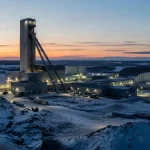
In the case of Northern Star, Elliott has described the portfolio: which includes the legendary Super Pit in Kalgoorlie and the Pogo mine in Alaska: as “world-class.” This framing is critical. It suggests that Elliott believes the current share price discount is not a result of poor ore bodies, but of poor stewardship. By building a stake of this magnitude, Elliott is signaling that it will not be a passive passenger while shareholder value erodes. The fund is expected to push for a board refresh, a strategic review of non-core assets, and a faster timeline for appointing a permanent successor to CEO Stuart Tonkin, whose recent resignation has left a leadership vacuum at a critical juncture.
More Read



Northern Star’s Underperformance in 2026
While the broader Global Mining Outlook 2026 initially pointed toward a banner year for gold producers, Northern Star has found itself on the wrong side of the curve. Since January, the company’s market capitalization has withered by approximately A$17 billion, with the share price slumping nearly 30%.
The drivers behind this value destruction are operational rather than market-driven. Northern Star has faced:
More Read
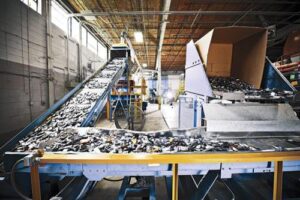
- Unplanned Maintenance: Significant downtime at major processing hubs.
- Supply Chain Disruptions: Delays in critical equipment arrival that have hampered development rates.
- Guidance Revisions: The company was forced to cut its FY2026 production guidance multiple times, a move that severely damaged its credibility with institutional investors.
These “operational stumbles,” as analysts have characterized them, occurred during a period when gold was trading at levels that should have generated record free cash flow. Instead, Northern Star became a laggard, failing to keep pace with peers like Newmont or Agnico Eagle.
Pressure on the Board: The Michael Chaney Factor
At the center of this storm is Chairman Michael Chaney, a veteran of the Australian corporate scene. Elliott’s campaign implicitly questions the board’s ability to hold management accountable for the 2026 production misses. With the CEO search now underway, Elliott is likely to demand a say in the selection process, ensuring the new leader prioritizes capital discipline over aggressive (and often dilutive) expansion.
The board’s initial defense has been a A$500 million share buyback program. While meant to signal that the stock is undervalued, the buyback has so far failed to provide a floor for the share price. Activists often view such moves as “too little, too late” when the underlying operational rot remains unaddressed.

Operational Outlook: The Path to 1.7 Million Ounces
Despite the internal and external pressures, Northern Star is doubling down on its long-term targets. The company recently reaffirmed its FY2026 production expectations of above 1.5 million ounces, with a medium-term goal of reaching 1.6–1.7 million ounces as current expansion projects at Kalgoorlie and Pogo come online.
A key component of this recovery will be the integration of autonomous haul trucks and cost-saving technologies. Northern Star has been a pioneer in underground automation, but the scale of its open-pit operations requires a new level of technological efficiency to offset rising labor and energy costs in Western Australia. If the company can demonstrate a successful turnaround in the second half of the year, it may be able to keep Elliott at bay. However, any further guidance cuts will almost certainly trigger a formal proxy battle.

Why Northern Star is a Top Mining Stock to Watch in 2026
For investors, the entry of an activist like Elliott creates a “heads-I-win, tails-you-lose” scenario. If management successfully turns the ship around, the share price should rerate toward its peers. If management continues to fail, Elliott will likely force a sale of the company or a breakup of the assets: both of which could unlock significant value.
The mining news cycle has been dominated by the energy transition, but Northern Star’s plight serves as a reminder that gold remains the foundational hedge in a volatile geopolitical environment. As we navigate the 2026 supercycle transition, the ability of large-scale producers to execute on their guidance is the primary differentiator between value traps and growth engines.
Conclusion
Elliott Management’s billion-dollar bet is a watershed moment for Northern Star Resources. It marks the end of the “benefit of the doubt” era for the current board and sets the stage for a high-stakes 2026. Whether through a radical operational turnaround or a forced strategic pivot, Northern Star is no longer just a gold miner: it is a live laboratory for corporate governance in the modern mining era.

Key Data Point: Northern Star Performance Snapshot (H1 2026)
| Metric | Value | Change (YoY) |
|---|---|---|
| Share Price Performance | -29.4% | ↓ |
| Market Cap Erosion | A$17 Billion | ↓ |
| Production Guidance | 1.5M – 1.55M oz | ↓ (Revised from 1.6M) |
| Buyback Program | A$500 Million | ↑ (New) |
| Elliott Stake | ~4% | ↑ (New) |